Thursday, September 29, 2022

Elvis

Director: Baz Luhrmann
Starring: Austin Butler, Tom Hanks, Olivia DeJonge, Helen Thomson, Richard Roxburgh, Kelvin Harrison Jr., David Wenham, Kodi Smit-McPhee, Luke Bracey, Dacre Montgomery
Running Time:159 min.
Rating: PG-13

★★★ ½ (out of ★★★★) 

Baz Luhrmann's Elvis definitely doesn't linger in one spot for very long, moving at a breakneck pace with frenetic editing and over-the-top theatricality as it charges through the milestones of Presley's life and career. With a dizzying, dazzling visual style and thrilling recreations of the King's stage performances (and the public's reaction to them) it's compulsively watchable and hard to look away from. That it's garnered such polarizing reactions is kind of a shock considering just how much it gets right, following the necessary beats, but doing so in an imaginative, flashy style that fits the one-of-a-kind performer it covers. 

Allegedly problematic elements, like a potentially awkward framing device and the criticisms of Elvis' appropriation of black music and culture, are not only seamlessly woven into the narrative, but addressed head-on. Presley's love of entertaining drives the action, with Luhrmann approximating for us the experience of watching him onstage and off. So while there are many bells and whistles, they add rather than detract from Austin Butler's electrifying lead performance in the title role. Radiating the King's innate charisma and magnetism, he gets even better as it goes on, with this eye-popping spectacle only enhancing the mythic presence Butler's called upon to convey. 

It's 1997 and Elvis Presley's (Butler) former manager, the now destitute Colonel Tom Parker (Tom Hanks) lies on his deathbed reminiscing about when first discovered the King of Rock n' Roll. Labeling himself the "snowman," Parker was a carnival huckster and opportunist, perpetually on the hunt for his own "Greatest Show on Earth" that puts him in the company of P.T. Barnum. He first meets Elvis while managing country singer Hank Snow (David Wenham), immediately recognizing the young man's crossover potential as a white artist who "sounds black." 

We flash back to Elvis' Mississippi childhood, having grown up poor with a mother, Gladys (Helen Thomson), who doted over him, and a father, Vernon (Richard Roxburgh), who did some time in jail. Finding refuge as a kid in comic books and his obsession with Memphis' African-American music scene, he later strikes a deal with Sun Records, but it's his memorable "Louisiana Hayride" TV performance that puts him on Parker's radar. 

With Parker guiding his career, Elvis becomes an overnight sensation in the face of politicians' complaints about his suggestive stage antics, further stoking racial hostilities and getting him into legal trouble. Upon returning from the Army to embark on a movie career, his new musical direction is eventually shaped by the social and cultural unrest of the '60's. Soon after marrying Priscilla Beaulieu (an excellent Olivia DeJonge), the possessive Col Parker's grip over Elvis tightens, turning him into a prisoner of his own fame. Despite a thriving comeback that pushes him far past his limits, prescription drug addiction threatens to derail it, all while Parker's true colors are revealed.

Having Col. Parker narrate his interpretation of events creates a perspective shift that greatly differentiates this from most biographical depictions of the King. But it does get off oddly, with a barely recognizable Hanks in a fat suit, buried under pounds of makeup and prosthetics speaking in a sometimes unintelligible Dutch accent most are probably unaware Parker even had. While all of this hardly seem necessary for one of our greatest actors and the image of a dying, hospital gown-wearing Parker dragging his IV pole across a hotel casino floor is quite a sight, Hanks' portrayal is far from the debacle it's been toted as. 

Once the immediate shock of that attention-grabbing dream sequence wears off, Hanks does bring kind of a devious charm to Parker, both as Elvis' father figure and eventual gate keeper. Physical appearance aside, Hanks does provide access to the man inside the suit, and at the risk of damning with faint praise, you do warm up to him as an antagonist. Plus, Luhrmann keeps the action moving at a fast enough clip that there really isn't time to complain about it, with Butler's exhilarating recreations of Elvis' iconic, show-stopping performances stealing most of the film.

Despite four credited writers, the script's far from unfocused, following a tight chronological order that never feels stifling or too paint-by-numbers because it's such a visual and auditory feast. The cinematography and production design has a predictably over-the-top sheen, but looks and feels period authentic, which is a must considering how many different eras it needs to span for a complete account.

Even those only vaguely familiar with Elvis' trajectory will notice that the story's structure revolves around maybe three or four key events. Most notable is the hysteria surrounding that first Hayride show with girls screaming, fainting and ripping off his clothes, effectively signifying that nothing will be the same for Presley again. As Elvis' hip swiveling and gyrating dance moves court controversy, Parker's attempt to clean up his client's image and go mainstream is the first sign of a developing rift between the two. It's also an early indication Elvis isn't someone who's ready to compromise his musical integrity to appeal to a larger audience, or appease an old school, brand conscious manager.       

Rocked by personal tragedy but newly married, Elvis is awakened to a world that's seemingly passed him by. It's here where Butler's performance kicks into overdrive and the film really finds its voice, connecting Elvis' upbringing to the tumult of the 60's embodied by the assassinations of Martin Luther King and Robert F. Kennedy. His rebellious spirit was established early so it makes sense he'd be able to carve out a new niche for himself in the hippie era, while also re-embracing the style of music he initially loved. It's also when things really start to go downhill with the controlling Parker, who's a step or two behind the times, but still taking credit for Elvis' best ideas. 

The Elvis Christmas television special intended by Parker to appease sponsors instead escalates tensions, signaling what should have been the end of their toxic, parasitic partnership. Instead it leads to a bitter feud which exposes Parker's true intentions. It's to Luhrmann and Hanks' credit that they do make the character somewhat more complicated than expected, even as Parker blackmails Elvis into the exhaustive, seemingly endless Las Vegas International Hotel residency that leads to his downfall. We know what's coming, but the film doesn't tastelessly dwell on it, with the focus remaining on Presley's adoration for the music, which Butler captures the essence of.

Finding an ideal outlet and subject for the unrestrained craziness some have found irritating in his previous work, this may be the best version of Luhrmann's style we've ever gotten. His polarizing, sensationalized approach feels completely organic to the story, lifting what should be an ordinary biopic about an extraordinary entertainer to even greater heights. In equal parts a human tragedy and the fulfillment of an American dream, it's a testament to the film's authenticity and power that the actual footage shown at the end becomes indistinguishable from what we've just watched. Exciting enough to reaffirm the devotion of lifelong fans while still converting the uninitiated, Elvis delivers on all counts, putting other pretenders in the genre to shame.           

Friday, September 23, 2022

Cobra Kai (Season 5)

Creators: Josh Heald, Jon Hurwitz and Hayden Schlossberg
Starring: Ralph Macchio, William Zabka, Courtney Henggeler, Xolo Maridueña, Tanner Buchanan, Mary Mouser, Jacob Bertrand, Peyton List, Dallas Dupree Young, Vanessa Rubio, Thomas Ian Griffith, Martin Kove, Yuji Okumoto, Alicia Hannah-Kim, Oona O'Brien, Joe Seo, Griffin Santopietro, Paul Walter Hauser, Sean Kanan, Robyn Lively, Luis Roberto Guzmán

Original Airdate: 2022 

**The Following Review Contains Plot Spoilers For The Fifth Season Of Cobra Kai **

★★★ ½ (out of ★★★★)

Having now wrapped its fifth season, Netflix's Cobra Kai still shows absolutely no signs of slowing down. While it's already common knowledge just how good this Karate Kid continuation is, showrunners Josh Heald, Jon Hurwitz and Hayden Schlossberg are constantly readjusting and evolving the story to keep it fresh. So even if the series already has an established creative voice and tone we're accustomed to, they're still finding new ways to continually top themselves. This latest batch of episodes are no exception, as the writers turn obstacles into opportunity, navigating their way around potential issues many assumed could become major pitfalls the longer this went. Inevitably facing some criticism from diehards insisting it's veered too far into comedy or devolved into a typical "teen show," they've wisely stayed the course, delivering the same high quality entertainment.  

Whereas last season seemed to take the characters in different directions that came together in a really clever cliffhanger, these episodes have a more singular focus that serves the storytelling and performances equally well. Nearly everything revolves around the sinister, looming presence of the show's main antagonist and he doesn't disappoint, taking center stage like a scheming Bond villain with his evil expansion plan. It isn't an easy line to walk, but a big part of the show's success has been taking itself just seriously enough, while still retaining a playful tongue-in-cheek tone. And now they've done it again, delivering a new batch of episodes capped with a bold exclamation point that leaves us wondering what's next.

Terry Silver (Thomas Ian Griffith) is flying high after Cobra Kai's tainted tournament victory at the end of last season vanquished Daniel LaRusso's (Ralph Macchio) Miyagi-Do from the Valley, And after framing John Kreese (Martin Kove) for his own drunken beatdown of Stingray (Paul Walter Hauser), Silver's grabbed full control of Cobra Kai, aggressively attempting to expand the franchise while his old Vietnam buddy rots in jail. But Daniel's not quite out of the picture yet, enlisting former Okinawa rival Chozen Toguchi (Yuji Okumoto) to help take Silver down for good. Meanwhile Johnny's (William Zabka) traveling with son Robby (Tanner Buchanan) to retrieve Miguel (Xolo Maridueña), who fled the tournament for Mexico in search of his biological father. 

With Robby contemplating the negative influence Cobra Kai's having on his former protege, Kenny (Dallas Dupree Young), reigning women's champion Tory (Peyton List) is still wracked with guilt over witnessing Silver pay off the tournament ref following her finals win over Sam LaRusso (Mary Mouser). As Silver's strategy to eat up the competition and take the dojo national picks up steam, he recruits a skilled group of South Korean senseis led by the ruthless Kim Da-Eun (Alicia Hannah-Kim), whose grandfather's teachings espoused a cutthroat "no honor, no mercy" philosophy. Now with a cutting edge, state of the art training facility and enough capital to take Cobra Kai's vicious methodology global, a rattled Daniel will need to call on some connections of his own to cut off the head of the snake.

Silver's sole control over Cobra Kai ups the stakes for the entire season, especially given who he eliminated from the equation to attain it. While last season's power struggle with Kreese ended in Silver having him wrongly incarcerated, it was rash to assume the betrayed sensei could ever be "softened" by jail or even want to help Daniel and Johnny if he's released.

Kreese is still the devil we know, and as these episodes dive deeper into exploring the reasons why, Silver is still far worse, driven exclusively by his insatiable appetite for money, power and greed. The season's heavily anchored by Thomas Ian Griffith's performance, with the actor again given an opportunity to shift gears and play the maniacal Silver more cerebrally than he did in The Karate Kid Part III. 

While Griffith was by far the best thing in the franchise's underwhelming second sequel, he's now bolstered by a better character arc and story, allowing him to further build on the added dimensions he brought to the role last season. A master of mind games, the wealthy business mogul completely throws Daniel off his game, slithering into every facet of his life, jeopardizing the LaRussos standing in the community and even causing cracks in he and Amanda's (Courtney Henggeler) marriage. It even gets so bad between them that she has to retreat back home to Ohio to seek advice from her cousin, and another familiar returning face, Jessica Andrews (Robyn Lively). Most of this rift is due to Daniel being unable to just sit back and watch this twisted sensei psychologically torment a whole new generation of karate students. 

To thwart Silver, Daniel not only enlists the help of Chozen, but tracks down former nemesis and Silver pupil, Mike Barnes (Sean Kanan), the latest legacy character to be creatively resuscitated by the series. Fans will be surprised to see what he's been up to, his reaction to Daniel and how he really feels about both now in middle age. The part isn't huge, but Kanan's effective in it, and par the course for most of these returns, his presence fits into the story's larger context. 

Chozen emerges as a major player after his memorable min-arc in the third season, now living with Daniel and Amanda while attempting gain Silver's trust and infiltrate the dojo. Some purists may complain the character's being reduced to a foil or sidekick, but with his timing, facial expressions and deadpan delivery, Okumoto's such a natural in the role that it's hard to see this as anything but a positive. It's also easy to forget these are Chozen's first interactions with both Silver and Johnny, opening up all sorts of possibilities that the writers take full advantage of, especially when it comes the combustible dynamic between Chozen and Silver. 

It's become a series-long joke that whenever Johnny googles something, hilarity ensues from his inability to move past the 1980's and socially adapt to modern day norms. Since Zabka is such a riot doing this, it never seems to get old, but the ongoing struggle from the series' inception has always revolved around Johnny's potential growth, or more specifically, how much and at what pace. It's a balancing act since you don't want to strip away what's made him who he is, especially considering how that's driven so much of the show's success. 

Making Johnny less of a jerk is one thing, but you don't want a sappy, overnight change that takes away all his bite. It's a credit to the writing and Zabka's performance that it took five seasons for us to revisit this conversation, indicating just how careful they've been about this. Now the trigger's been pulled, with him not only reconciling with Robby, but even taking Daniel's advice to get him and Miguel to bury the hatchet. And after Miguel's encounter with his slimy, criminally connected birth father, Hector (Luis Roberto Guzmán) in Mexico ends in disaster, you could argue that it just reinforces for all three what a real family actually is.

Johnny's relationship with Miguel's mom, Carmen (Vanessa Rubio) is still probably the flimsiest, most overly convenient subplot of the series, but the best news is that they've somehow managed to make him an expectant father without heavily sacrificing the character's rougher edges. His attempts to find new employment and personally recalibrate in the wake of this shocking news comically shifts Johnny's focus in a direction it hasn't gone since the series started. 

Maybe for the first time since the original films, Johnny takes a backseat to Daniel, if only because his beef with Silver doesn't run as deeply personal. It's undeniably Daniel's battle, but that doesn't mean he won't still need help fighting it. This is an improvement over last season when Miyagi-Do and Eagle Fang attempted to co-exist in the midst of Daniel and Johnny's predictable bickering. Having them go in different directions for most of these episodes before eventually joining forces again was probably a smart move.                     

Tory's allegiances are torn being forced to carry a secret that could destroy Silver's plan to have Cobra Kai take over the karate world through their potential participation in the famed international Sekai Taikai tournament. She could really be considered the show's true protagonist, as the guilt of knowing how he bought the win eats her alive, eliminating whatever satisfaction she could have gotten from defeating Sam to win that trophy. 

As Cobra's Kai's fastest rising star, Tory faces a choice. Much like karate came between Sam and Miguel, staying on this dark path would further decimate Tory's already shaky relationship with Robby, who already saw the light. The long troubled Tory is wrestling her own conscience and Peyton List knocks this out of park, subtly conveying the self-loathing and indignation Tory faces each time she steps inside that dojo. 

One of the most affecting aspects of Tory's arc is how she takes ex-Eagle Fang up-and-comer, Devon Lee (Oona O'Brien) under her wing like a sister, seemingly not wanting to see this girl go down a similar road. After briefly impressing as a new addition last season, O'Brien shines in a much larger role, with Devon contemplating if she still wants to be a Cobra in spite of the morally duplicitous qualities senseis Silver and Kim are promoting.

Miyagi-Do doesn't yet know how badly they need Tory on their side, but Daniel definitely needs Stingray, who's also battling his guilt over the Silver's payout to frame Kreese. Now driving Johnny's Dodge Challenger as a full fledged, card-carrying member of Cobra Kai, he's gotten everything he wants, provided he keeps his mouth shut. 

With Silver delivering on his word and welcoming Stingray back with open arms, there's little incentive for him to squeal, especially considering the potentially dangerous consequences if he does. But as badly as Daniel, Johnny and Chozen want him to flip, their biggest asset in destroying Silver is currently behind bars. 

Early signs point to a potentially rehabilitated Kreese being in a reflective, contemplative state of mind, attempting to stay out of trouble in hopes of an earning parole. And this prison stint gives the writers another chance to delve even further into the character's turbulent past and possible motivations. Kove plays it cool much of the way through, as we eagerly anticipate the moment Kreese decides to have his way with the fellow inmates. 

Kreese also has a great scene with the prison counselor where he emotionally cracks coming face-to-face with the ghosts of his past (including a digitally de-aged Johnny). But like everything involving him, you never stop wondering whether he's playing an angle. In the season's final minutes we discover he most definitely is. Part Halloween, part The Silence of the Lambs, his latest con job will probably earn a few laughs for its audacity, but that's Kreese in a nutshell, so it's perfect. Of course, if he held off a little longer he'd have been released instead of a fugitive, but timing wasn't always his strong suit.

The explosive, twist-laden finale ranks amongst the series' strongest, with Silver struggling to maintain a stranglehold over Cobra Kai as all his criminal deeds and dirty laundry float to the surface. Another action-packed, season-ending showdown takes place between Cobra Kai and Miyagi-Do that seriously tests allegiances and loyalty, but it's Silver and Chozen's one-on-one encounter that leaves the more lasting impression after slowly simmering throughout the ten episodes. Johnny also takes the worst beating he's ever gotten on way toward Daniel finally settling his score with Silver in a very public forum, with Cobra Kai's future on the line.

If there's a criticism you could level against this season (albeit an extremely minor one) it's that the bench of characters is so deep it starts becoming impossible for all of them to get a focus, forcing the writers to pick their spots. They've done it well, but it's hard not to notice the somewhat reduced role of All-Valley champ, Hawk (Jacob Bertrand), which may be less a reflection of his importance than the necessary drawback of being part of such a huge ensemble. And aside from a couple of brief scenes of him enduring Kenny's bullying, you may forget Anthony LaRusso's (Griffin Santopietro) even there, while wondering if he's interested in karate at all. 

The show's always excelled at depicting the characters' constantly evolving interpersonal relationships, so it's likely all of these aforementioned moves are purposeful and temporary, with the writers prioritizing which stories to put the heat on at any given moment. If the challenge comes in integrating the stories of the original legacy characters with compelling newer ones, that's where Cobra Kai finds the key to attracting viewers of all ages to a franchise over three decades old.

There's definitely a formula at play here, but it works, proving the series to be far more than just a nostalgic one-trick pony. The returns, reversals and surprises just keep coming, with the show constantly managing to reset itself on an episode-to-episode basis. And it all always comes back to the two middle-aged men who still can't let go of the 1984 All-Valley Karate Tournament final, passing their complicated high school legacies on to the kids, both for better and worse. Daniel and Johnny may be fighting on the same side now, but it hasn't dulled the series one bit.                 

Friday, September 16, 2022

Nope


Director: Jordan Peele
Starring: Daniel Kaluuya, Keke Palmer, Steven Yeun, Brandon Perea, Michael Wincott, Wrennn Schmidt, Keith David, Devon Graye, Jacob Kim, Terry Notary, Barbie Ferreira, Donna Mills, Osgood Perkins, Sofia Coto, Andrew Patrick Ralston, Jennifer Lafleur
Running Time: 130 min.
Rating: R 

**The following review contains major plot spoilers for 'Nope'**

★★★ ½ (out of ★★★★)  

With two successful big screen outings behind him, writer/director Jordan Peele takes his wildest, most ambitious swing yet with Nope, again daring audiences to look beneath the surface to extrapolate all of his film's possible meanings and intentions. Whether this results in Peele's most assured effort is another matter, as audiences pounded their heads against the wall trying to make sense out of what initially looked to be his most straightforward, mainstream project yet. But what apparently starts as a mysterious alien invasion story soon careens out of control in thrilling and maddening ways, creating a pull that's incredibly difficult to dismiss. 

Visually and thematically, Peele continues to prove he's a level above in displaying a mastery of Twilight Zone-inspired sci-fi moral and social commentary. The bigger question might revolve around how much viewers are willing to put up with to get answers and explanations that could justifiably lead to deeper inquiries at the end. He's definitely not spoon feeding anyone and you get the impression that if this was a little tighter and more accessible, it may not have been nearly as interesting.

Containing the most disturbingly brilliant scene Peele's delivered in his career, it's the rabbit symbolism from Us on overdrive, and even while the storyline completely reflects the movie's themes of greed, spectacle and exploitation, it's hard not to think that if the entire film was solely about this specific incident, no other picture this year could touch it. Then again, it is kind of just about that, as Peele mashes pop culture, biographical history and cinematic references together in divergent but related ways that create a one-of-a-kind experience.

Otis Haywood Sr. (Keith David) owns and operates Haywood's Hollywood Horses Ranch in Agua Dulce, California, training and handling horses for film and TV productions. But when he's killed by a nickel that inexplicably falls from the sky, son OJ (Daniel Kaluuya) and daughter Em (Keke Palmer) inherit the ranch, attempting to keep the business going. Agreeing on little, OJ's quietly dedicated to upholding his late father's legacy while the more outgoing Em seems more interested in chasing her big Hollywood break. That comes to a halt when an on set incident involving one of their horses, Lucky, leads to the Haywoods being fired from a commercial with renowned cinematographer Antlers Holst (Michael Wincott). 

With the ranch in financial peril, OJ sells some of his horses to former child star Ricky "Jupe" Park (Steven Yeun), who runs Jupiter's Claim, a Western theme park dedicated to exploiting a violent event that took place on the set of his 90's sitcom. While contemplating his interest in buying the ranch, the Haywoods discover what looks to be a UFO in the sky causing the horses to panic and suddenly vanish. Suspecting this object spitting debris could be tied to their father's death and chasing a payday, they enlist the help of Fry's Electronics store employee Angel (Brandon Perea) to visually document the evidence. Unfortunately, they're about to go head to head with a force they've greatly underestimated.

Opening with a thought-provoking bible quote about the spectacle of exploitative filth, we're given a brief flashback glimpse of a blood-soaked chimp before meeting the Haywood family. Whatever anyone's opinion of the eventual payoff, it's tough to recall a recent sci-fi film that establishes itself as quickly, introducing all the characters, setting off an inciting incident and laying all the groundwork for what evolves into a real head-scratching mystery. Add to that a Hollywood horse wrangler isn't exactly the kind of job we're used to seeing on screen and you have an intriguingly different hook right off the bat. So while trailers and commercials heavily hinted we'd be getting an alien invasion along the lines of M. Night Shyamalan's Signs (not a terribly far-off comparison), Peele's clearly planning something different. 

The flying saucer itself looks very much like every incarnation of a UFO we've seen in various media, with a key distinction being that the ship actually is the alien, a creature nicknamed "Jean Jacket" that devours anything or anyone that looks directly at it.  The opening chimp prologue and OJ and Em's speech to the TV commercial crew about their forgotten ancestor from motion pictures' earliest history plant the seeds for the film's most prominent running theme. And that becomes even clearer when the Haywoods visit Jupe's money-making shrine to the most tragic chapter of his child acting career.

There's a reason we get Jupe's take on this deadly chimpanzee attack that occurred on the set of his Full House-like sitcom, Gordy's Home!, before actually seeing it. His account has been filtered and warped through a combination of likely PTSD, media hype and a fundamental misunderstanding of what actually happened and why. Steven Yeun's only in a handful of scenes, but he's brilliant in them, with Jupe talking of the massacre without ever truly speaking on it, always deflecting to the public's morbid fascination with it. Rather than address the fear he felt while helplessly watching Gordy maul his TV family, he's more interested in telling the Haywoods about the SNL skit it inspired (clever mention of Chris Kattaan playing Gordy) or showing off the framed MAD Magazine spoof hanging in his museum office adorned with props from the series. 

When we're shown the attack, it exceeds all horrific expectations and provides even more disturbing context for Jupe's earlier comments. Ruth De Jong's production design ensures every detail in the scene looks and feels authentic enough to believe it's actually unfolding in front of our eyes. And if it feels like a true story, that's because it is. Or it's more than partially inspired by the fascinating case of an acting chimp named Travis (who appeared in several commercials and shows) who mauled his owner's friend and employee, Charla Nash in Stamford, Connecticut in 2009, leading to her requiring face transplant surgery. 

The Travis story might be one of the more overlooked, underreported news stories of the past couple of decades in terms of the legal and moral implications surrounding how we co-exist with and treat animals. There's so much to get into maybe it isn't surprising a feature film, series, or documentary hasn't tackled the event until now. Doing so without truly examining what it all means would seem exploitative, which is exactly the point Peele seems to be making. 

Much like Travis, Gordy was milked for profit in the entertainment industry with little thought given to his safety or those around him. In both instances, the result was a wildly unpredictable animal being placed in an environment he couldn't possibly handle, endangering everyone through no fault of his own.  It also calls back to the commercial scene with the Haywoods and Lucky in reminding us that an animal can snap at any time and how ignoring that possibility leads to disaster. It's the popping of a balloon sets Gordy off, but young Jupe (a great Jacob Kim) isn't spared during this rampage because of fate, luck or because he's some kind of chimp whisperer. There were concrete reasons, and it could have easily gone either way. 

What helps save Jupe's life is the impossibly placed shoe of his mauled co-star that causes his stare to divert from Gordy (a "bad miracle") and and their recognizably shared fist-bump from the show. But Jupe's inability to process this trauma leads to his hubris as an adult as he further exploits Gordy long after his death with this theme park attraction. And just to hammer that idea home, Jupe even invites his former TV sister, Mary Jo (Sophia Coto) to watch "The Star Lasso Experience" from the stands, sitting with a veil covering her disfigured face while wearing a pre-tragedy photo shirt of herself.

Given the opportunity to exploit another creature for profit in Jean Jacket, Jupe doesn't hesitate because he's got this, even as the UFO dines on horses at the Haywood ranch while setting its sights squarely on Jupiter's Claim. But this time Jupe's quest to stage a spectacle in the name of the almighty dollar backfires, as he and the spectators pay with their lives. What's great about Yeun's performance is how he plays the character without a shred of self-awareness, less as a money-grubbing carnival barker than that same scared kid hiding under the table attempting to still come to terms with the worst moment of his life. Only he can't since he was never shown how. He's just another casualty of the Hollywood machine, used up and spit out after his career reached its expiration date.

Part of OJ and Em's initial motivations for exposing Jean Jacket are monetary while cryptic, obsessive cinematographer Holst, with hand-cranked camera in hand, is lured by the temptation of capturing his own "impossible shot." Nearly all of this recalls the chimp incident, right down to an avoidance of eye contact and the creepily unwelcome media presence that descends upon the area sniffing a potential massacre. Kaluuya and a never better Palmer are great as bickering siblings, making OJ and Em complicated, but sympathetic characters whose actions very much need to be viewed through the lens of having to come to grips with an inexplicable loss and a now financially uncertain future. But they too poke the bear and find out. 

Brandon Perea's Angel is the simplest of the lead trio, but also the least tainted, as he has little on his agenda other than having fun and confirming his own wacky theories, which strangely works. Peele subverts expectations by having him become about ten times more involved than his comedic introduction would indicate. Perea's geeky oddball invisibly grow on you and once the final act arrived, we're just as invested in his fate as that of the Haywoods. 

Separated into five chapters, Peele builds the entire plot is on a foundation of thematic subtext and bread crumbs that require a lot of lifting from its audience. And when talking spectacle, the ending definitely is one, a Spielbergian throwback that could count Close Encounters and Jaws as obvious influences. Comparisons to the latter are especially apt, with a neat reversal that sees the threat coming from above rather than below. Nope earns its spot on a triple feature bill with Get Out and Us, even as many would argue it's the sloppiest of the three. But yet that somehow helps in making it the most fun, and ripe for endless analysis. 

Peele's perceived role as director, social commentator and pop culture purveyor casts a shadow that really looms large here, more for better than worse. It's kind of remarkable what he does with material that could have easily been a standard genre exercise, even when overstuffed with enough metaphors and symbolism to fill a cinematic syllabus. Worthy of repeated viewings and ongoing theories, Nope isn't easy to forget, ensuring it'll probably be argued about for a while to come.                               

Thursday, September 8, 2022

Top Gun: Maverick

Director: Joseph Kosinki
Starring: Tom Cruise, Miles Teller, Jennifer Connelly, Jon Hamm, Glen Powell, Ed Harris, Val Kilmer, Lewis Pullman, Monica Barbaro, Charles Parnell, Danny Ramirez, Bashir Salahuddin, Manny Jacinto, Raymond Lee, Lyliana Wray, Jean Louisa Kelly
Running Time: 130 min.
Rating: PG-13

★★★★ (out of ★★★★)

When the final book's written on Tom Cruise's career, it's a pretty safe bet that Top Gun: Maverick, the long awaited follow-up to his 1986 blockbuster, will be one of the primary talking points. The actor not only reenergizes familiarly nostalgic material so well you'd think he never left his rule-breaking pilot behind, but director Joseph Kosinki delivers a film that summons the spirit of Tony Scott's original. Expertly made with the sensibilities of a huge 80's action spectacle, it takes everything that was special about its predecessor and expands upon it, resulting in a pitch perfect sequel that surpasses the highest of expectations. On a technical level, there's little doubt these action scenes are superior, but what's more impressive is Kosinki's firm grasp on what was needed for this to really work, just as he previously proved with his criminally overlooked TRON: Legacy. 

The movie knows what it is and wastes no time getting there, making for one of the breezier, endlessly enjoyable 130 minutes you could spend watching a huge budget franchise movie. And while a quintessential big screen experience, it's still not hard to imagine viewers returning to it from the comfort of their own couches for a while to come. And by providing thrills that go beyond the adrenaline-fueled flight sequences, it further establishes Cruise as an expert at managing his own brand, again navigating the line that separates movie star and actor. This is the best possible combination of both, proving an ideal showcase for his talents and a welcome surprise for those understandably complaining they just don't make them like they used to.

Over 30 years after graduating from the TOPGUN program, U.S. Navy Captain Pete "Maverick" Mitchell (Cruise) is a test pilot whose constant insubordination and recklessness has kept him from rising up the ranks. But upon hearing that Rear Admiral Chester "Hammer" Cain (Ed Harris) is shutting down his jet program in favor of funding killer drones, Maverick responds by flying a prototype jet beyond Mach 10 and into high-hypersonic in a last ditch attempt to save the program.

Just as Caine intends to ground him for the stunt, Maverick's old friend and current U.S. Pacific Fleet Commander Tom "Iceman" Kazansky (Val Kilmer) intervenes to save his career, assigning him to NAS North Island, where he's ordered to train an elite group of TOPGUN graduates for an extremely dangerous mission. As a disinterested Maverick is tasked with leading a new team to the bottom of an enemy nation's canyon to destroy an unsanctioned uranium enrichment plant, Naval Air Force Commander Beau "Cyclone" Simpson (Jon Hamm) takes a strong disliking to the cocky, headstrong pilot, based mostly on reputation alone. 

Further complicating matters is that one of Maverick's students is Bradley "Rooster" Bradshaw (Miles Teller), son of his late best friend, Goose, who resents him for intentionally sitting on papers that held up his military career. He'll not only have to earn Rooster's respect, but that of the team's other pilots like flashy LT Jake "Hangman" Seresin (Glen Powell), determined LT Natasha "Phoenix" Trace (Monica Barbaro) and the unassuming oddball LT Robert "Bob" Floyd (Lewis Pullman). Struggling to let go of the past, Maverick reconnects with ex-girlfriend and bar owner Penny Benjamin (Jennifer Connelly). But he'll need to step up, as the future of the entire TOPGUN program and the safety of these pilots now falls entirely on him.

Where Maverick's head is at decades after the original's events concluded makes sense given what we've known about the character. He definitely wouldn't be a higher ranking officer given his rebellious propensities and was inevitable he'd still be punishing himself over Goose's death all these years later. But screenwriters Ehren Kruger, Eric Warren singer and Christopher McQuarrie use this as a jumping off point to inject fresh blood into the story, returning a beaten down but still highly skilled Maverick back to his old stomping grounds, as the last remaining vestige of a bygone era. 

Disrespected and underestimated by establishment loyalists like Cain and Cyclone, he's viewed as a hotheaded liability standing in the way of evolving technology. He's warned his day is coming, an ironic statement given how the film's built on honoring the past, or more specifically, repurposing the strengths of Scott's original for modern audiences. Middle-aged Maverick is still the same daredevil, but those tactics are frowned upon and whatever remains of his career depends on Iceman keeping him afloat.

Iceman gives Maverick this assignment not as some kind of favor, but because he's the right man for the job and the pilots need his guidance to form a cohesive unit. Iceman knows Maverick's his own worst enemy and their emotional scene together draws parallels between the characters' shared history,  weaving Val Kilmer's own cancer struggle into Ice's narrative in a manner that feels inspiring rather than tasteless. What Kilmer does in place of his vocal limitations makes this brief reunion soar, with the actor saying more with his eyes and facial expressions than most actors could in words. Cruise matches him beat-for-beat and the events that follow only lend more weight to a conversation that will have more than a few fans fighting back tears.

Rather than take the predictable, unimaginative way out in having Rooster blame Maverick for his father's death, the script tackles their tension from a different angle, with the mentor determined to keep a well-intentioned promise that's no longer as relevant as he thinks. The idea he's still suffering from PTSD of sorts over his best friend's death has led him to fear history repeating itself with Rooster, creating an intriguing dynamic and tension that permeates through their scenes together.

Rooster and Hangman's feud mirrors Maverick's classic one with Iceman and largely stems from their wildly different flying philosophies and hunger to be the best. Unfortunately, Rooster hasn't yet fully harnessed his capabilities and plays it safe while Hangman's showboating arrogance endangers everyone else. A well cast, mustachioed Miles Teller seems every bit Goose's son (especially in his scenes opposite Cruise) as Glen Powell channels Harrison Ford's Han Solo with a memorably charismatic supporting turn. 

The rest of the team have easily identifiable personality traits and quirks that make them easy to root for, but aren't overdone. The pilots have a job to do and the disciplined script keeps the focus there, with some well placed character moments and Top Gun call backs to compliment it. The original's campier elements are toned down, with the iconic but undeniably silly beach volleyball sequence channeled in the form of a similar football game that does a better job moving the story forward while eliminating the cringe factor.  

The Maverick and Penny romantic subplot cited by some as a weak spot is actually far from it, serving as a blueprint for exactly how such a storyline should be handled in this kind of picture. Casting Jennifer Connelly was a masterstroke, but the writers take a throwaway reference to this unseen admiral's daughter character from the original and cleverly expand upon it, correctly assuming diehards will get onboard and the uninitiated won't feel lost. That the pair already have an established shorthand and rocky history spares us an awkward introduction or feeling out process.We know just enough. 

Connelly never makes single mom Penny a Kelly McGillis replacement, but rather the only character besides Iceman who understands what makes Maverick tick having come from a similar world. As the rare age appropriate on screen love interest for the actor, she and Cruise share an effortless chemistry, now giving the long underrated, swooned over Connelly greater exposure with that elusive blockbuster hit she's deserved for decades. She also brings something completely different out of Cruise, who's probably never been this likeably human as a romantic lead before.  

The exhilarating last act utilizes practical effects along with some seamless CGI and VFX for the awe inspiring flight scenes. It probably helps that the actors are actually inside the cockpits with the cameras, and though they're not piloting the jets, were extensively trained as if they are. While the closing mission visually and narratively recalls the destruction of the Death Star at the end of Star Wars: A New Hope, it takes a turn with Maverick and Rooster relying on each other to survive what seems like an insurmountable predicament.

Kosinki and Cruise's Mission: Impossible editor Eddie Hamilton earn credit for keeping everything tight and exciting, leaving viewers hanging off their seats as they hurl toward a rousing resolution that doesn't overstay its welcome. Claudio Miranda's amazing aerial cinematography, Han Zimmer's throwback score (incorporating elements of the original's theme), and yes, even Kenny Loggins' "Danger Zone," bolster the overall package, ticking every box possible for a legacy sequel. 

Delayed in post-production with multiple writers attached, few took Top Gun: Maverick seriously going in. But again we underestimated Cruise's superhuman ability to enforce quality control in his projects. He'll eventually have to move onto smaller, more character driven parts, but that he can make this feel like one of those is why we can wait. A seamless blend of action and plot, he takes us on the ultimate ride, proving his onscreen authenticity and understanding of what audiences want is what's always separated him from the pack. After watching it, that Days of Thunder sequel suddenly doesn't seem like such a bad idea anymore.                                                

Tuesday, August 23, 2022

Better Call Saul (Season 6)

Creators: Vince Gilligan and Peter Gould
Starring: Bob Odenkirk, Jonathan Banks, Rhea Seehorn, Patrick Fabian, Michael Mando, Giancarlo Esposito, Tony Dalton, Mark Margolis, Michael McKean, Bryan Cranston, Aaron Paul, Carol Burnett, Ed Begley Jr., Betsy Brandt, Jessie Ennis, Juan Carlos Cantu, Sandrine Holt, Tina Parker, Pat Healy, Max Bickelhaup, Peter Diseth, Julie Pearl, Kevin Sussman, Jeremy Shamos, Julie Ann Emery, Joe DeRosa
Original Airdate: 2022

**The following review contains major 'Better Call Saul and 'Breaking Bad' Spoilers**

★★★★ (out of ★★★★)

When Better Call Saul premiered seven years ago, there was an unspoken understanding that co-creators Vince Gilligan and Peter Gould's primary job was to show how the likeable but scamming public defender Jimmy McGill (Bob Odenkirk) devolved into Walter White (Bryan Cranston) and Jesse Pinkman's (Aaron Paul) egomaniacal "criminal lawyer" Saul Goodman on Breaking Bad. We were under the impression this transformation would occur quickly, perhaps as early as its first season. The writers even acknowledged as much in interviews, all while doling out those post-BrBa black-and-white flash forwards of Jimmy/Saul toiling away in a lonely, depressing existence as Omaha Cinnabon manager Gene Takavic. But then a strange thing happened as seasons went on and they inched closer to the prospect of Jimmy going full Saul: we feared seeing it. 

Anticipation turned to dread as we waited for the catalyst. It wasn't the guilt over his brother Chuck's (Michael McKean) death, getting disbarred, becoming entangled with the cartel or even his role in Howard Hamlin's (Patrick Fabian) demise. These and many more incidents undoubtedly contributed to the transformation, but what really did it was losing Kim (Rhea Seehorn). It was always about Kim. And few could have guessed after being given only about five minutes of screen time in the pilot, she'd end up as one of the richest written and performed female characters on modern television.

Kim was always different, as theories circulated as to what would happen to explain her absence during Breaking Bad. And now we have our answer. She wasn't "disappeared," like Walt, Saul and Jesse eventually were, in prison, or killed. Sickened by what she became with Jimmy, she made a conscious, pragmatic choice to leave her husband, unintentionally solidifying his persona of "Saul Goodman." But more accurately, it's Jimmy who manufactured Saul, wrapping himself in this over-the-top con man as if it were his late brother's space blanket. Goodman's as much a psychological defense mechanism as Chuck's illness, if not more so, and the definitive answer to whether this obnoxious, loud dressing criminal lawyer was an extension of Jimmy or a mask he donned to dull the pain. Of course it was the latter, and maybe we should kick ourselves for thinking he'd be able to drop it so easily after everything that's gone down. But they got us. 

We wanted a happy ending for Gene Takavic, but Gilligan and Gould have frequently depicted a moralistic world where actions lead to justifiable consequences. All the clues were there that Gene would completely fly off the rails in Nebraska, self-destructing under the weight of his own guilt. He almost succeeds, taken back from the edge in a final episode and season that ranks among TV's greatest finales and the rare spin-off to rival its predecessor in quality. It may have seemed impossible when this started, but the writers haven't only avoided disrupting Gilligan's original creation, but enhanced our appreciation of both, ensuring neither can be watched exactly the same way again.  

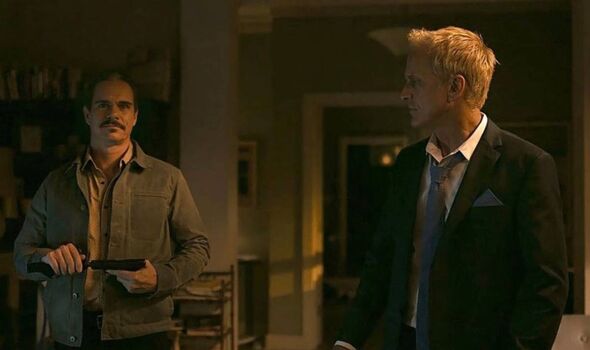
A panicked but resourceful Nacho (Michael Mando) is on the run, having no place to go after helping fast food drug kingpin Gustavo Fring (Giancarlo Esposito) seemingly knock off suave supercriminal Lalo Salamanca (Tony Dalton), who faked his own death. He's laying low, plotting to extract revenge on Gus by exposing the Superlab, while Nacho's taking heat from both sides and inevitably can't survive much longer. 

Nacho's exit is both tragic and heroic, carried by the intensity of Mando's performance and the idea that, despite poor choices, he follows a code of honor that Gus' future right hand fixer Mike Ehrmantraut (Jonathan Banks) can appreciate. In protecting his father Manuel (Juan Carlos Cantu) Nacho makes the ultimate sacrifice, going out on his own terms and in a blaze of glory, putting the screws to the wheelchair bound, bell dinging Hector Salamanca (Mark Margolis) one last time. Of course, Gus is smart enough to know Lalo is very much alive, quietly preparing himself for war when he reemerges.  

As charismatic mastermind Lalo, Tony Dalton slid in to fill the void left by Michael McKean's exit as the show's central antagonist. And did he ever deliver, playing this sociopath so frighteningly and entertainingly that we don't want to see him go, while knowing full that departure is a must given the circumstances. His final stand enabled Gilligan and Gould to again do what's become their trademark: methodically and deliberately subverting audience expectations. All this while Jimmy and Kim reach the finals stages of their elaborate plan for Howard which, due to Lalo's reemergence, carries catastrophic consequences. 

Taking what Mike likes to call "Bad Choice Road," Kim can't help but turn her car around and finish the Howard scheme with Jimmy, marking an amoral point from which there's no coming back. And in doing so she throws away Cliff Main's (Ed Begley Jr.) invitation to continue doing what she loves, instead doubling down on discrediting Howard to force the Sandpiper case settlement. While it's difficult to watch Kim tragically sink even lower than Jimmy, the character's behavior is consistent with what we know of her, and far from a total blindside. 

Flashbacks to Kim's relationship with her alcoholic mother as a child isn't meant to explain, excuse or even provide a reason for all this, but they do offer context about who she is and what motivates these choices. Barely parented at all in a household where duplicity was rewarded, it makes sense she'd gravitate toward upholding the law. Unfortunately, it also tracks that she'd be drawn to the thrill and excitement of breaking it that accompanies her relationship with Slippin' Jimmy. And now they've gone too far, by a lot. 

Patrick Fabian's series-long performance Howard Hamlin might be its most underappreciated, with the character initially earning viewers' disdain for reasons that have more to do with how we'd expect him to be portrayed on a lesser show. Largely respecting Jimmy's hustle at HHM, he was always in an awkward spot trying to carry out Chuck's dirty work. Even if there were moments of Howard mistreating Kim, she and Jimmy aren't doing this out of vengeance, but because it's fun, which is far worse. 

Despite resenting Howard for healthily coming to terms with Chuck's death, even Jimmy expresses hesitation before "successfully" seeing through the plan that paints Howard as a cocaine addict and demolishes his reputation. Lalo's arrival in their apartment feels like the tragic culmination of Jimmy's cartel involvement and Kim just not knowing when to quit. They are toxic for each other and the Sandpiper payout is now blood money, with Mike swooping in to clean up what's become their defining mess. Easily the show's most victimized character, Howard was at the wrong place at the wrong time, and just the kind of loose end Lalo wouldn't think twice about eliminating.

The legal and cartel worlds of the show collide in the most literal sense with Lalo and Howard sharing a grave under what will eventually become the Superlab. But if if we know one thing about Mike it's that he doesn't like innocent people being dragged into the "game." His instructions to delicately handle Howard's corpse is in line with the code he's always operated under, or at least convinced himself he has. The talk with Nacho's father reveals a cold, harsh dose of reality that not everyone lives for revenge. No matter what he tells himself about how he's not the bad guy, none of it will bring this man's son, or his own. Shot behind bars in that scene, Mike's in a prison of his own making, and like so many of the show's other characters, he can't seem to break the habits destroying him.

As for Gus, the events leading to his Superlab showdown with Lalo have exposed a more vulnerable version of the coldly calculating crime boss from Breaking Bad. Scared, flustered and not fully in control here, he gets the job done nonetheless, setting the stage for the criminal mastermind we'll get later. But he isn't that until he outsmarts Lalo, still laughing and smiling as he draws his last breath. He may have done too good a job conning everyone, as Hector's carried away by the cousins in his wheelchair, still ringing that bell.

Gus gets a brief, fleeting moment to bask in his victory, which reveals more about him personally than we've gotten in either series thus far. His bar scene with wine sommelier David (Reed Diamond) initially presents itself as a throwaway until you realize the writers acknowledge the biggest elephant in the room while giving us a rare look at the man outside his work element. Seeing him flirting and connecting with another person proves there's a human in there somewhere, with the sad coda being that the criminal life he's chosen dictates a world that could never include anyone else. Like Mike, he's dedicated himself to revenge, but gets a rare breather to take it all in before the real action starts in about four years.   

In so many ways, episode 6.9 ("Fun and Games') serves as Better Call Saul's true finale, putting a bow on this era and timeline, not to mention also Kim and Jimmy. HHM dies with its last surviving partner and Howard's memorial is attended by the only two people who know he wasn't a suicidal drug addict. Taking Mike's advice, they are doing their best Laurence Olivier and Meryl Streep, as to not arise suspicion in his grieving widow, Cheryl (Sandrine Holt). But Kim takes it further by outright gaslighting her, recognizing the need to completely squash Cheryl's suspicions in order to cleanly close this out. 

That was the last time. Kim's done, even if she won't be able to live with herself afterwards. Unlike the self-denying Jimmy, they'll be no pushing it down or waking up one morning to discover she hasn't thought about it. At this point she's right that together they're poison, bad for each other and everyone around them. And as Kim packs up and leaves, we're reminded of all the forthcoming danger she thankfully avoids, and how differently both will process this moment. Enter Saul Goodman.

The shocking flash forward jump from Kim leaving Jimmy to Saul waking up in his rotating bed next to a sex worker speaks volumes. We see him picking out flashy suits and ties while perfecting his trademark comb over in the same mansion authorities were cleaning out in this season's first episode (golden toilet and all). 

Hopping in the Cadillac and yelling at Francesca (Tina Parker) through that earpiece, we buckle up for the Breaking Bad era, only to realize we're still a few years away from when high school chemistry teacher Walter White walks into his office as "Mr. Mayhew." Gilligan and Gould know there's little reason to retrace those same steps or follow Saul any further, at least for now. More thematically relevant glimpses of that will come during Gene's journey in the 2010 timeline, which is where the series spends the majority of its remaining hours.

Thinking we'd be lucky to get at least maybe one full episode centered on Gene Takavic, there are essentially four. All of them function as kind of a multi-part closing epilogue reminiscent of Breaking Bad's "Granite State" and "Felina," which served as a post-script to the electrifying "Ozymandias," still considered by many that show's unofficial finale.   

Shot entirely in black-and-white, the polarizing tenth episode, "Nippy," gives us our wish in focusing exclusively on Gene. When we last left him his cover was about to be blown by cab driver Jeff (Don Harvey), an Albuquerque native who  recognized him as the infamous Saul Goodman. That Harvey's scheduling conflict forced a recast oddly ended up working in the story's favor. 

A small, but key part that grows in importance, Harvey briefly portrayed Jeff as slightly menacing and threatening, causing us to further commiserate with Gene. This season, Pat Healy steps into the role and his very different take on Jeff coincides with the evolving dynamic, as Gene commits to handling this guy himself and asserting control, revealing a more hapless, pathetic side to Jeff that Healy knocks out of the park. 

The jaunty, immensely enjoyable department store caper Gene orchestrates (recalling early Slippin' Jimmy scams) isn't exactly high stakes, but that's not the point. It's a gateway to get Gene out of his rut and back in the game, albeit in the unhealthiest way possible. Still, seeing him socialize again and befriending the mall security guards (in an incredible montage) is a stark reminder of how much he's missed any kind of human connection. And Gilligan and Gould's use of 89 year-old comic legend Carol Burnett as Jeff's mother Marion pays off in ways no one could have envisioned when her inclusion was surprisingly announced for the final stretch. Gene's wrangling her into his con but that she takes an immediate liking to him is only natural considering Jimmy's long history with the elderly. But it also makes the attempted manipulation of her especially cruel, even by Saul's lowest standards.   

Any hesitation viewers had in fully embracing "Nippy" as a standalone are entirely erased in the subsequent Thomas Schnauz-directed episode 11, "Breaking Bad," which contains the eagerly awaited appearances of Walter White and Jesse Pinkman, with many guessing exactly how they'd return. But what few anticipated is how relevant their scenes would be to Gene's plight. Since it was the Breaking Bad episode titled, "Better Call Saul" that first introduced the sleazy criminal lawyer into Walt and Jesse's orbit, it's only fitting they both now reappear in this Better Call Saul episode, which flashes back to that initial encounter in the desert, but with a twist. 

Abducted by a masked Walt and Jesse and kneeling over an open grave, Saul's frantic throwaway (at the time) line about Lalo and Ignasio takes on deeper significance now that the series has retroactively explained its inclusion. But it's the other previously unseen conversations between the three men in the RV that's more important. Besides the thrill of seeing Walt and Jesse bickering again, we're confronted with the fact that neither of them would have gotten as far as they did without Saul, who saw his opportunity and took it, despite Mike's warnings. He just couldn't leave well enough alone, as history repeats itself in Omaha with Gene attempting to relive his Saul glory days, neglecting to acknowledge that's what caused his downfall. 

Gene thinks he's found a new Walt and Jesse in Jeff and Buddy (Max Bickelhaup), but he's really just an addict using whomever and whatever is at his limited disposal to get a quick Saul hit. The teased fifth season phone call to Francesca was from Gene, but it's not the important one. Sure, he gets an update on how hot the situation is, our confirmation of Jesse's El Camino status and what's happened to some remaining players, but the real thrill comes in him dropping the Gene guise for a couple of minutes, even if a justifiably aggravated Francesca wants none of it. 

It's the mention of Kim in Florida and his subsequent call to her that pushes Gene off the deep end. The identity theft scam Gene ropes Jeff and Buddy into (another great montage) is uncharted territory in both its pointlessness and physicality. He doesn't need the money, but has now resorted to drugging people and breaking into their homes for kicks. Buddy's refusal to rob kindly cancer sufferer Mr. Lingk (Kevin Sussman) doesn't trigger Gene's sympathies, but rather reignites his disdain for another cancer patient, Walter White. "We're done when I say we're done." Unfortunately, he'll have to do it himself this time

Risks be damned, he breaks into Lingk's house, making no effort to cover his tracks, as if he wants to be caught And if that call with Kim completely destroyed him, it's also brought this addictive opportunist back to the surface, as Schnauz cuts between this break-in and a flashback of Saul entering Walt's school, confirming that some things never change.While all this doesn't exactly reimagine events, it reframes the character of Saul in Breaking Bad as something more dangerous than just a sleazy criminal attorney.  An instrument of destruction who saw an opportunity and pounced, he propped up a chemistry teacher who would have otherwise been killed by the cartel or DEA within a couple of months, just as Mike had predicted. Walt was a monster, but Saul's been conveniently ignoring his own role in unleashing him.  

To see what's become of Kim Wexler six years after she last saw Jimmy is jarring, knowing that so many of her most identifiable, positive characteristics have been suppressed or buried in the wake of what they did to Howard. But unlike Jimmy, she's painfully aware of it and determined to punish herself on a daily basis. Working a 9 to 5 office job at Palm Coast Sprinklers, Kim chats with middle-aged Karens, wears dowdy clothes and struggles over the choice of mayonnaise or Miracle Whip with a boring live-in boyfriend. Her blonde ponytail replaced with brunette bangs, there's nothing inherently wrong with this new life other than who's leading it. She didn't have to change her identity or live in constant fear of the authorities like Gene, but this isn't her.

Always certain of what she wanted, the most alarming aspect about 2010 Kim is her indecisiveness, as if she feels making any choice will lead to disaster. This is a different kind of prison than surrounds Gene, but one that's intentionally safe, mundane and filled with predictable routines. The tragedy comes in knowing she's not doing what she loves and was always best at: practicing law. When we do eventually see their phone conversation, all she can legally and morally offer him is silence, along with relief he's still alive. But when he lashes out in response to Kim's suggestion he turn himself in and flips it all back on her, the realization sets in that she can't do this anymore. It's time. 

Kim's return to Albuquerque is a depressing reminder of how the years have marched on, leaving everyone from the past behind. Mike's former parking attendant job has been replaced by a machine, "Better Call Saul" benches now bare ads for defense attorney Bill Oakley (Peter Diseth), and saddest of all, Kim watches a young, idealistic lawyer prepping her client for court. HHM is a distant memory, as are Howard, Chuck, Jimmy and herself. It didn't have to be this way, but it is, and while we can't read all of the affidavit Kim brings to Cheryl, we see enough to know it's a full confession. And Gus, Mike and Lalo all being dead still may not eliminate the potential consequences for her. That's ultimately up to Cheryl. 

It's revealing that Kim doesn't let Cheryl know Jimmy's alive, still protecting him to some extent. The picture of steely composure and certainty for six seasons, it's taken this confession for her to finally let it out, with Rhea Seehorn delivering her most powerful acting moment in the series when the tears start flowing on the bus. Uncomfortable to watch, but necessary to have happen, it's one of many literal invocations of the Gilligan written and directed episode's title, "Waterworks," his first pulling double duty since Breaking Bad's finale. It was worth that wait.

The affidavit isn't the only legal document we see in the episode, as Saul stalls and anxiously awaits Kim's arrival to sign divorce papers at his "Cathedral of Justice" back in 2004. If his attitude wasn't enough to convince her the Jimmy she knew is long gone, the clientele sitting in his office seals the deal. One of them is drug dealer Emilio (John Koyama), who just so happens to have a hoodie and baggy pants-wearing friend waiting for him outside in the rain. Did we absolutely "need" a scene with Kim and Jesse? Plot-wise, probably not. But under the circumstances it definitely makes sense enough not to feel shoehorned in, representing what might be the ultimate overlap of both series. It's fan service, but totally works since the two characters occupied such similar roles in their show's separate but interlocking universes. 

At opposite ends of their respective journeys, Jesse recognizes Kim from representing Combo and briefly expresses some doubts about this Saul guy. In an alternate world she warns him, and even if the events of Breaking Bad still happen, maybe they don't go as far? It's the earliest incarnation of Jesse we've seen, but you sense even in this brief interaction that he values this woman's legal advise or he wouldn't have asked. But after signing of those papers, she understandably wasn't in the mood. Is Saul Goodman a good lawyer? "When I knew him, he was." It's as diplomatic an answer as Kim can muster considering she really doesn't know him at all anymore.

A now middle-aged Aaron Paul steps back into an early twenties Jesse and plays him as he always did, with some clothing, lighting and camera angles taking care of the rest. This appearance probably works better physically than the previous episode's RV scenes with Cranston and Odenkirk, where he had only half a mask to hide his head and face and was frequently shot in close-up. The voice is noticeably deeper but that adjustment is out of the way quickly as he falls right back into all the Jesse mannerisms we know and love without skipping a beat. Since he's much younger than Cranston, his aging could have been a distraction, but they do as good a job as possible making it an afterthought, allowing us to excitedly lose ourselves in Cap'n Cook's return. 

While Kim struggling over how much or little her confession numbs the guilt, Gene hits rock bottom. It comes not when he considers smashing Lingk over the head with his deceased dog's urn, but during a final interaction with Marion, who he greatly underestimated. Besides watching two comedic geniuses in Burnett (who's guest Emmy worthy) and Odenkirk go toe-to-toe in a tension-filled scene as deadly serious as anything in Breaking Bad, it's only fitting that a senior citizen bring him down. Marion's discovery of those "Better Call Saul" commercials on her new laptop shows he let his guard down, playing it a little too loose in corrupting poor, deluded Jeffy.  

Gene tightening the phone wire in his hands as he approaches Marion just might be the most terrifying moment in the history of the series. We believe he could kill her and it's only when she tells him, "I trusted you" that something breaks through, perhaps reminding him of his better days practicing elder law. That was when Jimmy stuck up for people like Marion, who's now looking into the eyes of a desperately unhinged Cinnabon manager. When he lets go and she presses the Life Alert button, he's forced to flee, with the tiniest hint that maybe a piece of Jimmy could be left after all. 

If "Waterworks" is Seehorn's showcase, then the Peter Gould written and directed series finale "Saul Gone" belongs to Odenkirk, who's never gotten the chance to play as many versions and personas of this character within a single episode. It's a trip, but one that won't draw comparisons to "Felina," which saw Walt storm back into ABQ like an avenging cowboy, gunning down Nazis and rescuing Jesse before going out in a hail of bullets. That was great, but this show isn't Breaking Bad, the recognition of which has always been one of its most valuable attributes. 

Different in tone and tenor, Gilligan and Gould drew from its predecessor's blueprint to craft an intimate, character-driven series that's a little more cerebral, trusting patient audiences to feel rewarded by their attention to detail. So much of the show's drama has been built on characters using their intellect to wiggle out of insurmountable dilemmas. And given how it all started, it's oddly appropriate the last episode contains nearly every element that's characterized its impressive run. 

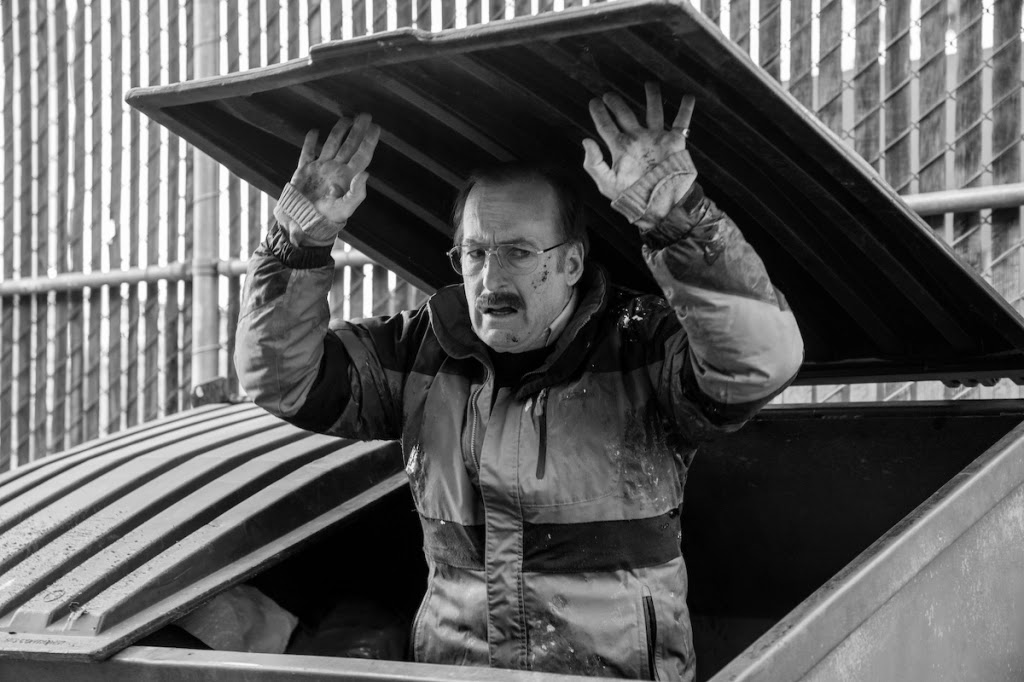
Within minutes, Gene is appropriately apprehended in a garbage dumpster, and just like that, he's back in the system, hilariously calling upon former legal nemesis Bill Oakley for help. But sans mustache and in full Saul mode, he doesn't need any help so Bill's forced to only sit back and enjoy the ride. Facing a laundry list of charges and staring down a life sentence plus 190 years, the master goes to work, manipulating the feds into agreeing to a sweetheart of a plea deal. 

Once more, Saul uses the truth to spin an elaborate lie, while a visibly disgusted Marie Schrader (a returning Betsy Brandt) listens to his story about being threatened and intimidated into doing the dangerous Heisenberg's bidding. He knows it only takes one juror to believe it, and the feds fold, offering him an unprecedented seven-and-a-half year sentence. But for Saul for real revelation comes next when he hears of Kim's confession. It may take away what little leverage remained, but he was just toying with them anyway. Suddenly the satisfaction of screwing the system again doesn't seem quite as enticing as before. 

The idea that Saul, and human beings in general, are incapable of change is explored in three pivotal flashbacks involving Mike, Walt and Chuck. All of them are long gone, but in previously unseen moments he spends with them, we witness a different side of Saul, seemingly lost and looking for help, yet still not quite ready to own up. And while he's clearly trying to own up to his mistakes, did he ever find the three wrong people to turn to for guidance. 

Mike might be the exception, as we flash to a conversation during the memorable fifth season "Bagman" episode where he and Jimmy were stranded in the desert. At least he sees Jimmy's hypothetical time machine scenario as an opportunity for introspection, citing the day he took his first bribe as the moment he'd change. But despite clearly presenting that question in hopes that Mike can coax the truth out of him, Jimmy again buries his true feelings and changes the subject. 

Confirming predictions of many, Cranston's second Walt appearance arrives via Breaking Bad's penultimate episode, "Granite State," when he and Saul briefly roomed in Ed the disappearer's vacuum store before separately starting over with assumed identities. This is end game Heisenberg and it's amazing how Cranston can just pick up exactly where he left off in attitude and demeanor, with Walt insufferable as ever. Arrogantly dismissing Saul's time machine question as scientifically impossible, he at least cuts to the core of the issue by recognizing that he's actually asking about regret. 

Further confirming what a pompous blowhard he is, Walt starts in again with his arguable, unproven claim Elliott and Gretchen forced him out of Gray Matter. Always the victim, nothing is ever his fault, but unlike Saul, it wasn't circumstances that changed him. Prideful and desperate for respect, "Heisenberg" was always bubbling under the surface, looking for an excuse to emerge. 

It's telling that's Walt again blames his biggest regret on others, conveniently overlooking all the chaos and death he initiated afterwards. But confounding us again, he stares at the watch Jesse gave him, implying maybe one other regret, which we know he eventually makes right. If even Heisenberg can reach some sort of realization about his selfishness, it's definitely not too late for Saul, who wasn't "always like this," as Walt accuses. That's a description better reserved for himself.

Saul won't admit in either of those two conversations that his biggest regret is Chuck, and while it wasn't a given Michael McKean would reappear in a finale, how could he not? There's enough blame between the brothers to go around and both could have made better choices, but it feels momentous to revisit the very early days of the series (or just before it started), with Jimmy making those deliveries to Chuck's house. He did a lot for his older brother while getting nothing but grief and judgment in return, but this scene (besides revealing the origin of "The Time Machine" book confiscated from Saul's mansion) shows a different side to that. Aside from the mental illness, Chuck was also lonely and isolated, to the point that it's kind of sad to see him genuinely wanting to connect with Jimmy and get nowhere, mainly because neither will budge.

Chuck's obsession with sabotaging Jimmy's legal career was a self-fulfilling prophecy, helping to create the "chimpanzee with a machine gun" he intended to stop. And after Jimmy realized he'd never get his brother's love or approval, he went about destroying him instead. 

Chuck and Jimmy may have been incapable of change, but they share a couple of small moments here that hint a common ground could have possibly been reached if both tried a little harder. Of the finale's three tremendous flashbacks, this is the deepest and most consequential, especially considering what follows.

After getting the call from DA Ericsen (Julie Pearl) that Saul's testimony in Albuquerque could negatively affect her, Kim enters the courtroom fearing the worst. It's "showtime" alright, but with a big catch, as he repeats his Heisenberg sob story to the judge before making a dramatically sharp turn into the truth that seems to surprise even him. 

With Bill hilariously flailing to withdraw himself from the case as the feds look on in delight, Jimmy  torpedoes his meager seven-and-a-half year sentence to admit he facilitated Walt's worst crimes. His voice cracking and trembling, he not only takes full responsibility for what happened to Howard, but also the cancellation of Chuck's insurance that led to his suicide. Now Kim knows he's for real.

Jimmy seeing the person he most respected and accepted him for what he was come clean proved to be the example he couldn't get from Walt, Mike or Chuck. Unlike them, he was able to break the cycle. There's nothing in it for him when he throws away that sentence to spend the next 86 years in prison, other than Kim's potential forgiveness. And his own peace of mind. 

Jimmy can't control Cheryl's potential civil suit against her, but does the right thing anyway, dropping the mask and finally being honest with himself. The almost invisibly subtle change in Seehorn's body language and facial expression while Kim watches confirms this breakthrough, as does the buzzing of the EXIT sign, a brilliant visual nod to Chuck's courtroom meltdown in "Chicanery." Saul's gone but "James McGill" will get to share another smoke with Kim as a tiny bit of color reenters their world, coming full circle from the series' pilot episode. 

This is about as "happy" an ending as Jimmy could have gotten considering the circumstances, and judging by the prison inmates' enthusiastic reaction to meeting the legendary Saul Goodman, he'll be just fine not having to constantly look over his shoulder as Gene. Kim just might be okay too, as her volunteering at that legal office indicates she may now feel somewhat freed of the burden that's held her down.

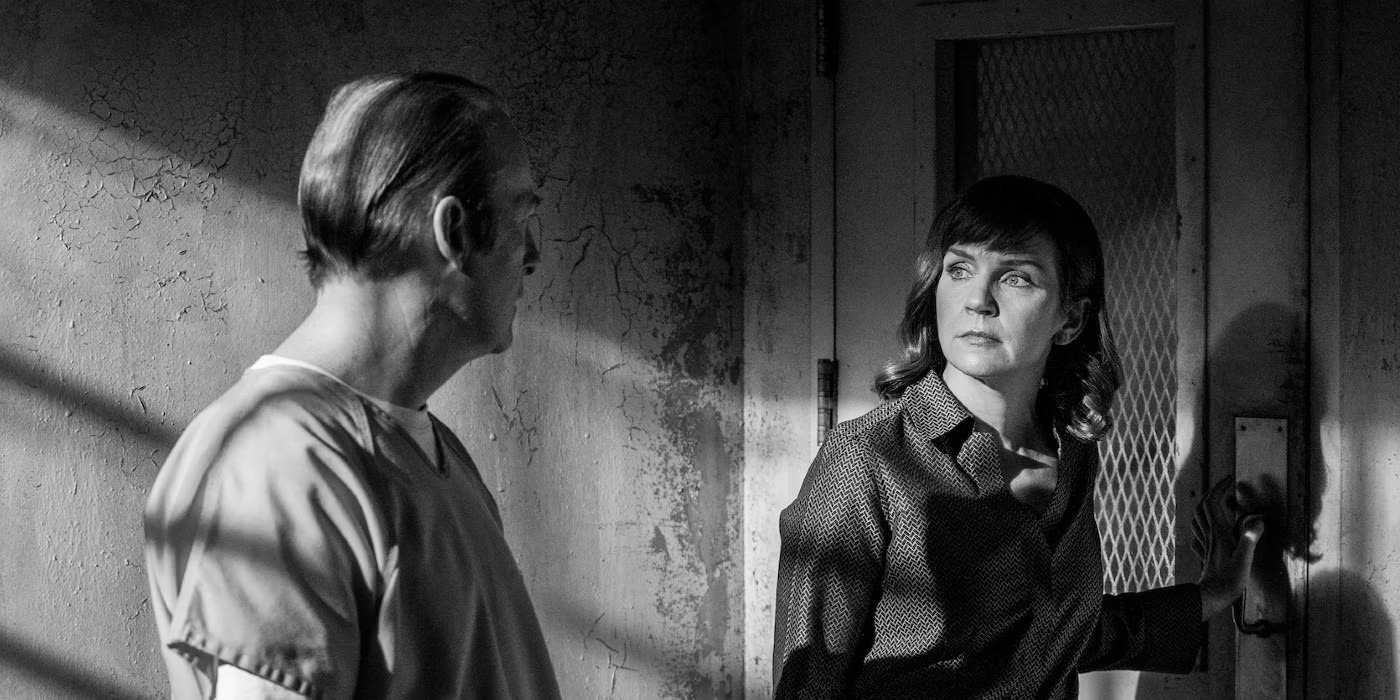
When Kim visits Jimmy in prison, she's carrying herself differently than we saw in Florida, showing small signs of her old, confident self. And despite using her unexpired New Mexico bar license to get in, it's fair to say that'll be the extent of her future scamming. 

It's possible Kim resumes practicing law again somewhere, maybe even working to have Jimmy's sentence commuted. When he gives her the finger guns as she leaves, it's hard not to acknowledge the possibility this isn't the final time they see each other. Or at least we can keep telling ourselves that.

Better Call Saul succeeds where most finales don't in absolutely sticking the landing, with every scene, line and visual choice purposefully building to a conclusion that was in the cards the entire time, while still managing to completely surprise. And that's not easy when you're constructing a prequel where more than a few events and character fates are predetermined. Its final hour and a half not only works as a hits compilation, but the concluding moments spotlight what the entire story was about. So many finales fail at this, instead settling to safely sign off in a manner that upsets the fewest fans. 

If Breaking Bad was about Walt's love for "Baby Blue" this was always all about a very different, more complicated bond between Kim and Jimmy. Initial skepticism about the show's direction played out over multiple seasons, but Gilligan and Gould had a game plan, adjusting accordingly as they went along to ensure all the pieces fit. And now as this entire universe presumably comes to a close, there's a new yardstick against which all future TV spinoffs and prequels can be impossibly measured.