Showing posts with label Danny Boyle. Show all posts

Sunday, September 22, 2019

Yesterday


Director: Danny Boyle
Starring: Himesh Patel, Lily James, Ed Sheeran, Kate McKinnon, Camille Chen, Maryana Spivak, Lamorne Morrise, James Corden
Running Time: 116 min.
Rating: PG-13

★★★ (out of ★★★★)  

If Oscars were handed out for story ideas and concepts, it's likely anyone involved with the one at the center of Danny Boyle's Yesterday would be preparing their speeches. Unfortunately for them, no such category exists, and for good reason. Movies still have to be written and directed, wherein we discover if the execution of those ideas successfully translate to the screen. It would seem the pairing of Academy Award winning Slumdog Millionaire director Boyle and Love, Actually screenwriter Richard Curtis on a film envioning a world where The Beatles never existed would be the closet thing to a sure bet there is. I'd even go as far to say it contains one of the best premises for a movie we've heard in years. Calling it a "can't miss" is likely underselling its potential, which seemed limitless from the moment it was announced.

While its theatrical trailer appeared to have given away too much, it's still fair to say expectations remained very high going in. Especially when they somehow found a way to license the Fab Four's entire catalogue, cleverly incorporating it as a plot device that guarantees we'll listen to the songs in a way we haven't before, watching the reactions of characters discovering it for the first time. It could also work as pop culture commentary, glimpsing how it would be received, marketed, and promoted in today's wildly different music landscape. We do get some of that. Kind of. Mostly in its promising first half, before veering way off course and making me about as frustrated as I can recently remember about a film's squandered potential. Despite being recommendable on just about every level, you can't help but be bothered by what it isn't, delivering what has to be the cruelest kind of tease. It succeeds due to a winning lead performance and a film's worth of Beatles' covers that are excellently performed and presented, but that inescapable feeling it could have been so much more still lingers after the credits roll.

Jack Malick (Himesh Patel) is a struggling singer-songwriter from Lowestoft, England whose manager and childhood friend, Ellie Appleton (Lily James) keeps encouraging him not to give up on his dream, even as he continues to perform in empty dive bars, coffee houses and music festival  tents. About ready to quit and return to teaching, Jack's hit by a bus during a global blackout, landing him in the hospital with multiple injuries. When he gets out and sings "Yesterday" for his friends, the realization sets in that they have no idea who The Beatles are.

When a quick Google search results in insects rather than the band, Jack's suspicions are confirmed, as he's awakened to a world where only he's heard of John, Paul, George and Ringo. Unsure whether they never existed or no one remembers them, Jack begins performing their songs and passing them off as his own, attracting the attention of pop star Ed Sheeran (as "himself"), who asks him to open on the Moscow leg of his tour. You could probably guess which song he picks.

It isn't long before Sheeran's cold, money-hungry agent, Debra Hammer (Kate McKinnon) gets her claws into Jack, signing him to her label and carefully orchestrates her newest superstar's meteoric rise. As his career takes off, it becomes clear something's missing: Ellie, who's opted to stay behind to continue teaching. As they wrestle with their feelings for one another, Jack reluctantly basks in the newfound fame while also wrestling with the guilt of having plagiarized The Beatles' biggest hits. Not to mention his fear of being found out.

If there's one thing this film does exceptionally well, it's incorporate The Beatles' music into the story in a natural, unforced way. It's a welcome change of course after the last major release to earn that legal right, 2007's Across The Universe, which attempted to shoehorn their songs into a single narrative, with wildly mixed and forced results. Having played more like a collection of music videos starring characters we cared little about, it was easy to understand the lukewarm notices. Dramatizing the lyrics and content behind their songs was always going to be an uphill battle so it's a relief that this film doesn't even attempt to try.

It's as a tribute to the band's music and legacy that Boyle and Curtis score the most points, its premise practically demanding a closer look at what they've meant, regardless of how well that idea's seen through until the end. But their biggest accomplishment is in finding a virtually unknown singer and actor who can deliver two hours straight of immensely innofensive Beatles covers that remind us just how fun their music can be. While it seems strange to need a reminder of that, there are times their legacy seems so daunting it would feel like homework for the uninitiated, if such a group exists. There's a lot to like in what's done with the arrangements of these songs and how the story necessitates their inclusion rather than the other way around. They're updated and tinkered with just enough and Himesh Patel has a really pleasant voice and presence for delivering them as intended, in addition to an everyday charm well suited to the monumental predicament Jack finds himself in. Of everything, the music was the one aspect the film absolutely had to nail, and it did.

The question of whether or to what extent the public would embrace the Fab Four's music if released by a modern artist in present times is handled fairly well, wisely observing that no matter how great art is, it still needs to catch on. And more often than not, people actually need to be told how good something is before they feel comfortable fully embracing it and spreading the word. In this sense, Curtis' script is accurate in so far as depicting that just singing these hits won't be enough. One of the best scenes involve Jack singing "Let it Be" for his disinterested family and receiving an even chillier reception when performing more of their classics for local patrons. Or Sheeran's insistance on changing the lyric of "Hey Jude" to "Hey Dude."

If there's anything to extract from this, it may be the realization that our culture actually does need agents, critics and the media to open our eyes to quality if it isn't otherwise receiving exposure. Would The Beatles be as revered if they came along in an era where TV wasn't simultaneously taking off in popularity and didn't have the platform of shows like Ed Sullivan's? If no one told us how great they were, would we ever know? Or is the music strong enough that it didn't matter? Maybe that philosophizing gives Curtis' screenplay more credit than it deserves, but the very idea does make the mind race with implications and possibilities. So there's that.

Casting Ed Sheeran as the unwitting mentor Jack leans on to get The Beatles' work to the masses makes for a strangely good fit. His role's actually larger than expected and the highest compliment that can be paid is that his presence doesn't feel like a celebrity walk-on, as he blends into the movie's hypothetical universe fairly well. And that him being presented as the modern songwriting bridge between The Beatles and Jack Malick doesn't come off as an abomination is likely the biggest victory he could have hoped for before signing on to this project. It doesn't require too much, while allowing the singer to poke fun at himself in a way that also matches the tone of the material. That's more than can be said for Kate McKinnon, whose caricature of a music exec seems to have been transplanted from another movie altogether.

Everything about McKinnon's character and performance as Debra Hammer is hideously misjudged, to the point that if she literally dressed up as a dollar sign it would seem subtle in comparison. If the intent was to broadly depict industry types as shallow, money hungry pariahs, this doesn't help the story in any way, especially when the agent in question doesn't seem like an actual person, much less someone Sheeran would even associate with. She has this terrible line where she tells Jack that he's just there to make her rich and the delivery is so ham-fisted and over-the-top way that you're not even sure what to make of it.

This isn't dark satire of the music industry or a parody of its many woes, so the character's mere presence causes a massive break in what was previously a fantastical, but well-grounded conceit. McKinnon somehow manages to play this at a volume of camp that's turned up about ten times higher than just described, her acting histrionics peaking at the film's finale. As she races backstage screaming something about money in a demonic voice better suited for an Exorcist reboot, you'll be asking whether it's too early to start thinking about Razzie nominations.

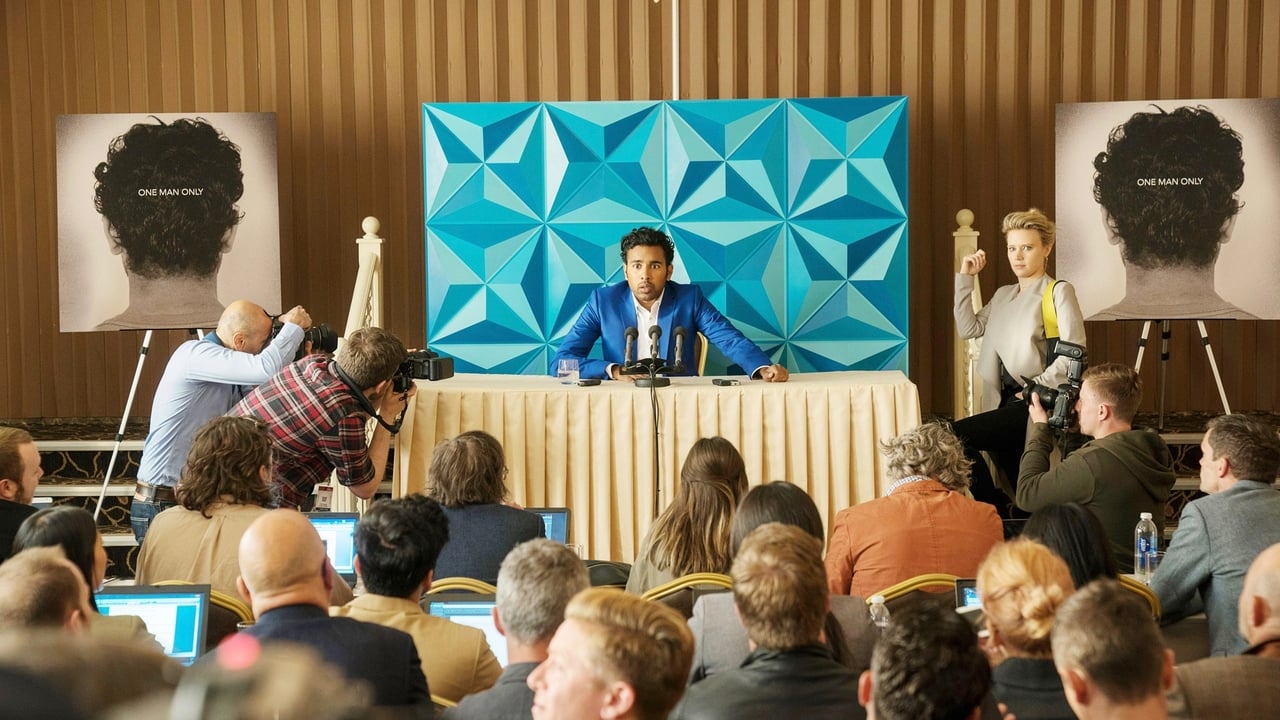
McKinnon's character does lead to an interesting boardroom scene where the marketing and promotion of Jack's album ("One Man Only") starts to take shape, with the hook being that he does everything on the album himself in a corporate age where few artists exercise their autonomy. While the irony of that title isn't lost on the guilt-ridden Jack, Curtis' script starts flying off the rails just when it should be delivering its biggest payoff, shifting focus to he and Ellie's somewhat clumsily handled romance. Like the "A" plot, it starts off promisingly, as their strictly platonic relationship develops into more as we anticipate they'll eventually realize their feelings through the circumstances of this extraordinary situation. Instead, the script forces the issue with convoluted confessions and break-ups, letting the actual story we're here for fade into the background.

Lily James is quirky and likable as usual, but it's not much of a role given that Ellie isn't really around for Jack's ascent, making it harder to invest in the relationship when she reemerges full force in the third act. Nothing really tops their enjoyable early scenes together with him as a struggling artist being unconditionally supported by his childhood friend and manager. Set against the Beatles' music, it could have made for a powerful love story, but it seems a more concerted effort was put into making sure James looks as dowdy as possible, as if to justify his delusion in only seeing her as a "friend."

Of course, the true stakes are in whether anyone finds out what Jack is doing, namely those who may somehow know of The Beatles existence, or maybe any of the surviving band members themselves, whomever they may be. The trailer doesn't spoil any of this, but I kind of wish it did since the tease we get there feels like it could have been infinitely more satisfying than what actually ended up on screen. In fact, there's more than a few details present in that trailer (like Ana de Armas' character) that didn't seem to make the final cut, implying that there may have been more production or editing issues than initially suspected.

Curtis does have a trick up his sleeve toward the end that can be considered shocking, and is probably the most satisfying in terms of delivering on the story's premise. But it's difficult to read just how we're supposed to react once you get past the actual shock value of it happening. The scene in question swings for the fences with mixed results, but about halfway through Yesterday, it was already obvious this had settled into the rom-com it was going to be. There would be no explanation for what happened or any real fallout for the main plot, as so much of what happens is in service of a fairly twee romance. The premise didn't have to go full Twilight Zone or anything, but by any standard, the resolution falls a bit short.

That audiences seem to have enjoyed the film considerably more than critics comes as little surprise since the public loves The Beatles and would likely jump at any opportunity to bask in their music, which this provides in spades. But it's almost maddening seeing a set-up with this much potential  compromised to appeal to a larger fan base, even if they found the right writer for that job. While Curtis is known for writing fluffy British rom-coms that do this, boy how I really wish he hadn't used this concept as a vehicle to do it. The bond between the two lead characters tends to function better when used as the backdrop to our relationship with The Beatles. So while it's easy to appreciate Yesterday for exactly what it is, it's still hard not getting carried away by all the possibilities of what could have been.

Sunday, November 8, 2015

Steve Jobs


Director: Danny Boyle
Starring: Michael Fassbender, Kate Winslet, Seth Rogen, Jeff Daniels, Katherine Waterston, Michael Stuhlbarg, Perla Haney-Jardine, Ripley Sobo, Makenzie Moss, Sarah Snook, John Ortiz
Running Time: 122 min.
Rating: R

★★★★ (out of ★★★★)  

During one scene in Danny Boyle's extraordinary Steve Jobs, Jobs gets into it again with Apple Computer co-founder and old friend Steve Wozniak just as he's about to reveal his new iMac to the world. As this shouting match ensues, centered around Jobs' adamant refusal to publicly or privately credit anyone other than himself, you can't help but notice a small group of young Apple employees uncomfortably looking on. They're trapped in the auditorium as these two go at each other, baring witness to twenty years of dirty laundry being aired at the worst possible time. Then you just try to imagine being one of those cringing employees in that room when this happened. Did it really happen? And if it did, how would you tell people what went down. Would anyone even believe you?

There are many such moments in the film and just as many conversations, arguments, speeches and quick witted dialogue exchanges. While loosely based on Walter Isaacson's best-selling biography, this is still an Aaron Sorkin script after all, and in case you haven't heard, Steve Jobs wasn't such a great guy. But not in the same sense that the Mark Zuckerberg character wasn't in The Social Network. He was emotionally shut off and severed important relationships to build his technology empire, but as much of that story was successfully exaggerated and even sometimes fabricated by Sorkin, there was always this fleeting glimpse of humanity in there. The final scene served as a messed up, but poignant reminder that Zuckerberg, in his own mind, did it all for a girl. At one point during this, Jobs is asked, "What's your excuse?" and it's a real treat spending all of the film's enthralling 122 minute running time trying to discover it.

Had Jobs lived to see this, he'd probably appreciate its narrative tidiness, which not only tells us everything we need to know and some things we maybe wish we didn't, but does so with laser-like precision. It focuses only on the hours preceding three product launches: The Macintosh in 1984, NeXT in 1988 and the iMac in 1998. It's a testament to how tight Sorkin's script is that anything earlier, later, or in between, isn't missed, or in most cases, is covered anyway in the conversations and confrontations taking place before he takes the stage.

Only two scenes take place outside, flashbacks are used sparingly, and yet, it never once feels like a talky stage play. If anything, it's an action movie that uses it words as weapons, the story flying by at a breakneck pace, with Boyle using a myriad of visual flourishes to make each time period look and feel different.  He brings a non-stop energy to the proceedings that stands in stark contrast from the clinical style David Fincher (who was originally attached to direct) would have likely brought to an already icy story. But for Boyle, it's the highest imaginable compliment that we're not left wondering what could have been. No matter confined and contained the setting, it always feels like the story's moving. In hindsight, he actually ended up being the ideal choice for the material.

If the ingenious structure tightens the noose on the story and its characters then it also turns the microscope on Fassbender's performance, in which every expression, line delivery and physical action seems far more important than it otherwise would. When we first see Fassbender as Jobs in 1984, it's amazing is just how little he looks like him, and then how quickly he makes us forget by so convincingly playing such a colossal asshole. Once he busts out of the gates swinging, it's clear we're in for a wild ride. An obsessed control freak who threatens and berates employees, he never admits failure or accepts blame, even when on more than a few occasions, he completely should.  And nothing represents that failure more than him cruelly denying paternity of ex-girlfriend Chrisann Brennan's (Katherine Waterston) daughter Lisa (played at different ages by Makenzie Moss, Ripley Sobo and Perla Haney-Jardine), both to their faces and in the press.

While Sorkin's script goes a certain distance in acknowledging Chrisann isn't perfect and won't soon be competing for "mother of the year," Jobs' behavior in the opening '84 section of the film still comes off as nothing less than reprehensible. And yet, the few fleeting moments he shares with the daughter he believes (or at least says) isn't his show that he's capable of being a good father only when Lisa's connecting with him at his level. That is to say on a Macintosh. For all his flaws, he at least recognizes that it would be criminal not to foster this obviously gifted girl's creativity and intelligence, causing him to open up his wallet, regardless of how much he resents her mother. We learn that education is apparently the window into Jobs' soul, or at least for most of the film, that empty void where his soul's supposed to be.

It wouldn't exactly be accurate to say Jobs' treatment of anyone necessarily "improves" throughout the course of time covered here so much as his temperament ebbs and flows unexpectedly, with Fassbender impressively sliding in and out of jerk mode on what seems like a whim. Jobs is a volatile character and he captures that, sometimes offering even the littlest tease that this guy's turned a corner or had an actual moment of self-awareness, only to slip right back into another scary meltdown.

Physically, Fassbender's resemblance to Jobs is about on par with Anthony Hopkins or Frank Langella's to Nixon, but what's strange is when we enter the infamous jeans and sneaker phase, he somehow begins looking EXACTLY like him.The complete immersion has set in, and while it's true that original choice Christian Bale would seem on paper to be the perfect choice, it's hard to envision him surpassing Fassbender's total immersion into the public idea of who Jobs is, which never approaches  imitation of any sort. He's a complicated, contradictory figure and despite two actors attempting this before him, there's still no blueprint for it, making what he accomplishes all the more remarkable.

Supporting players and events that were skimmed over, cliff notes-style, in 2013's Ashton Kutcher-starring Jobs (which took a more traditional biographical route), 1999's TNT film, The Pirates of Silicon Valley, or even in this year's acclaimed Alex Gibney documentary, Steve Jobs: The Man in the Machine, are explored in far greater detail here. More accurately, it makes everything that came before it seem like a cartoon, lacking in depth or a singular vision. Regardless of how much is confirmed to have actually happened, there is this sense (prevalent in most of Sorkin's work) that we're eavesdropping on certain conversations and incriminating backstage shenanigans that weren't intended for public consumption.

Besides pulling the curtain back on Job's dysfunctional family relationships, almost as much time is spent digging into the circumstances that led to the ousting from his own company by CEO and former Pepsi chairman, John Sculley (Jeff Daniels). Previously depicted as the out-of-touch figurehead who fired Steve Jobs in just about every version of this story put on film or in print, Sorkin's script presents an entirely different take. Played by Daniels as a wise sage with some genuine insights into both the marketing of Apple computers and its co-creator's psyche, it wouldn't a stretch to call him a father figure to Steve and the only person who understands what makes him tick.

His experience on the Newsroom making him no stranger to rattling off Sorkin's rapid-fire dialogue, Daniels elicits sympathy for Sculley and his dilemma, making us wonder if we wouldn't take the same actions if put in his shoes, contending daily with an unpredictable, insubordinate Jobs. Just the very idea of a meglomaniac like him answering to a Board of Directors is a recipe for disaster. While his ousting was the first time he ever seemed to take something personally, Sorkin squashes any notion  he was somehow humbled by this or even the subsequent failure of his own competing NeXT venture. Instead, Jobs' return to Apple is depicted as the latest frightening chapter detailing his unhealthy obsession with proving himself.

As uncompromisingly as Jobs is portrayed, there's still this undercurrent that he really did something right to have inspired such loyalty in those he frequently mistreated over the years. It comes to a point where you have to wonder whether they're just asking for it, constantly coming back for more, even long after he seems to have outgrown his use for them, and they for him. Seth Rogen plays Woz as Seth Rogen playing Woz, and for this film's mission, that actually works quite well. He's a likable schlub whose request for acknowledgment of the Apple II team's contributions by Jobs spans over a decade and falls on deaf ears. The practical engineer to Jobs' big picture designer, this was a partnership always destined to crumble, as flashbacks to the garage show us.

Original Mac team member Andy Hertzfeld (Michael Stuhlbarg) is yet another victim of that tyranny, but handles it better than just about anyone, even managing to completely turn the tables on him at one point. But it's Kate Winslet's Joanna Hoffman as Job's right-hand woman and marketing executive through the years who serves as the rock of the film. The only person capable of standing up to him and winning, she's the constant presence guiding Steve in the right direction by reigning him in and cooling him off. Whenever his raging ego careens out of control to continuously threaten everything he's created, she's there to talk him off the cliff.

The character of Joanna is so strong, and Winslet's work so economical and invisibly efficient in every scene, that by the end you're convinced she's as much responsible for his success as the man himself, by simply refusing to let him self-destruct. But even she has her limits, justifiably sickened by the one thing she can't fix on her own: His relationship with his daughter. She can push but it's up to him to do the rest. Although the last scene comes closest, there's no epiphany of eureka moment where Steve Jobs suddenly becomes a heartfelt guy or great father. Rather, there's this sense the needle maybe moved just enough, his failures making him slightly more open as a person than the monster we met in the opening scenes. That's why what Fassbender pulls off is something akin to a highwire act without a net, capturing the mercurial behavior of someone you'd find impossible to like or admire, yet still begrudgingly feel forced to respect.

Jobs has his loyal followers and gets the desired results, presenting the question of whether the same qualities that define his moral failure as a human being also qualify him as an effective leader. We're left trying to reconcile the fact that this forward-thinking genius who bettered so many lives could have also been a deadbeat dad and raging egomaniac. Do the ends justify the means? It turns out what little love he had was poured into his machines, leaving very little to the one person most deserving. His biggest design flaw may have been himself, but we were lucky enough to reap the benefits. Much like The Social Network, Steve Jobs is a perfect film, not for what it says, but how, utilizing an exciting structure to thematically capture one of the most contradictory figures of our time.
          

Wednesday, September 11, 2013

Trance


Director: Danny Boyle
Starring: James McAvoy, Rosario Dawson, Vincent Cassel, Danny Sapani, Wahab Sheikh, Matt Cross, Tuppence Middleton
Running Time: 101 min.
Rating: R

★★★ ½ (out of ★★★★)

Blurring the lines between fantasy and reality, dreams and nightmares, and the conscious and unconscious, Danny Boyle's Trance plays as if Memento,Vanilla Sky, Eternal Sunshine of the Spotless Mind and Inception were mixed in a blender to create a concoction Alfred Hitchcock would have appreciated. The few ads there were when it was released try to sell it as a heist movie, and while there is a heist, this is more. Going into details beyond a very basic description is impossible considering if I told you even half of what went on in this movie, you wouldn't believe it. There's twist on top of twist for nearly all its running time and when it ended it occurred to me that I hardly even remember anyone talking about the film when it was released.

Despite relatively strong reviews and an Oscar-winning director behind the lens, this came and went without so much as a peep. As challenging and ambitious as anything released in the first half of the year, it's only drawback might be that the screenplay is almost too intelligent and original, threatening at points to overtake the character-driven element, which is also incredibly strong. And yet that risk is also part of the fun. It also takes the usually tired plot point of hypnosis and does something surprisingly deep with it, turning over on itself so many times I nearly lost count. With mind blowing visuals, one career high performance, kinetic energy and a hypnotic pull of its own, the movie is fittingly hard to shake from memory.

When art auctioneer and gambling addict Simon Newton (James McAvoy) finds himself owing a massive debt, he works out a plan with the dangerous Franck (Vincent Cassel) and his henchmen to rob his own auction house and steal the multi-million dollar painting, "Witches in the Air," by Francisco Goya. But the meticulously planned heist goes awry as Simon is knocked unconscious and in critical condition, greeted as a hero by the media when he eventually comes to. Suffering from amnesia and with no recollection of what he did with the painting, a furious Franck and Simon agree he see a hypnotist in hopes of jogging the repressed memory and locating the painting. That hypnotist is Elizabeth Lamb (Rosario Dawson), who ends up getting way too personally and professionally involved, to the point that we really start to question what's wrong with this woman and what her exact motivations could be. And everyone's motivations are constantly changing and allegiances shifting as they inch closer to retrieving Simon's memory of what happened that day. But what starts as an attempt to glean a single piece of information becomes more complicated, shaking the very foundation of what's real and what's imagined. 

With a fascinating fast-paced, narrated prologue that takes us inside the auction house detailing the  security plans and procedures in place to prevent a theft, it would be easy to think from the onset that we really were going to be watching a standard (if exceptionally well-made) heist film in the Scorsese mold. Then things start to become a blur, but not because the plot is necessarily complicated per se. What might be the most thrilling, impressive aspect to Joe Ahearne and Jon Hodge's script (adapted from Ahearne's own 2001 British TV movie) is just how straightforward and grounded it is. When the hypnosis comes into play, there's nothing too crazy like the characters entering each others minds or anything like that. Despite being under hypnosis at various points, it never feels as if anyone is acting without their own free will and memories are not accessed unless the subject is psychologically open and avialable to doing so. Of course, Simon isn't for a variety of reasons, which is where most of the drama lies.

All three of these characters have secrets and as they come out we find ourselves shifting our allegiances and support as much they do. In a gutsy move, there really are no heroes or villains here. Just complex characters using each other to get what they want, even when what we think they want is constantly in flux. And it's about much more than the painting. Dawson's role at first glance almost looks like it will strictly be a supporting one, as Elizabeth is cleverly introduced as what looks like a plot device, or at best a vehicle to further the feud over the painting. But with each passing scene the part seems to just grow in importance to the point that it overtakes the entire film in unanticipated ways. Strangely, it's really the first time Dawson's been dramatically tested in a major high profile role, and she responds by delivering the best performance of her career. Not only is she completely believable as a hypnotherapist, but as the mind-bending plot unravels with all its twists and turns, she subtly reveals facets to the character we couldn't have guessed at.

Elizabeth makes for a polarizing character because Dawson holds just enough back as to not give away her confusing motivations, pushing and not pushing certain buttons at just the right times. And prepare to be shocked and awed at just how much of  the actress you see in this, as it's surprising the notoriously prudish MPAA didn't give the film an NC-17 on the basis of her full frontal nude scenes alone. But much like everything else in the picture, it serves its purpose, making it easy to see why she took on the challenge. The always reliable Cassel is at most devious and charismatic here as Franck, playing a seasoned, sophisticated crook who isn't exactly unlikable and also has goals that are questionable from the start. He basically steals (no pun intended) the movie out from under McAvoy, who's supposed to be lead despite the very nature of the role making him a blank slate as Simon. Still, he does a commendable job as the hero who really isn't and few performers can top the actor at playing the scrambling, sensitive underdog.

The script, performances, Trainspotting composer Rick Smith's hypnotic score and Anthony Dodd Mantle's mind blowing cinematography all combine to create to what amounts to a seriously trippy movie experience in which the hypnosis sequences seem almost indistinguishable from reality-based scenes. There are many memorable shots, but there's a single reflective image (you'll definitely know it when you see it) in Franck's ultra cool apartment that's probably the most impressive of the year and London is given a visual makeover that makes it unrecognizably dreamlike. To say happenings get a bit convoluted in the third act is an understatement and it's hard escaping the nagging feeling that maybe it doesn't all tightly hold together as the characters become almost machinations of the plot. But there's an extended flashback sequence toward the end that attempts to fill that in and mostly succeeds. Those usually never work, but somehow this one's really compelling, adding rather than detracting from the narrative. 

It's hard to fault Boyle for over-ambition when he successfully follows through on so many of the ideas presented. Any criticisms that the Oscar-winning director is somehow "slumming it" by directing a psychological thriller should probably see it first. It represents what's becoming an  increasingly rare case of a first-rate filmmaker elevating what could have easily been standard, pulpy material. And if we want to really go there, it's time to admit that Slumdog Millionaire is one of the less painful Best Picture winners in recent memory. This is at least as strong as that or 127 Hours and definitely his most purely entertaining and satisfying effort since Trainspotting.

When characters are just watching themselves on an ipad and it's breathtakingly exciting, that's a sign you're in the hands of a master craftsman. Knowing how versatile he is, it's still tough to imagine Boyle had something like this in him, and yet easy to envision anyone else screwing it up. It could have been an all-out mess, or even turned out to be an almost equally well-made cheesy thriller like this year's Side Effects. What we get instead is a full throttle sensory experience that not only dares you to guess what happens next, but demands multiple viewings to fully absorb.

Friday, December 10, 2010

127 Hours


Director: Danny Boyle
Starring: James Franco, Amber Tamblyn, Kate Mara, Clemence Poesy, Lizzy Caplan, Treat Williams, Kate Burton
Running Time: 94 min.
Rating: R

★★★ ½ (out of ★★★★)

There's a moment in 127 Hours when adventurer Aron Ralston tells himself to keep it together as he passes the 24-hour mark in an isolated canyon with his arm pinned under a boulder, and it revealingly might be the only piece of advice anyone needs to remember in a life or death situation like that. Through sheer will and determination he'll hang on for 5 days until doing the unthinkable to finally free himself. "Could I do it?" is the question most likely to be on everyone's mind when the credits roll and the most compelling aspect of the film is how it makes you look inside for the answer. In trying to solve the riddle of sustaining maximum interest in a single location survival story where we already know the ending, director Danny Boyle uses a whole bag of tricks to tell it, but what surprised me most was just how little that bothered me. It fits the story's tone well and when the sounds and images are this technically impressive and memorable (many unshakable long after the film's conclusion) he's entitled to a little showing off. But who most entitles him to it is James Franco, easily one of the most likable and talented actors working today, showing everyone what he's got by responding with the performance of his life.

Based on the Ralston's autobiography, Between a Rock and a Hard Place, the film depicts 27 year-old Aaron's (Franco) April 2003 hike in Utah's Blue Rock Canyon where after helping out lost hikers Megan (Amber Tamblin) and Kristi (Kate Mara), he falls through a crevice, a heavy boulder tumbling on top of him and trapping his arm. With little water and even less food he's forced to come up with ways to not only prolong his life, but keep his sanity as he starts to physically and mentally deteriorate. With a small camcorder among his few belongings, Aaron records his thoughts and feelings on the situation, which turns into a kind of a video will for his family. After exhausting all reasonable options to escape he's finally forced to use the cheap, dull knife he got as a present from mom in a way he couldn't have anticipated.

Academy Award winning director Danny Boyle pulls out all the stops using split screen, voice-overs, flashbacks, flash-forwards, dream sequences, montages and odd musical selections. The best thing about these hallucinatory sequences (aside from their obvious visual intensity) is their lack of context, with one so mysterious and mesmerizing it may have actually been better off without the full-on explanation it gets at the end. And without knowing you'd probably be able to guess this was made by the director of Slumdog Millionaire since the colorful, eye-popping prologue sequence, the score and the visual and storytelling style throughout are almost identical to that film. That's of little surprise when you consider Boyle's team of screenwriter Simon Beaufoy, cinematographer Anthony Dod Mantle (who deserves to be nominated again here) and composer A.R. Rahman reunited for this. It's overly reductive to say he remakes that movie in a canyon considering the differing subject matter, but a direct comparison (which actually favors this film) is called for and anyone who sees it would agree. I do think this will play better for those who haven't seen Slumdog, or did, but haven't a clue that the same person made it. In Boyle's defense, when you have to tell a exciting 90 minute story of someone stuck under a boulder, you almost have to make some wild stylistic choices and few very filmmakers would have made them work as interestingly as he.

Since the book covered Ralston's entire life rather than only those 127 hours, that portion still had to somehow be conveyed on screen, even if I can't help but wonder what we would have gotten if his original wish to have this optioned as a docudrama came to pass, sparing us the bells and whistles Boyle provides. Would the story be more or less moving? Would it be any different from a National Geographic or Discovery Channel reenactment?  The only thing we know for sure either way is the pure power of Franco's performance, creating Aaron from the inside-out, his words and actions shedding light on how the character finally arrives at the mental place necessary to make the brave decision that saves him, as well as the series of mistakes that led him there. When Aaron says he feels as if that boulder was waiting for him his entire life we completely believe it and understand what he means because of Franco. Aaron starts the film as as a cocky, free-spirited adventurer and ends it as a different person entirely but Franco has no problems getting us to root for him right away (he's also very funny, especially in the video diary scenes). This movie is his show and aside from him, not many others get screen time, though it's worth noting that Tamblyn and Mara aren't easily forgotten after they've left. As for the infamous self amputation scene, it's definitely graphic but not gratuitous and feels more like an emotional release or the culmination of a journey than anything overtly gross or disgusting. Anyone who thinks they can't watch it (some audiences have reportedly passed out) can remind themselves Ralston brought himself to somehow DO IT without passing out, which kind of puts things in perspective.

It's tough bringing a true-life survival story like this to the screen but even tougher when it's ending is uplifting and inspiring and Boyle does lay it on pretty thick in the final minutes. Comparisons to the more tragic Into The Wild come to mind as the film races by, even if that really wasn't a survival story, but something more. And in a way this is more too as the careless protagonist also has to discover he really can't go at everything alone. My only minor quibble is that when so much is happening technically you runs the risk of remembering all the things the movie does before the story. A couple of years and a few more viewings should determine whether I'm wrong. 127 Hours is almost exactly as great as I expected it to be. No better, no worse. But the most impressive thing about it is how much is constantly going on in a story where you wouldn't expect anything can.

Wednesday, August 5, 2009

Ripping Apart Entertainment Weekly's List of Top 25 Active Directors

A couple of months ago Entertainment Weekly released an absolutely hilarious list of the "Top 25 Active Directors." It wasn't until recently that I had the chance to actually go through it and see just how horrifying it was. In case you haven't heard, EW ceased existing as a relevant publication a couple of years and has recently gone off the deep end in terms of their disposable content, not that it was ever the bastion of journalistic integrity to begin with. It's the kind of magazine you read on the toilet (or maybe flush down it) and has all but become indistinguishable from your US Weekly or OK! Magazine. We should probably just consider ourselves lucky that Michael Bay, McG or Catherine Hardwicke didn't show up on the list.

I'm under no grand delusions that the publication exists for intelligent film commentary and since all lists are completely subjective I approached this one with very low expectations and an open mind. Even still, this has to rank as one of the most laughable movie-related lists I've ever seen. So much so that I had to comment on it. It's just awful, even by their standards. But it's important to look at exactly why.

Their choice of the word "ACTIVE" is curious one, implying that you had to have shown recent results in order to receive consideration for the list. I wholeheartedly agree with that but the problem is that in many cases that was all they looked at and in others they just forgot about it and rewarded certain mainstream filmmakers based on past glory and/or box office receipts. There's more to this than just picking the directors who made the best films since that topic is subjective in itself.

I always thought the fairest way to judge this is by the overall integrity of the filmmakers' body of work--past and present. When you see film, can you tell who's directing it? Do even their bad ones seem to say something important visually and narratively? It shouldn't just be as simple as picking your favorite movies and listing who directed them. The list can be seen here, complete with their somewhat lackluster explanations. Be forewarned though-- it's one of those annoying slide shows. They also ranked the 25 that didn't make the cut, which unsurprisingly included many who should have. Below are my takes on their choices, along with two controversial exclusions I thought were justified.

25. Jon Favreau-This is almost too laughable to talk about and further proof that Iron Man has emerged as one of the most overrated films of the past 5 years. What scares me most about the pick is the possibility that many reading the magazine may actually agree with it. A superhero movie comes along that's slightly above average for a change and everyone's wetting their pants. The further away I move from the movie the less I appreciate about it. Elf? Zathura? Decent films, but please. I suppose I should just be grateful he's in the last spot. By the way, Mickey Rourke looks ridiculous in those photos from Iron Man 2.

24. Pedro Almodóvar- I have not seen a single film this man has directed. Right now you're either you're rolling your eyes in disbelief at how I could have not seen any films from the legendary Spanish director Pedro Almodovar or you're thinking, "Me neither. Never heard of the guy." If it's the latter that's proof that EW just did this as an attempt to add "prestige" to their list and include a foreign filmmaker. I hope not because I've heard nothing but great things about his work. It would be a shame if he was included for the wrong reasons.

23. Paul Greengrass- Having shamefully still not seen any of the Bourne films I'm not the best person to be judging the merits of his inclusion on this list or his placement. But that should hardly matter to EW who I'm sure gave him the spot primarily on the basis of the amount of dough that franchise raked in.

22. Paul Thomas Anderson- Upon seeing the title "Top Active Directors," a couple of images raced through my mind. The first was of Rollergirl. The next was of womanizer Frank Mackey reduced to tears at his dying father's bedside. The last was of Daniel Plainview, drilling into an ocean of oil, his hand emerging from below covered in black. I prefer Fincher slightly for the top spot but it's VERY, VERY close and I wouldn't dare argue with anyone who would rank PTA number one. But they ranked him at... 22? Really? This guy wrangled an Oscar-worthy performance out of Adam Sandler for crying out loud. That has to count for something.

21. Ang Lee- No arguments here, especially in this slot. What I didn't realize until recently was that he hasn't really directed that many films despite being known to American audiences for over a decade now. Regardless, The Ice Storm is one of the '90's greatest and Crouching Tiger, Hidden Dragon and Brokeback Mountain proved that accomplishment wasn't a fluke. His Hulk joins Michael Mann's Miami Vice as one of the decade's most intriguing and creatively ambitious commercial failures. It doesn't hurt his standing with me in the slightest.

20. Ron Howard- This is a tough one. As a director he really never doesn't do anything special but he's one of the most consistent on here, with only a few occasional missteps (How the Grinch Stole Christmas, EDtv and from what I've heard the recent Angels & Demons). Sorry, but I loved Willow. When he's on he's really on (Apollo 13, Frost/Nixon, Parenthood) but too much of his work falls into the middling mainstream category. Most of the directors on here (even those I don't care for) have at least one film that can be considered an Earth-shattering accomplishment. He doesn't and nothing really sets him apart from the pack and I still say his most impressive achievement will always be as as co-creator/producer/narrator of Arrested Development. Nothing he's done in the film world even comes close and that's a testament to the show, not a swipe at his directorial career. 20 is a fair ranking.

19. Clint Eastwood- This is disgusting and I'm not even a huge fan. If this list meant anything at all, diehard devotees of his work (of which there are plenty) would be up in arms at this lowly ranking of 19. Not only at age 79 does he boast one of the most impressive, expansive filmographies of anyone on here (Play Misty for Me, High Plains Drifter, A Perfect World, In the Line of Fire, Unforgiven, The Bridges of Madison County, Mystic River, Million Dollar Baby) but he exemplifies the word "active" having made two important cinematic contributions in the past year (Gran Torino, Changeling) with another one already in the can. What were they thinking?

18. Danny Boyle- I'll give credit to them for at least showing restraint with this somewhat plausible #18 ranking for him. Looked at from afar his entire filmography is a mixed bag (A Life Less Ordinary, The Beach) with some gems thrown in (Trainspotting, 28 Days Later). For shame, I still haven't seen Sunshine. Slumdog Millionaire is by far his pinnacle, but unlike Nolan with The Dark Knight, Boyle wouldn't have made this list without his 2008 entry. But he did, and EW didn't really overrate him, which was nice.

17. Darren Aronofsky-Despicable ranking. An atrocity he isn't AT LEAST in the top 10. If looking at the names of some of the filmmakers ranked ahead of him doesn't make you throw up in your mouth a little I don't know what will. But what's so scary about my surprisingly adverse reaction to his placement is that like a few other directors on here I've discounted, he's only made three films (Pi, Requiem for a Dream, The Wrestler). That means those three films were more memorable and powerful than many other filmmakers' entire output that's spanned decades. And I don't even LOVE those three movies. But they're distinct and were made by someone with considerably more vision than most on this list. Snubbed by the Academy also, Aronofsky just can't ever seem to catch a break.

16. Zack Snyder- Ha Ha. Obviously, having only directed three films thus far he's done nothing to earn a spot on this list but in his defense I don't think he in any way deserves to be thought of as a hack or mentioned in the same breath as a Michael Bay or a McG, as many have unfairly been doing. His worst film (300) was an emotionally empty, visually dazzling exercise, but even that misfire wasn't exactly forgettable. As Watchmen proved, he obviously has talent and could eventually work his way on to the list, as unlikely as it seems. The editors at EW are idiots for putting him on it now.

15. Sam Raimi- The sell-out of all-time. Awful choice. Probably my least favorite director on here. If he had just retired after the Evil Dead films then maybe they could have made a case for his inclusion. Maybe. But he went on to helm the Spider-Man franchise and ruin the once promising careers of Tobey Maguire and Kirsten Dunst. Recently tried to regain some cred by going horror again with Drag Me to Hell which I have no interest in ever seeing since there's nothing unique about his filmmaking style. Now he's threatening to give us Spider-Man 4. Make it stop. He's ranked at 15 but any number would be too high for me. The anti-Nolan.

14. Judd Apatow- If this were a list of the most influential people in the movie industry today or a list of the most important writers or producers Apatow would be ranked #1 hands down. How he's changed the face of comedy over the past few years can't be undersold and he's one of the few on on here who have real substantial achievements to brag about. But unfortunately, this is a list of the best active DIRECTORS. He's only helmed three films, with his latest, the dramedy epic Funny People just hitting screens now to surprisingly lukewarm notices. Based on his output so far you'd fare better arguing he isn't a great director than he is, with sometimes shaky control over tone and an aversion to the editing room. And even those who think he's a master behind the camera would still have to admit he's a far better writer. But I still understand how they couldn't avoid the temptation to include him. His contributions to comedy so far are immeasurable...just not as a director.

13. Tim Burton- Ask anyone and they'll probably tell you their favorite Burton film is Edward Scissorhands. Good answer, considering he's devoted his entire career to remaking it over and over again (Batman, Batman Returns, The Nightmare Before Christmas, Charlie and the Chocolate Factory, Sweeney Todd) without stepping out of his comfort zone once. And that's my main problem with him. He's one of a kind but is unable to stretch or trying anything different, or at least hasn't proven yet that he can.

Every film he's made looks exactly the same and plays in exactly the same dark, gothic style featuring a bizarre, misfit protagonist (usually played by the similarly overrated Johnny Depp). The only time he strayed slightly (VERY slightly) from that was with Big Fish. He also has some real junk on his resume, like Sleepy Hollow and that ill-conceived Planet of the Apes remake. Alice in Wonderland just looks like more of the same from him. Rinse. Wash. Repeat.

12. David Fincher- You think The Curious Case of Benjamin Button had anything to do with this disrespectful ranking? If so, that's good for a laugh because Fincher's supposedly "weakest" work is leagues better than so-called masterpieces directed by EW's filmmaking legends class here. I'd say Panic Room is his weakest and even that's still better than most of these directors' best. The most talented filmmaker working today and my choice for #1.

11. Guillermo del Toro- Mixed feelings. On one hand it's impossible to argue against the technical prowess of someone who brought us Pan's Labyrinth and the Hellboy films. On the other, that's really all he's brought us so far and while he's been working since the early 90's he's only just hit his stride now. Most everything else is forgettable (Blade 2) or just unimportant (Mimic). Ranked a little high but with a couple of more films under his belt he'll likely earn this spot sooner than later.

10. Joel and Ethan Coen- A no-brainer. Not even EW couldn't screw this up. A perfect example of filmmakers with their own distinctive storytelling style and unlike some other picks on here their best days don't seem to be behind them. Some of their more recent efforts (No Country For Old Men, Burn After Reading) beyond being quite great can stand side by side with the classics (Fargo, The Big Lebowski, Raising Arizona) without embarrassment. Most importantly, they're always challenging themselves and going in new directions. No personal favorites of mine but credit where credit is due.

9. James Cameron- Um... I thought we said "ACTIVE." Cameron hasn't made a film in over a decade. I'm all for quantity over quality but let's not get carried away here. He doesn't deserve to be anywhere near this list. And am I the only person not at all looking forward to Avatar?

8. Michael Mann- I really like this pick. It just feels right. "Feels" is actually a great word to use because all of his films have a visually distinct one that only he seems to be able to pull off. I can't name a single one of his films that would rank among my favorites but you have to respect what he brings to the table. Actually could stand to work more but I'll take quality (Heat, Ali, The Insider, Collateral) over quantity any day of the week. Say what you want about Miami Vice (and believe me I have) but it was one of the best SHOT movies of the past 5 years. And it took guts and a lot of artistic ambition for him to do that to his own television series whether you agree with it or not. It's the kind of brave flop other directors on here wish they had the talent to have made. Public Enemies may have hurt his standing in the public's eyes but I haven't seen it yet so can't comment.

7. Quentin Tarantino- He's representative of the kind of choice that makes sense not necessarily because he has the strongest resume on here (far from it), but because even his lesser films contribute something important to the overall body of work. Jackie Brown, Death Proof, and Kill Bill definitely aren't for everyone but no other director on this list could have made them. And this coming from someone who's far from a Tarantino fanboy and thinks he believes his own hype way too often. When you're watching a movie directed by Tarantino YOU JUST KNOW he directed it. The man knows how to tell a story with the camera almost as well as he can with words. That's often overlooked. Great choice.

6. Ridley Scott- I've actually enjoyed most of his films (save for the recent Body of Lies) but nothing he does ever strikes me as truly unique, nor do I feel he has a distinctive voice that greatly differs from other filmmakers, especially in the action genre. An impressive craftsman without a doubt (Alien, Blade Runner and Black Hawk Down are nothing to sneeze at) but worthy of being named one of the top ten working directors today? Probably not. Check out Gladiator if you don't believe me. A strong film, but completely pedestrian.

5. Steven Soderbergh- Interesting selection but I don't agree with it and especially not at #5. After a promising early career he went on autopilot and started turning out safe, unchallenging mainstream fare like Erin Brockovich while occasionally throwing in arty, experimental efforts (Full Frontal, Bubble and the recent The Girlfriend Experience) that yielded mixed results. But what ultimately keeps him off for me are those Ocean's films. Hollywood superficiality at its peak. Takes risks, but not as often as he should. The filmography might be there but the quality isn't. Ranked a bit too high.

4. Christopher Nolan-
I don't have a big problem with this. Sure, #4 may seem a little high but that's only because the rest of the rankings are so screwed up. And as a "of the moment" pick it has a lot more credibility than, say, Danny Boyle. His previous work (Memento, Insomnia, Batman Begins and The Prestige), while not perfect, support the kind of singular vision that deserves top notch placement on a list like this. That vision was realized in The Dark Knight, making those aforementioned films look even better in hindsight.

3. Martin Scorsese- While not one of my personal favorites, even I can recognize when I don't have a leg to stand on in an argument. I have no case here that he's overranked. One of the all-time greats whose recent work (i.e. The Gangs of New York, The Aviator, The Departed) can stand its ground.

2. Peter Jackson- I shouldn't even be commenting on this since I haven't seen any of The Lord of the Rings films, but what else has he done that warrants a spot this high? You raked in a lot of cash-congrats. Just based on his placement it seems like another crowd pleasing, monetarily motivated pick from EW.

1. Steven Spielberg- I knew they'd do this and I take issue with it not because I dislike Spielberg or his films (how can anyone?) but because the reasoning behind the selection is so dubious when you consider his underwhelming output this past decade. Two words: CRYSTAL SKULL. He needs to get back on the map quickly if he wants to re-claim his throne. And it's a good thing we're judging his work as a director not a producer (Eagle Eye, the Transformers films) or he'd deserve to fall off the list completely. The word "active" does him no favors in evaluating the merits of his #1 ranking. That said, I can't argue he doesn't at least still deserve be in the top 5 or 10.

Didn't Make it and I'm Glad

Spike Lee- The most overrated filmmaker alive. I'm sure many were up in arms when they didn't see his name, feeling this exclusion symbolizes the list's inaccuracy, but I felt like clapping. His films range from preposterously overrated (Do The Right Thing, Inside Man, and just about everything else) to flat-out awful (the recent Miracle at St. Anna). But at least there's one other person as thrilled as I am that he didn't make the list: Spike Lee. Now he has a new excuse to cry racism and blame Clint Eastwood for all his problems. The fact is his films just aren't that great. Yes, of course he's a lot better than some of the choices up there, but just because they didn't deserve to make it doesn't mean he should.

Woody Allen- As much as it pains me to say it, you'd have to go back to the 70's or early '80's to make a strong argument he deserves a place alongside the best active directors, if only because he's been so wildly inconsistent since then. Unlike Lee however, I'm actually a fan of his work and find even his lesser efforts to at least be interesting. It seems we just keep waiting and waiting for the next truly great Woody Allen picture to come along and it never does. It's getting frustrating. For every movie that flirts with greatness (Match Point) there are a dozen others that don't (The Curse of the Jade Scorpion, Celebrity, Scoop, the list goes on and on). The output is just too uneven to warrant inclusion. A good call by EW.

Should Have Made It (these names jump out at me as outrageous omissions but there are probably more)
Wes Anderson
David Lynch
David Cronenberg
Richard Kelly
Lars Von Trier
Sam Mendes
David Gordon Green
Oliver Stone
Spike Jonze
Gus Van Sant

Monday, February 23, 2009

Burning Questions From The Academy Awards

Wow, they weren't kidding about changing the feel of the show were they?

Can Hugh Jackman consider it a success if the telecast runs longer than Viva Loughlin but shorter than Australia?

Not a question, but a statement: "It's Miley!"

No offense meant to him at all but when you see Judd Apatow with Leslie Mann do you think to yourself, "How did he get HER?"

And shouldn't that be inspiring to normal, funny guys everywhere?

Am I wrong to worry about his next film mixing even more dramatic elements (dying!) with the laughs?

How about the new set?

I know they were going for a more intimate feel but didn't that theater look a little crammed?

Were you worried Jackman wasn't joking when he said he was contractually obligated to mention Brad and Angelina during the show?

How hard must it have been to come up with a musical number for Frost/Nixon?

Isn't Anne Hathaway a good sport?

And who knew she was such a great singer?

But were you thinking that could be the only time she'd see the stage all night?

Did Jackman actually sing that he was going to "Frost your Nixon?"

Aren't you excited about Nicolas Cage's new thriller, Knowing (insert sounds of crickets chirping)?

Shouldn't they have just called it Next 2?

Wasn't it a great idea to have previous Oscar winners present the acting categories?

Didn't it seem like less of a good idea when you realized it would extend the show an extra 12 hours?

Whoopie Goldberg won an Oscar?

Can we have that back please?

After Penelope won did you throw all hope out the window that it would be a "night of upsets?"

Once again, how exactly is Milk an "original" screenplay?

And didn't Dustin Lance Black's speech further confirm that it's just a message movie?

Did you know how the night would go once Slumdog won best Adapted Screenplay?

Who would have guessed the camera would pan to Brad and Angelina when Aniston was presenting?

Will the media ever let that go?

Doesn't it seem like WALL-E should be winning or at least nominated for more than just Best Animated Feature?

Especially in a year like THIS?

Was that the sound of Ben Lyons screaming giddily when Benjamin Button won Best Make-Up and Art Direction?

Speaking of Lyons screaming giddily, isn't Robert Pattinson kind of scary looking?

Is Joaquin Phoenix gonna kick Stiller's ass now or what?

In just a couple of years Phoenix goes from Oscar contender to punchline?

Does a major hottie always get to host the sci-tech awards?

And are they already lining Megan Fox up for next year?

How great was it to see Pineapple Express acknowledged (at least in some way)?

Did Seth Rogen lose some weight or what?

Have you ever seen so many musical numbers?

And now that musicals are back, is it okay if they go away for a little while again?

If they had to be on the show, weren't Zac Efron and Vanessa Hudgens at least incorporated into it in the most painless, least offensive way possible?

If someone where to beat Ledger could they at least take comfort in the fact that they'd still be a more deserving winner than Cuba Gooding Jr.?

Did Cuba had to clear his busy schedule for this?

Are we human or are we dancer? (not related to show, just felt like asking)

Didn't Kevin Kline's intro perfectly encapsulate what made Ledger's performance in The Dark Knight so special?

And how awesome was it that he referenced the memorable scene with the Joker sticking his head out the car window?

Did Michael Bay edit that action movie montage?

Who's idea was it to include Indiana Jones and The Kingdom of the Crystal Skull in a montage celebrating achievements in special effects?

Were you hoping Christian Bale and Shane Hurlbut would present the Cinematography Oscar?

Wasn't that Jimmy Kimmel commercial with Tom Cruise hilarious?

Didn't the commercial breaks seem much shorter this year?

As the night progressed could The Dark Knight Best Picture and Director snubs have been more painfully obvious?

Didn't Jerry Lewis look pretty damn good considering every other week there seem to be rumors that he's dying?

Didn't it seem like Jim Carrey should have been presenting that award instead of Eddie Murphy?

Was it me or was John Legend really struggling through that song?

And considering how little time the Best Song nominees were given, didn't Peter Gabriel kind of have point not wanting to perform?

Were you hoping M.I.A. would show up?

So, should A.H. Rahman mail or hand deliver that Oscar to Bruce in Asbury Park?

Was it me or did Queen Latifah singing through the death montage not come off as tasteless as you thought it would?

Was there any doubt Paul Newman would rank highest on the applause-o-meter?

Even after Indy 4 is Spielberg still the most inspired choice to present Best Director?

After seeing Danny Boyle's reaction to his win did it make you forgive and forget all the Slumdog overexposure this past month?

Didn't the five previous winners presenting Best Actress give the moment a more personalized, less scripted feel?

And didn't Shirley MacLaine not only come across as sincere, but like she actually saw and respected Hathaway's performance?

Or is MacLaine a much better actress than we've given her credit for?

Wasn't this method a clever way to showcase (stroke the egos of) the presenters as well as the winners?

Can you believe that group that was up there?

Did you remember that Marion Cotillard won the Oscar last year?

And how about all the English she's learned since then?

Kate Winslet couldn't have possibly been surprised...right?

Wasn't De Niro's comment about Penn playing straight the line of the night?

Was anyone except Penn, his wife and Gus Van Sant NOT pulling for Mickey?

And if he hadn't mentioned him in the speech would there have been a riot?

Has Penn ever given a more eloquent speech in his life?

Didn't the Best Picture montage unintentionally highlight how much better the older films were?

Maybe just a little bit of a stretch juxtaposing Frost/Nixon with Citizen Kane?

Did you cringe thinking what Best Picture winners could possibly be interspersed with The Reader?

Were your worst fears realized when it ended up being The Graduate, American Beauty and Schindler's List?

Didn't that feel really awkward?

And does that give even more ammunition to haters of The Reader?

But didn't Frost/Nixon and Benjamin Button come off looking the best next to those classic films?

And is that a telling sign?

If Boyle winning didn't do it, when you saw those kids up there accepting the Best Picture Oscar did you then forgive and forget all the Slumdog overexposure this past month?

Am I thrilled that I nailed 20 out of 24 categories in my predictions?

Isn't it hilarious that despite all the changes the show still clocked in at 3 1/2 hours?

But didn't it at least FEEL shorter?

And couldn't you just not wait to flip over and hear Ben Lyons' analysis of the show?

Is Hugh Jackman the only host in recent years who didn't look nervous and actually seemed to be enjoying himself?

Wouldn't they be crazy not to ask him back next year?

Why did we even have comedians hosting it?

How many of those upcoming 2009 releases do you think will actually be competing for Oscars next year?

Remember this time last year when everyone thought Hamlet 2 would be the film to beat at this year's ceremony?

Didn't just that brief clip of Tarantino's Inglorious Basterds look pretty sick?

Did you crack up at their inclusion of Terminator Salvation?

Given who's in it, is it okay if I just go ahead and declare 500 Days of Summer my favorite film of 2009 already?

Shouldn't the producers get major props for actually changing things up and delivering a somewhat exciting show?

And can't you see it increasing interest in the films (well, one at least)?

Friday, December 19, 2008

Slumdog Millionaire

Director: Danny Boyle
Starring: Dev Patel, Freida Pinto, Anil Kapoor, Irrfan Khan, Madhur Mittal

Running Time: 121 min.

Rating: R


**** (out of ****)

There’s this guy I know who I tell everyone will have to be my “phone-a-friend” lifeline if I ever appear on Who Wants To Be A Millionaire? Talking to him it isn’t immediately obvious just how smart he is but listen long enough you realize he knows a little bit about everything and that knowledge comes not from a genius I.Q. but life experience and just simply paying attention. To say a Mensa membership is required to win that million is about as absurd as claiming Danny Boyle’s Slumdog Millionaire is a movie about a game show.

When the film first started I remember thinking it wasn’t what I expected. Then, about five minutes later it was over. I say five minutes because that’s exactly what it felt like. It went by in almost a blur and when it ended I had a funny feeling. It took a little bit to realize that feeling was my pulse finally slowing down. The movie washed over me as I lost myself in a hyperkinetic story that felt like it was moving a mile a minute. The performances, the cinematography, the music and the engulfing plot structure all come together in perfect harmony to create an experience that isn’t easily forgotten. And at the center of it is a genuine and affecting love story, and one that doesn’t feel as if it were cribbed out of a screenwriting handbook.

I frequently roll my eyes when I hear an “underdog” film has been anointed an awards contender right out of the gate but the fact is that this movie is pretty much airtight and easily the best on Boyle’s directorial résumé. You may think it can’t possibly be better than Trainspotting but that film, while great, benefited mostly from being at the right place at the right time. This is more than that. While it isn’t necessarily groundbreaking it does give us one of the most intriguing premises for a movie in years and something we haven’t seen before. With a concept as promising as this one the film already had a head start, but where Boyle could have easily dropped the ball, he squeezes every last dramatic drop out of it he can.
The film tells the story of Jamal (Dev Patel) an 18-year-old orphan from the slums of Mumbai who is one question away from winning 20 million rupees on the Indian version of Who Wants To Be A Millionaire? Having already racked up 10 million, the show breaks for the night a police inspector (Irfan Khan) arrests him for suspicion of cheating, refusing to believe that an uneducated street peasant could know the answers to all those questions. He tortures him into revealing how he did it as the film flashes back to show how key events in his life provided him with the correct answers. We witness his volatile relationship with hotheaded brother Salim (Madhur Mital) as well as the special bond he develops with the third member of their gang, and the girl he loves, Latika (Freida Pinto).

The flashbacks span years with three different actors playing the characters at various points, tragic circumstances eventually separating them, all leading to the moment when Jamal appears on the show. As we’re given each question we’re also given the accompanying story behind it. Questions range from “Who invented the revolver?” to “Which historical figure is on the $100 bill?” The film constantly astonishes in the way the answers show up in his life. One early question, involving a Bollywood star, has a payoff that’s both touching, disgusting and hysterical all at the same time. We know the ending and it doesn’t matter. What matters is how Jamal gets to it and that’s what kept my mouth open in amazement the entire time.

For all the praise this film has been getting over the past month Simon Beaufoy’s screenplay (based on the novel Q &A by Vikas Swarup) is actually underrated in terms of its depth. It’s smart enough to acknowledge that the questions on the show aren’t difficult and Jamal’s ability to answer them comes from just simply paying attention to what’s going on in his own life. It’s not in the slightest bit unrealistic or manipulative since many people have it in them the capacity to get to the final level of this show. The questions don’t reflect book smarts but rather everyday details we breeze by without ever paying attention to.

It isn’t a screenwriting contrivance that questions baring such a strong connection to key moments in Jamal’s life showed up. All the questions bare a strong connection to all of our lives, except the difference is we never notice or remember it. Jamal did. That’s why the police can’t fathom how he could know all the answers without cheating. They’re stuck in a mind-set that the answers are dependent on intelligence and in doing that they’ve exposed their own limited worldview, strangely confirming the very reason he’s destined to win.
The host of the show (expertly played by Bollywood veteran Anil Kapoor) is Regis Philbin re-imagined as an obnoxious, arrogant sleaze. He’s even more disbelieving of Jamal’s streak of “luck” the police and the script allows us a quiet scene with him that gives us real insight into why. The host also fails to grasp that a situation like this measures guts and resourcefulness more than brains, which is why Jamal never blinks in the face of his intimidation tactics. Compared to what else he’s dealt with in his life, its nothing. It takes a certain kind of person to maintain their composure under those circumstances and the flashbacks do more than tell us how he knew the answers. They tell us how he became that person.

All the characters are given that detailed treatment, specifically Jamal’s brother, Salim, who throughout the story is tough to really get a read on as to where his loyalty lies. At times he acts out in a jealous, violent rage while at others he’ll do anything to protect his brother. He’s rendered in both writing and performance with a wild inconsistency that can only be found in real life, not the movies. When we finally do get a read on him it’s an incredible moment and one that developed organically out of the story. Boyle handles the epic relationship and sometimes cruelly forced estrangement between Jamal and Latika as if it were a fragile keepsake. It’s always on the radar but doesn’t really explode until the film’s final 30 minutes. When it does, you realize just how important those early scenes were.

A lot of movies are released where a variety of actors have to play the same character at different ages, but I don’t think I’ve seen one that’s done it as effectively as this. I really believed those three little kids at the beginning of the film and the adults they grew to become at the end were the same people, which just bolsters its emotional resonance. The cast is comprised of mostly unknowns with the children giving revelatory performances and Patel holding his own against the more seasoned acting vets. He effectively conveys the world-weary blank slate on which the entire story is projected on.

Anyone who calls this a “feel-good movie,” drawing comparisons with Little Miss Sunshine or Juno just because the same studio released them or because this has a “happy ending” is deliberately trying to bury it. I can feel the backlash starting already and it’s sickening that some believe a film shouldn’t be permitted to deliver a life-affirming message while tackling serious issues, no matter how well it's done. Even in these tough times some still insist on suffering at the movies just to say the film ended on a down note. The question should never be whether an ending is happy or sad but rather if it logically follows the 110 minutes that preceded it. I’d challenge anyone to come up with an ending more earned or appropriate given the circumstances.

There’s even been some controversy as to whether the MPAA rated this too harshly with an “R,” with Boyle even publicly stating he was disappointed with the decision. I have no idea why. There’s no way this film should have ever been rated “PG-13” when there are scenes of genocide, a man running down the street on fire and children being tortured. Interestingly, many of the audience members I saw it with just couldn’t take it, either covering their eyes or exiting the theater entirely. It was probably misinformation about the film’s content combined with the context the scenes were presented in that caused those reactions, but the fact remains the same. This got the rating it deserved and it’s a good thing because if it didn’t the detractors would just have more ammunition to unfairly label the film as lightweight. Nothing about it is lightweight.

Boyle truly captures initial excitement we all felt when Who Wants To Be A Millionaire? first debuted in the states in 1999, reminding us that ABC really blew it when they decided to shove it down our throats 7 nights a week because they had no other original programming. They sealed its fate with overexposure, which is a shame because it was the most exciting game show that ever aired in North America. If another program were chosen to build the plot around it wouldn’t have worked. The show’s structure and questions just naturally lends itself to the cinematic story Boyle is conveying.
He also understands that many audiences don’t care for subtitles and finds a way to present them in a unique way that won’t turn us off while cinematographer Dod Mantel’s dazzling, colorful visuals perfectly accompany the energetic rush of the film, showing the slums of India in a light we’re entirely unaccustomed to. The music follows suit, specifically A.R. Rahman’s pulsating score and an unforgettable musical interlude set to M.I.A’s “Paper Planes." If you already loved the song as much as I did, you’ll love it even more after this.

We’ve reached that time of year where critics’ groups from across the country and beyond come out with their lists of 2008’s best films and a variety of cinematic achievement awards are handed it. We complain how they never seem to get it right, but how about those times when they actually do? This is practically a lock to win Best Picture in February and I’m not saying that because I feel it necessarily deserves it (I have to view all the releases this year before making that determination). What I am saying is that the voters are probably drooling all over themselves right now because this film contains all the universal themes they seem to go crazy over. Unfortunate as it is, recent tragic events will just make it all the more relevant. But I do worry massive critical and awards praise will turn people off from the film and prevent them from seeing just how smart and deep it is.

For those who claim Danny Boyle “sold out” by making a film that appeals to the mainstream I’d ask them to take a step back and see that this is the moment he’s been working toward his entire career and just be happy for him. This isn’t a Sam Raimi situation where a filmmaker abandoned the tools that brought him to the dance to court audience favor and a fat paycheck. It’s a case of a director finally finding more universally accessible material that perfectly matches his sensibilities. I always thought Boyle was solid but never considered he had a film like this in him. It takes supreme talent to make a crowd-pleaser that doesn’t succumb to manipulation or theatrics. Slumdog Millionaire is not only every bit as great as you’ve heard, it might even be a little better.