Thursday, April 29, 2010

Crazy Heart

Director: Scott Cooper
Starring: Jeff Bridges, Maggie Gyllenhaal, Colin Farrell, Robert Duvall

Running Time: 112 min.

Rating: R


★★★ 1/2 (out of ★★★★)

It's become a long-running joke that country music can sometimes really pile it on. Drinking. Women trouble. Pick-up trucks. More drinking. You couldn't be blamed for assuming that all those stereotypes have been adapted to the screen in Crazy Heart, in which Jeff Bridges plays a washed-up 57 year-old alcoholic country singer named Bad Blake. But what's so unusual is how the film tells an overly familiar story in such an effortless, laid back style that it seems fresh and invested with new meaning. The performances are too honest and the setting and circumstances too believable that you end up losing yourself in a story that in lesser hands could have easily come off as a poor man's version of The Wrestler, but with a country star.

There's relief in discovering the movie never feels like it's trying too hard, casually letting this world the protagonist inhabits wash over you. The music and performances are what I'll come away remembering most, but it's surprising how much respect rookie writer/director Scott Cooper shows the audience by not playing any games and just delivering it as is. And that was more than enough considering it's Bridges who carries much of the load in the role that justifiably won him an Oscar.

When we first meet Bad (Bridges) he's exiting his '78 Chevy Suburban and dumping a bottle of his own urine in the parking lot after arriving for a gig. It's a steep fall for a performer who years earlier was filling arenas and respected as one of the biggest country stars of his era, kind of a combination of Waylon Jennings and Kris Kristofferson. Now with a serious drinking problem and an adult son who wants nothing to do with him, Bad is relegated to staying at cheap motels and doing one shot gigs at local town bars and bowling alleys in the southwest.

"I used to be somebody, but now I'm somebody else" is a famous lyric from one of his biggest hits and an accurate reflection of his current situation, living in the past and singing the same songs to the same crowds who also have yet to find a way to move on. Bad was somebody, but now he's a nobody, vomiting between sets and waking up the next morning with aging groupies in his motel bed. That's until he meets Jean Craddock (Maggie Gyllenhaal), a divorced young journalist doing a piece on him, and while Bad's developing relationship with her, as well as her four-year-old son, Buddy (Jack Nation), could be his last chance at personal redemption. Meanwhile the possibility of a professional comeback rests on his recently renewed connection to Tommy Sweet (Colin Farrell), a current country star he mentored urging him to get back in the songwriting game.

It would be easy to classify the Bridges' Best Actor victory as a "make-up" for being slighted in the past or a career achievement award and that's true to an extent. We could all probably name about four or five performances he's given that already deserved recognition but in his defense this does rank up there with his strongest work and I'd only be able to name two (I'll let you guess which ones) that I thought were better. Why he tends to be overlooked and so often taken for granted when his peers collect the accolades could be because he makes everything look so effortless that it doesn't seem like he's doing anything. He disappears into roles to such an extent that it's understandable to forget he was the actor who played them. He's been doing it his whole career but the character of Bad really plays on that strength because he's a laid back, cool guy battling demons but unwilling to show anyone the pain he's in or even acknowledge it to himself. Few but Bridges, the master of understatement, could have fit it better and surprises us even more with a vocal and performing ability no one knew he possessed. This part was tailor made for him and seemed to be just waiting for him to reach the point in his career where he could finally play it.

What's funny is that Bridges doesn't possess what you'd necessarily consider the greatest voice by music industry standards but it's perfect for this character and the original songs and music composed T. Bone Burnett (including the Oscar winning original song,"The Weary Kind" co-written by Ryan Bingham) sound better than most of the country music I've come across on the radio. The musical performances from him and Farrell are easily the most believable on screen since 2005's Walk The Line. I'm not a country music fan at all but still loved the music in this, so that's saying a lot. The film takes a familiar story arc but throws in some small touches that set it apart, like how Blake's relationship with Jean just seems to come out of nowhere with little explanation, as something like that would.

How a young, pretty reporter would fall for this old train wreck of a man is never a question because Gyllenhaal doesn't let it become one. Those who only know what she's capable of from her essentially thankless role in The Dark Knight are going to be blown way by how much depth she brings to this single mom. She's Bridges' equal in every way. Certain expectations accompany the hot shot character of Tommy Sweet, especially when he's played by someone like Colin Farrell, but Cooper's script wisely ignores those, choosing to go in a more realistic direction and refusing to present Tommy as the arrogant rival we expect he has to be. Robert Duvall has a cameo role as an old friend of Bad's but if you blink you'll miss it.

As many have already pointed out, the similarities between Bad Blake and Mickey Rourke's Randy The Ram from The Wrestler are too numerous to ignore, but that's not necessarily such a bad thing since he was a fascinating character and so is this one and the setting is vastly different. You didn't have to be a wrestling fan to appreciate that film just as you don't need to be a country music listener to enjoy this. For both, the viewer hopes the protagonist can make a comeback but know the chances are slim because they seem so thoroughly consumed by their own demons and unwilling to let go.Credit Cooper for crafting a biographical drama that makes an emotional connection while remaining mostly free of any false crisis or manipulative shenanigans that would make us feel like we're watching a movie written by someone who's trying to write an a comeback tale to pull at the heartstrings. Crazy Heart is real and raw, but Bridges makes sure it's never depressing.

Tuesday, April 20, 2010

Bad Lieutenant: Port of Call New Orleans

Director: Werner Herzog
Starring: Nicolas Cage, Eva Mendes, Val Kilmer, Brad Dourif, Xzbit, Fairuza Balk, Jennifer Coolidge
Running Time: 121 min.
Rating: R

★★
★ (out of ★★★★)

Bad Lieutenant: Port of Call New Orleans
is two hours of Nicolas Cage acting crazy, which isn't necessarily a bad thing. For Cage fans it's a must-see and even his biggest detractors would probably want to check it out just for curiosity's sake. Even though this often hysterical film doesn't have much of a point and fell considerably short of my expectations, I would feel too guilty not recommending it, if only for its insanely high entertainment value. It's so concerned with putting its star in as many jaw-dropping, scenery chewing situations as possible that it forgets we also have to care about the character he's playing and the case he's investigating. It's fun mind you, but in a way it's similar to another remake Cage starred in a few years ago, The Wicker Man, where he ran around in punching women in a bear costume. He could have worn the costume again here with the key difference being that this film's actually made well and almost seems to take itself seriously at times. His work makes up for most of the script's shortcomings.

The film opens in the weeks following Hurricane Katrina, when New Orleans Police Sergeant Terrance McDonagh (Cage) suffers a permanent back injury rescuing a drowning convict. When we see him six months later he's being promoted to lieutenant for his heroic actions, but can barely even function because of his addiction to vicodin and cocaine. Physically and emotionally unfit to handle any investigation, he's naturally assigned the biggest one involving an execution-style multiple homicide involving a local drug kingpin named Big Fate (Alvin "Xzbit" Joiner). He's also gotten himself into a mess with an important client of his hooker girlfriend Frankie (Eva Mendes), owes money to his bookie (Brad Dourif) and is about to be stripped of his badge and gun by the Feds. On top of all that, he has to watch over a teenage witness and care for his alcoholic father and sister (Jennifer Coolidge). A long list of responsibilities when you're strung out 24/7.

The screenplay by William Finkelstein isn't so much concerned about the homicide or exploring character motivation. Maybe it was before Werner Herzog was attached to direct and Cage signed on to star, but it sure isn't now. Nor does bear any resemblance to its namesake, 1992's Bad Lieutenant, starring Harvey Keitel, other than that both center around a corrupt cop. This movie is scene after scene of Nicholas Cage going as far off the deep end as humanly possible. Of course, that's nothing new. He's always accused of overacting but this time he's deliberately doing it so you can just imagine the results. Watch Cage hold up a pharmacy. Watch Cage get high before interrogating a suspect. Watch Cage disconnect an old lady's oxygen supply while threatening her at gunpoint. It goes on and on until finally running its course and it takes a lot longer to run its course than I expected, mainly because Cage is such a strong screen presence, even more so when he's allowed to fly off the rails like this.

By the time the film was over I couldn't even remember the name of the protagonist and I only refer to him here as "Cage," which is revealing when you think about it. You could almost draw a comparison with the criticisms that were leveled against Jack Nicholson for his portrayal of the Joker in 1989's Batman. That it was just Jack being Jack. I disagreed then because I felt the nature of the character called for that kind of over-the-top performance. This is a little different. It's a police procedural that doesn't have anything particularly important to say and little going for it outside of watching Cage lose it on screen. But, honestly, that's a lot. I don't know if it's a great performance but it's definitely a compelling one and there's no way this movie could have worked with another actor in the role. There's an attempt made to flesh out his relationship with Mendes' hooker and while her and Cage are much better together here than they were in Ghost Rider, I can't say there's much emotional investment. Val Kilmer's role as his partner is criminally underwritten and his screen time so minimal you wonder why his name even appears in the credits. It's all about Cage.

Not even upstaged by a pair of charismatic iguanas, he's the entire driving force behind the picture and that's it with everyone else in the plot existing as merely a means for him to act out. By the final third of the movie the case itself (which is so run-of-the mill it could be a Law and Order episode) is all but discarded in favor of watching Cage cut loose as only he can, engaging in behavior completely at odds with the story, but perfectly in sync with the lunatic he's portraying. It's almost as if Herzog said, "Screw it. No one cares about the case anymore anyway." As exhaustive and frustrating as it is, we do root for Terrence's redemption because Cage forces us to.

A big deal was made about the decision to shift the original film's New York setting to post-Katrina New Orleans but the movie could have taken place anywhere and it wouldn't have made the slightest bit of difference. The circumstances surrounding Hurricane Katrina are about as necessary to the story as it was in The Curious Case of Benjamin Button, if not less so. And that might be the biggest disappointment of the film for me. While setting it in New Orleans isn't distateful in any way, it feels like key opportunities were missed in conveying the feel of a very specific time and place. But what thankfully isn't lost are the parallels between the city and the protagonist, both of which were faced with tragic circumstances then eaten away by corruption.

Supposedly this film was green lighted without the blessing or support of the original's director, Abel Ferrera, who's gone on record slamming the production. But the film is so over the top and shares so little in common with his that it's hardly worth getting worked up about. If anything, the 1992 film represents exactly the kind of movie that should be remade. Herzog really had the right idea in molding just the shell of the original into a new story that explores different themes and other filmmakers would be wise to keep that approach in mind when adapting from previous works. I'm just still kind of at a loss as to my exact thoughts on the film because it's difficult digesting it as anything other than a guilty pleasure. It really needs another viewing, which I'd give it with very little hesitation. Despite a myriad of problems, Bad Lieutenant is compulsively watchable in a train wreck sort of way.

Friday, April 16, 2010

TV on DVD: Californication (The Complete First Season)

Creator: Tom Kapinos
Starring: David Duchovny, Natascha McElhone, Pamela Adlon, Madeliene Martin, Evan Handler, Madeline Zima, Rachel Miner
Original Air Date: 2007

★★★ 1/2 (out of ★★★★)

Californication is a show with a premise that's somewhat difficult to sell: A washed-up writer has to deal with beautiful women throwing themselves at him everywhere he goes. Poor guy. You can see how this concept is problematic on the believability scale and presents a challenge to audiences who might want to empathize with the main character. Yet the series still manages to be compulsively entertaining to the point where it's very nearly addictive and I think it's because we're NOT asked to empathize with this guy or relate to him on any level. We just need to laugh at and with him. He is what he is, which is one of those likable unlikable TV characters whose life is one mess after another and it's fun seeing him try to clean it up. The show features the same kind of self absorbed L.A. characters as Entourage but reminded me also of Weeds, if marijuana was replaced with sex. This is more polarizing than those two because of the subject matter but I liked it much more and it's laid back humor went down easy for me without feeling forced.

Self-absorbed novelist Hank Moody (Duchovny) is in a slump, both personally and professionally. Nursing a serious case of writer's block, his last successful novel, "God Hates Us All" was adapted into the terrible but commercially successful romantic comedy called A Crazy Little Thing Called Love starring two actors ubiquitously referred to as "Tom and Katie." His move from New York to L.A. a couple of years ago with longtime girlfriend Karen (Natascha McElhone) and their daughter Becca (Madeleine Martin) has been a disaster with Karen now engaged to publisher Bill (Damian Young) and even his loyal agent Charlie (Evan Handler) doubting his ability to produce another worthwhile piece of writing. Depressed and full of self-loathing Hank plunges himself into a hedonsitic lifestyle that includes sleeping with every woman he sees and experimenting frequently with drugs and alcohol. The former is the driving force of the entire series when in the pilot he "successfully" scores with a girl named Mia (Madeline Zima) at the bookstore impressed by his fleeting fame. Two problems:

1. She's sixteen.
2. She's Bill's Daughter.

The manipulative Mia hangs the information of Hank's statutory rape over his head as blackmail in funny and sometimes downright creepy ways throughout the season, coming to a head in the finale. That and Hank's self-destructive sexual behavior prove to be a big roadblock in his goal of winning Karen back from Bill and forging a meaningful relationship with his daughter. The show is nothing else if not timely...and a little controversial. The term "sex addict" has entered the lexicon in a big way lately and has been thrown around (somewhat haphazardly) to describe the antics of unfaithful, two-timing public figures like Tiger Woods and Jesse James. But given that Hank was dumped and actually cheated on this show still presents the profile of a character who really does seem to be a sex addict, not just someone who cheats, checks into a clinic for P.R. and gets labeled with the buzz word. He actually needs this to function in his everyday life which creates an interesting dynamic for the show, especially in light of the fact he's trying to re-build his family and jump start a dead career. His encounters (physical and otherwise) with these various women provide the laughs on the show while his attempts to straighten himself out into a well adjusted father and potential husband for Karen supply the drama.

Despite all the hype and critical acclaim surrounding this series, I was apprehensive going in because I'd heard a lot of negative feedback from those who saw it and was never that big of a David Duchovny fan to begin with. When you see a performer do the same act for a decade straight it becomes easier to believe that they're not capable of anything else. After watching Duchovny in this I now understand how it can be a nightmare for an actor to be trapped in a specific role and how it can annoy the hell out of them having fans constantly reminding them of it. As droll F.B.I. Agent Fox Mulder on The X-Files he helped cured insomnia for viewers for nearly ten years because that's what was required of him. None of this was his fault but the part stayed in one key throughout, depriving him the opportunity to display much range (or emotion) at all. This role is the complete polar opposite of that in exposing a gift for dry comedy we didn't know he had and stands as a great example why actors are leaving film for more creative opportunities in television.

It's a little bit of a stretch (okay, a big stretch) to believe this guy gets laid every night of the week using the tactics he does, but hey, you never know. It is L.A. It's easier to see how Duchovny got so caught up in playing such a fun character that it spilled over into his personal life. Telling his wife he was researching the role probably isn't an excuse that went over well, but he somehow takes this self-centered, egotistical jerk and makes us root for him. It helps that in a cesspool of jerks Hank's the antihero, whether it's saving Mia from her coke snorting creative writing teacher or putting Bill in his place he always seems like the lesser of two evils in any situation. His relationship with Bill is particularly interesting because they're not exactly enemies but you almost get the impression that they can't survive without tormenting each other.

That Duchovny won the Golden Globe for this instead of The X-Flies proves at least every once in a while they get it right. But as good as his performance is, the three actresses supporting him are equally impressive, especially Madeline Zima whose playful, knowing approach to Mia allows us to see the humor and silliness in the season's most uncomfortable storyline. As Becca, Madeleine Martin (who eerily resembles Emily the Strange) has an unaffected, very matter of fact way about her that you don't see very often in child actresses. Everything just seems to bounce off her, until every once in a while she offers little glimpses of just how much Hank's behavior hurts. Never shocked, she always seems to be in a constant state of resigned disappointment that he can't get his act together. And like Duchovny, the well traveled (but unfairly unknown) Natascha McElhone is finally afforded the opportunity to play the kind of multi-dimensional character her film roles wouldn't allow. What there are in the way of guest spots include Judy Greer as a prostitute named Trixie and the busy Amber Heard continuing her welcome streak of appearing in everything I've seen in the past year, this time briefly as herself.

The show isn't perfect, but it's close. The one story thread that didn't work for me involves Hank's agent Charlie and his sadomasochistic relationship with his secretary, Dani (Rachel Miner), or really anything involving the sexually frustrated Charlie and his wife Marcy (Pamela Adlon). Part of that problem is that Hank's such a character that it's difficult caring about anyone or anything that aren't directly related to his issues. While Miner's a good actress, the role doesn't seem to fit her for some reason and the whole situation feels like filler. That the character of Dani looked to be expanding in importance and screen time as the season wrapped worries me slightly moving forward. And yes, that ruffling of papers you hear are the Red Hot Chili Peppers' attorneys gathering the documents necessary for a huge lawsuit. Too bad the band inexplicably didn't register the trademarks "Californication" or "Dani California" and will now probably lose the case. They deserve to for such a boneheaded move.

All the tools are there for this series to get much better in the following seasons, but I fear the possibility it could also get progressively worse, collapsing under the weight of its own difficult premise. It's a good sign though that synopses for upcoming seasons reveal Hank takes up teaching at a university and there are guest appearances from Peter Gallagher, Kathleen Turner and singer Rick Springfield (playing "a version of himself"). As a whole, Showtime presents the strongest line-up of original programming on cable and Californication is emblematic of that, providing one of the breeziest DVD viewings of a show I've had recently, without a single clunker episode in the twelve. It's the kind of show that you can get hooked on for hours thanks to interesting, well-written characters well worth spending your time with.

Monday, April 12, 2010

Brothers

Director: Jim Sheridan
Starring: Tobey Maguire, Natalie Portman, Jake Gyllenhaal, Sam Shepard, Clifton Collins, Jr, Mare Winningham

Running Time: 105 min.

Rating: R


★★★ (out of ★★★★)

Over the past few years viewers have endured more than their fair share of films dealing directly or indirectly with the war in Afghanistan. With Brothers we have a first: Overseas torture mixed with soapy melodrama on the home front. But how sad it is it that I find this approach preferable to having more political propaganda pushed on me by Hollywood? The first and second hour of this film seem penned by different writers, the tone is all over the map, the casting is off and yet somehow the film comes together and works. And it works because the movie knows exactly what's it's trying to do and does it, foregoing cheap sentimentality. After a rough start where you're not exactly sure the direction things are going in, it makes a sharp left turn wherein two unbearably tense scenes and one frightening performance define the entire film. While I wouldn't be eager to partake in another viewing and it's about as subtle as a sledgehammer to the head, the script honestly explore its ideas without deteriorating into the love triangle it was advertised as.

Just as Marine Sam Cahill (Tobey Maguire) prepares to embark on another tour of duty overseas, his "black sheep" younger brother Tommy (Jake Gyllenhaal) is released from prison after serving time for armed robbery. Sam's wife and high school sweetheart, Grace (Natalie Portman) with whom he has two daughters (played by Bailee Madison and Taylor Grace Geare), can't stand Tommy's reckless behavior, nor can his disapproving father (Sam Shepard) who constantly belittles him for not measuring up to his big brother. Then word comes that Sam's helicopter was shot down and he died. In actuality, he's taken as a POW and is being tortured in a mountain village. Back home, the bond between Grace and Tommy grows over their mutual loss, at least until they receive the shocking news that Sam is alive. But he returns a shell of his former self, psychologically destroyed by his experience and carrying a secret that's eating away at him with guilt. Now he has to learn to how re-connect with his daughters and deal with the developing relationship between Grace and his brother.

The first hour is very off putting. It starts with the familiar story of the screw-up little brother getting out of prison, complete with one of those stereotypical military dads (played here by Sam Shephard) who loves one son and hates the other. Scenes of overseas combat and torture you'd expect to see in a film like Babel or The Hurt Locker are interspersed with a family soap opera back home that at first glance seems like it belongs on the Lifetime channel. But the second half irons this problem out and it at least becomes clear why this approach had to be used, even if part of me still thinks it may have been more effective to show less of it. It's obvious from the casting and the heavy emphasis on the infidelity plot point in the trailers that the primary goal was to pack as many females into the theater as possible to clean up at the box office.

Luckily, the trailers were a complete misrepresentation and the film ends up being more interested in how war can psychologically transform someone to a point where they're no longer recognizable to even those closest to them. Despite what the teasers indicate, not much occurs romantically between Tommy and Grace, but one of the more realistic details of the film is that the returning Sam senses "something" happened while he was gone. No one even has to say anything. He just knows. Whether it's from watching a lot of movies like this or just the fact that his wife's Natalie Portman, he's able to put two and two together. That's believable.

Coming home eerily resembling a zombie and with twenty pounds missing from his already slender frame, Tobey Maguire owns every scene he's in. He's like a ticking time bomb waiting to go off at the slightest provocation, making you believe that in a sense Sam really did die in Afghanistan, only to be replaced by this empty shell of a man. He's so scarred from his experience that intimate, emotional contact with anyone is impossible. He can't communicate with his wife anymore on any level and his daughters are scared to death of him, wondering aloud what's happened to their daddy. There's a scene at the dinner table during a birthday party that's just unbearable in the amount of suspense created. The tension mounts and builds for minutes until the situation just explodes and as impressive as Maguire is in it, young Bailee Madison as his daughter is right there to match him. I really liked how she outwardly shows affection to her father but behind her eyes you can see just how terrified she is of him.

You could argue all three actors are miscast, chosen for their star power with little consideration given to whether they were even right for the parts. This continues what's starting to become a popular trend these days in movies: Casting too young. The hiring of actors who for whatever reason (whether they're not old enough or don't act or look old enough) aren't credible in the more age experienced roles they're being asked to play. Maguire and Gyllenhaal were at least the RIGHT wrong actors for this because they're talented enough to fake it until they make it and are more than capable of meeting the challenges put in front of them with this story. Portman isn't. I know everyone thinks she's this great beauty who can do no wrong but for me she just continues her long streak of mere adequacy, done no favors here in a part that's all wrong for her.

Portman just isn't believable as a mother with two children that age, nor is she any more credible as a grieving widow struggling with feelings for her brother-in-law. When Grace opens up about her high school days in an intimate U2 themed fireside chat with Tommy, Portman can't hold up her end of the deal because she just isn't skilled enough at conveying the kind of person Grace would have been. Instead, I just kept picturing her face buried in books at the school library. If they had to cast in this age range a better choice for the part would have been someone like Katie Holmes, who would be more credible as a mother and we know from past films she at least shares the necessary chemistry with Maguire. Portman fails to ignite even the slightest spark with either actor. In her defense, she does get better as the film wears on and the focus shifts, or maybe I just eventually gave up and accepted how ill fit she was for the role. Luckily, Maguire and Gyllenhaal are so good in this that they carry Portman through so that she doesn't seriously harm the picture.

Gyllenhaal is actually less miscast than stretching out of his usual comfort zone with a darker character, which he pulls off. Even though Tommy's a black sheep you don't want to make him too much of a jerk and he does a great job walking that line. While Maguire isn't very believable either as a parent it hardly matters because his performance as a raging psychotic is so riveting that it holds all the loose ends together. Those who understandably forgot while he was wasting his time and talent making the Spider-Man films can be reminded how gifted an actor he really is here. I'm relieved it only took him only one film to get right back to business.

When it all finally comes to a head in one climactic final showdown there's legitimate doubt how it will end and whether everyone in this family will survive. I was surprised how thoughtful and restrained the ending was considering all that came before, but thankfully everything wasn't too nicely tied up in a bow for us either. Director Jim Sheridan (who's no stranger to family dramas) and writer David Benioff deserve credit for tackling the issue head on and not backing down. While watching Brothers I was reminded of 2008's Stop-Loss, which also dealt with the emotional trauma of soldiers trying to reaclimate themselves to normal life, but fell victim to its own political grandstanding. This pulls some strings and pushes a few buttons, but emotional grandstanding is just what this topic needed. Too many movies dealing with the after effects of war have played it safe, cautious of offending anyone or going too far over the top. Brothers deserves credit for at least having the guts to provoke a strong reaction.

Wednesday, April 7, 2010

A Second Look: Halloween II (Unrated Director's Cut)

SPOILERS FOLLOW FOR BOTH THE THEATRICAL AND UNRATED VERSIONS

★★★ 1/2 (out of ★★★★)

It's best when you have a gut feeling to just go with it. A couple of months ago I shared my brief thoughts on Rob Zombie's sequel that isn't a remake, Halloween II, giving it a mildly negative review. But I gave Zombie credit for tackling a thankless project that was going to happen with or without his involvement. He had to know that despite the relatively lukewarm reaction to his 2007 re-imagining of John Carpenter's classic, audiences were burnt out on pointless horror sequels and remakes and would have little interest in seeing this franchise revisited further. Despite my issues with the film I still respected that he clearly gave his all, opting to use this second opportunity as a form of creative expression when no one would have cared if he just phoned it in for quick pay day. Daring to push the series' mythology in a different direction, he had to know his decisions it would infuriate hardcore fans of the franchise and more casual viewers just simply wouldn't care.

After watching the theatrical version on DVD I thought I had seen a mess with flashes of brilliance but even as mixed as my initial reaction was, certain scenes didn't leave me and there was a nagging feeling it needed to be revisited. That's just about the highest compliment I could give a picture I didn't like and made me curious whether this is one of those extremely rare cases where an unrated directors cut ends up being a difference maker. Additional footage in a film is usually a death knell, needlessly piling on minutes, narrative exposition and back stories to pad running time. The DVD director's cut of Watchmen last year is a great example of an already lengthy film hurt by additional pointless narrative and I still contend an extra trip to the editing room could have only improved The Dark Knight. But the director's cut of Halloween II is one of those unique films that enhances nearly every aspect of the theatrical version and diminishes its flaws, taking what was a barely recommendable outing and unleashing the deeper story that was struggling to break through.

Filling in the blanks where they need to be filled, these extra twenty minutes give the narrative and its characters more room to grow and breathe. The result is a genre-bending throwback slasher that's more grindhouse than the actual movie Grindhouse and builds to a fever pitch of suspense in its final hour. It also presents an alternate ending that truly is ALTERNATE in every sense of the word, as well as controversial. If you're in the majority who hated the theatrical version you'll still probably hate this but if you're like me and found that to be a fascinating misfire with promise then you'll be pleased to discover much of that promise is fulfilled here. Then again, it's still easy to see how it inspired levels of vitriol exceeding most slasher sequels when Zombie made ballsy decisions like this:

-Depicting all-American good girl Laurie Strode as a grungy metalhead losing her battle with post-traumatic stress disorder and in the midst of a psychotic breakdown.

-Re-imagining Dr. Sam Loomis as a greedy, fame hungry author exploiting the suffering of Mike Myers' victims and their families for profit.

-Mike Myers unmasked as a bearded, wandering hobo...and talking!

-The film's first twenty minutes is---ALL A DREAM.

-Trippy hallucinations of Myers' late mother Deborah...with a white horse.

-The absence of John Carpenter's famous Halloween score.

-Laurie shown smiling after being committed to the confines of a mental institution in the closing scene.

As blasphemous as all these ideas are even the film's opponents would have to admit that they're intriguing and original, baring no resemblance to anything seen in the series before. Mentally and emotionally unglued two years after her Myers' murderous rampage, Laurie Strode (Scout Taylor-Compton) is a damaged shell of her former self living under the same roof as the Bracketts but her relationship with them (especially Annie played by Danielle Harris) is strained and only serves as constant everyday reminder of the traumatic ordeal she went through. This wasn't made completely clear in the theatrical cut but here important scenes are added between the two girls that better reflect this crumbling family dynamic. The pizza scene with all of them at the dinner table works largely because of Zombie's gift for realistic, Tarantino-style dialogue (it's also at play in the coffee house scenes). But besides just being entertaining it also conveys something more meaningful if you listen carefully to it. Sheriff Brackett (the great Brad Dourif) can't really relate to these girls at all and time has completely passed him by. This is cleverly intercut with Myers claiming his first victims in the field before heading "home."

Pitching Laurie as a psychotic and clinically depressed basket case is a tough sell any way you look at it but this cut of the film has the goods to justify it. Margot Kidder's bizarre cameo as Laurie's psychiatrist elicited unintentional laughter in the theatrical version mainly because it added nothing to the film and needlessly called attention to itself. Because it's so brief and unfocused we were forced to view it as a joke. But this version gives her more screen time focusing on her sessions with Laurie, giving us insight into her fractured psyche and relaying pertinent information. Leaving it on the cutting room floor to begin with wasn't only the wrong call creatively but turned a veteran actress into a bad punchline when she deserved better (especially with cameos like Weird Al Yankovic, Chris Hardwicke and Howard Hesseman to earn intentional laughs). Here, Kidder gets much better treatment as just those couple of minutes extra minutes hit all the right notes for the story. Laurie's scenes with her psychiatrist and Annie flesh out the character much more, which helps a lot considering the entire film centers around her inability to come to grips with the trauma she experienced. As a result of the renewed focus on Laurie's instability, the controversial twenty minute "Gotcha!" opening doesn't seem as manipulative, nor does she come off nearly as unlikable. A big improvement.

Of all the criticisms leveled against the film the one that boggles my mind most is how anyone could find fault with Scout Taylor-Compton's performance. Granted, I thought she did a suitable job in the 2007 remake (where she was boxed in by preconceived notions of the role and given far less) but this is a huge leap up from that. That she'll constantly be compared to Jamie Lee Curtis isn't fair because Curtis was never asked to do the things Compton is in this film. The first 20 minutes notwithstanding, this isn't a "scream queen" or "final girl" performance any more than the movie is just another flimsy entry in the dead teenager genre (see the Friday the 13th remake for that). This is a girl basically suffering from post-traumatic stress. Laurie may still be far from likable but Taylor-Compton makes us want to understand why, and in the process earns the character sympathy. No one can watch the scene in the car when she discovers she's Mike Myers' sister and tell me that isn't some seriously impressive acting.

Nor could you convince me that the decision to paint Dr. Loomis (Malcolm McDowell) as an egotistical, fame-hungry prick doesn't provide the film with its most wildly entertaining sequences, tops of which is his emotional book signing confrontation with a grieving father. Loomis' behavior does seem like a natural progression from the events of the last film and those still hanging to Donald Pleasance's interpretation should consider whether he ever really did anything with it or was given the opportunity to. McDowell is and takes full advantage. More screen time for him pushes the psychological component of the story even more, further calling into question his motivations in the final act. If there's one weak acting link it's Chase Vanek as young Michael if only because Daeg Faerch was so memorably creepy in the 2007 remake.

You could make the argument that Zombie is still pedaling his brand of hillbilly porn but I won't since he wears the trailer trash gimmick so much better this time around, achieving a mood and atmosphere that captures the look and spirit of the holiday (witness that costume party). He also makes inspired musical choices like the subtle but chilling use of the Moody Blues' "Nights in White Satin" during the hospital sequence. My biggest problem with the theatrical cut was that the actual implications of the story seemed to be treated as an afterthought in between Myers' graphic kills. The murders are still unflinching and disturbing but now with actual context to view it in it's less a horror movie rampage than an exploration into the sick mind of a serial killer and the lives he's affected. Even the white horse dream sequences don't feel as thrown in and seem to gain a sense of purpose. Zombie just keeps filling the cup with psychological back story to the point that it's practically boiling over with tension when Myers arrives in Haddonfield and sets his sights on Annie. Because so much of the film was unusually spent focusing on the day-to-day struggles of the Brackett family and Laurie, Annie's death is the first horror movie murder in a long time that packs an emotional punch. Nothing is shown but Dourif's face says it all after discovering his daughter's lifeless body on the bathroom floor.

The alternate ending does away with an unforgettable visual with Laurie stepping out of the shack in her brother's mask (as big a stretch as that was) but replaces it with an ending that arguably makes more sense and provides the needed closure lacking in the theatrical cut. It's reasonable given what we'd seen up to that point that she'd turn her knife on the true villain of the story, Dr. Loomis. This is the first ending of a Halloween film that actually feels like THE END. As if the final chapter's been written and the book closed. Of course it isn't and they'll be a Halloween 3D without Zombie's involvement but he at least deserves credit for attempting to provide the conclusive finale Carpenter refused to give us in 1978. Had he done that, the series wouldn't have needed to be bailed out of the mess it got into.

If Zombie's guilty of anything with Halloween II it's overestimating fans' ability to let go and accept something other than the original incarnations of these characters. Because doing that would mean conceding that most of the films in the series are terrible and can only be appreciated on a guilty pleasure level. This strives for more and for me takes the opposite trajectory of his 2007 re-imagining, a film I thought highly of right after seeing but fell by the wayside as time wore on. Torn between staying respectively loyal to the Halloween legacy and bringing his unique vision to the material, Zombie crafted a mish-mash of key moments from the previous entries and fused with it his own, resulting in a strange mix. But getting that film out of his system and freeing himself from the shackles of the original ended up being the best thing that could have happened. After three decades of suffering through countless sequels, the unrated cut of Halloween II not only feels like a worthy successor, but succeeds independently as a psychological drama.

Sunday, March 28, 2010

Lost: Final Season Report Card (Part I)

Well, we're halfway home. Nine episodes down, eight to go before one of television's most anticipated series finales in a long time. When I reviewed Lost's Season 6 premiere a little over a month ago my reaction to it was mixed, as I expressed concern that the flash sideways structure depicting the intersecting lives of the Oceanic passengers had the plane not crashed was repeating too much information we already received in the first two seasons while sidelining the show's best characters in favor of its least interesting ones. Now, nine episodes in, I'll say that while those issues linger and so far I've found the season to be uneven, we've at least seen signs in recent episodes that a compelling and satisfying final chapter could possibly be in sight.

Recently, huge chunks of information have started coming to the surface which in typical Lost fashion are answering some major questions while also posing new, intriguing ones. But the time left to continue doing that is quickly running out and it's inevitable that even after the show ends nagging questions will remain, discussion will continue and DVD's will be re-watched for years in attempt to unravel what it all means. That's why despite being a mixed bag for me so far it's hard to complain too much since we've been treated to two of the of the series' best episodes (and performances) this season and aren't sure how all the little pieces will fit together yet to complete the puzzle. In an approach that would surely make Dr. Linus proud, I've assigned letter grades to each of the episodes this season, along with a brief analysis.

[poster image via mbradyclark]


"LA X" (Episodes 104/105)

There's no sense repeating what I already covered in my original review almost two months ago but I found the season opener to be a shaky start. I am a fan of the flash sideways as a concept and it has provided this season with some of its best moments, but unfortunately also some of its worst. According the producers, these alternate flashes (which are ending soon by the way) have been "100 percent necessary to tell the story." Given the amount of Kate and Claire I've had to suffer through I sure hope that's true. The most intriguing question left is how the two timelines will collide.

GRADE: B-


"What Kate Does" (Episode 106)

Not to be confused with the second season episode "What Kate Did." And it would be easy to confuse the two since, you know, they both suck. Let's just say it: Kate's flashbacks or flash sideways or flash anythings are just plain silly. Her back story as a fugitive, plane crash or not, have always brought the series to a narrative stand still and this episode was maybe her worst outing yet, dragged down even further by the involvement of pregnant Claire. This relayed no new information about Kate as a character (not like we'd need any at this point) and other than the surprise appearance of "Other" Ethan Goodspeed (William Mapother) as a kindly physician, the storyline APPEARS to be a total wash. What saves the episode is the 2007 action at the temple with Dogen and his "translator" Lennon's unsuccessful attempt to kill Sayid. Jack is in full angry, bitter Jack mode which is always a positive. Could have done without Sawyer's moping, but who can blame him? Juliet's death was a devastating loss...for viewers. Now we're stuck with Kate.

GRADE: D


"The Substitute" (Episode 107)

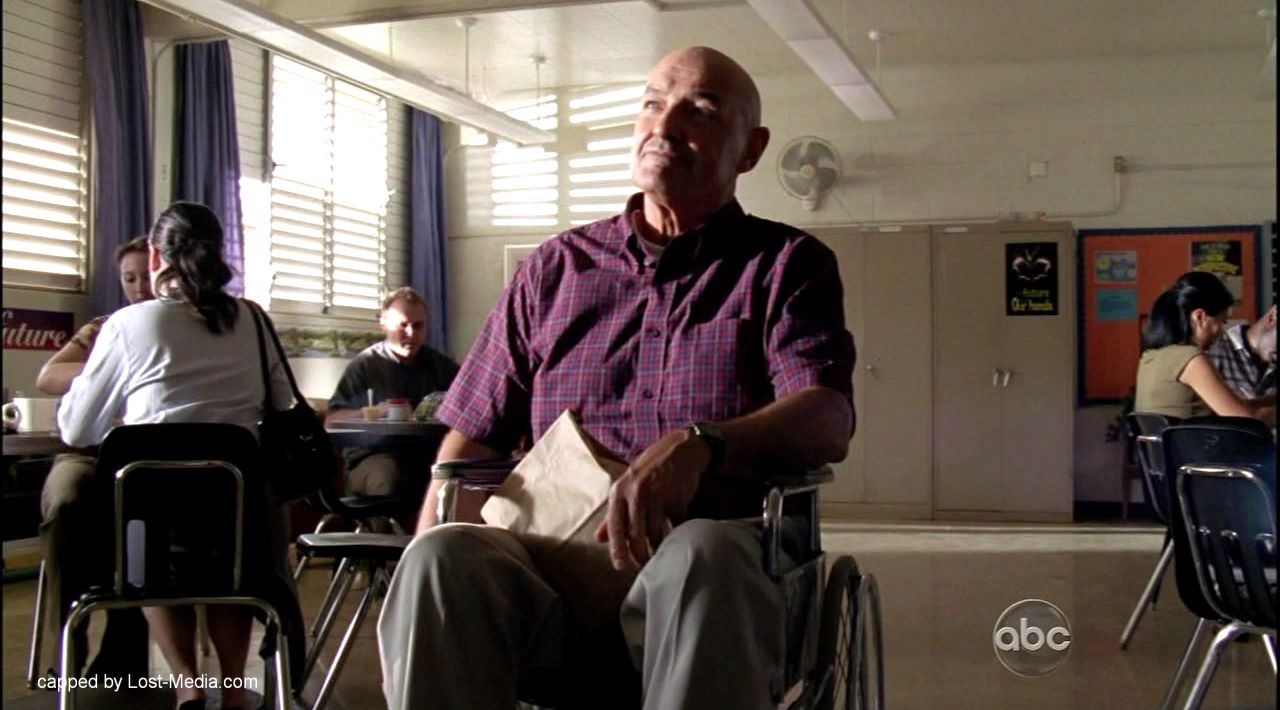
LOCKE = GREATNESS. Especially if it's tortured, wheelchair-bound Locke in flashbacks, or this case a flash sidways. He gets fired from his job, which leads to important, surprising interactions with temp agency owner Hurley and career placement counselor Rose. Katey Segal makes a welcome return as Locke's financee. The action on the island in 2007 is less interesting but moves the story forward a step with Locke's funeral and the alliance of the Man in Black (under the guise of Fake Locke) and Sawyer. But this episode is really about one thing: Locke's alternate back story and his decision to accept a job as a substitute teacher, which results in the season's best moment, and one of Lost's most memorable introductions when he meets his new colleague: "BEN LINUS, EUROPEAN HISTORY."

GRADE: A


"Lighthouse" (Episode 108)

Surprisingly dull episode considering Jack's the focus. He has a son (named David) in the alt-verse. They have a rocky relationship. Who does Jack NOT have a rocky relationship with? 2007 Other, Dogen has a random but possibly important cameo as a parent Jack runs into at David's recital, which is about the only noteworthy event in a mostly uninvolving flash sideways. On the island Hurley continues seeing visions of Jacob, who we discover is recruiting "candidates" to replace him. Now that's info. Jack throws a fit at the lighthouse when mirrors reflect his childhood and he discovers his importance to the island (um..this is news to him?) The action involving the kidnapped Jin and crazy, poor man's version of Rousseau, Claire is painfully boring and, honestly, who didn't know Claire's "friend" would be Smokey? Sorry, but Emile De Ravin's acting is just dreadful. And no Ben?

GRADE: C


"Sundown" (Episode 109)

Sayid isn't exactly someone you'd consider one of the more exciting characters but he definitely has his moments. This could have gone either way, but luckily enough was happening that this became a fast-paced episode that took some steps toward advancing the overall story arc. In the flash sideways he has to bail his brother out of a mess with a loan shark that results in him reverting back to his killing ways. His alternate path crosses with Jin (tied up in a freezer?) In the first genuine surprise to occur on the island this season Sayid kills Dogen and Lennon, aligning with the Man in Black. MIB turns into Smokey and attacks the temple. Battle lines are drawn. Team Jacob vs. Team MIB. Again, too much Claire for my liking as she rants, raves and whines while being held captive for much of the hour. Plus, we get even more Kate/Claire/Aaron nonsense. Aside from that, this action-packed ep gets the job done moving things along.

GRADE: B


"Dr. Linus" (Episode 110)

Or, why Michael Emerson is the best actor on television. I couldn't wait to see creepy Ben completely out of context and off the island attempting to function as an actual member of society. How does he act at work? What does he do when he gets home? What books does he read? What's his favorite TV show? Will we see him grocery shopping? Will he still be as weird? So many questions. Somehow this episode managed to exceed even the wildest of expectations. It took everything we knew about Ben as a character and completely repositioned it in a fresh and interesting way making it by far the best flash sideways of the season.

How his daughter Alex was re-introduced as a student he was mentoring was brilliant and the storyline involving his blackmailing of the school principal played like an island situation brought into a real world setting of high school politics. It's outcome suggests he would have become a very different person had he and his father left the Dharma Initiative years ago, but maybe not THAT different. The action with Ben digging his own grave and begging for forgiveness for killing Jacob is equally exciting. Ricard Alpert's suicidal tendencies foreshadow the incredible game-changing episode we're in for with him. Charles Widmore returns! Hey, when Lost ends (and assuming Emerson and Terry O' Quinn aren't busy) wouldn't it be great if we could have a classroom drama spin-off with Ben and Locke as inspiring teachers?

GRADE: A+


"Recon" (Episode 111)

A worthwhile Sawyer-focused episode that saw the return of some familiar faces. While I can't say I'm thrilled he's reverted back to his angry, rebel without a cause character from the first season (this time as a detective instead of a crook) I liked how the flash sideways was focused on his loneliness and obsession with tracking down Locke's father. If what they're doing with Sawyer seems like a huge step down now it's only because anything would after the creative high the character reached last season. There's just no topping that for me. Miles as his LAPD partner was a clever idea as was him setting Sawyer up on a blind date with the returning Charlotte. Nice surprise there--even though Faraday won't be happy. In '07 Sawyer's double-dealing like crazy to leave the island cutting deals with Widmore and MIB. He wants out. Everything was going so well until....fugitive Kate. Again. Ugh. Tight episode anyway.

GRADE: B+


"Ab Aeterno" (Episode 112)

We always knew the ageless Richard Alpert was a fairly interesting character and it's safe bet many fans were eagerly awaiting an episode that would finally explore his back story. But it's a safer bet that nothing could have possibly prepared anyone for the emotional journey we were taken on. Should we just go ahead and give Nestor Carbonell his Emmy now?

If this series can manage to make it past the finish line without tripping up the producers should throw Carbonell a parade because his tour de force performance will be looked back on as what sealed the deal. It was all him the entire hour and he delivered. It's also only the second time the writers were able to craft a compelling romance...and they did it in 40 minutes. None of Alpert's previous appearances on the show can be viewed the same way again, which is what the most effective flashbacks should do. We found out why Alpert doesn't age, how he arrived on the island as a slave in 1867 and his true relationship to the MIB and Jacob.

Then there's the big shocker that likely that likely had fans wetting their pants. For the first time since the show's inception the possibility that everyone's dead and the island could be Hell or Purgatory is at least suggested, but far from confirmed. Thanks to the infamous wine bottle analogy, the roles of Jacob and MIB have come into much clearer view as has the purpose of the island as a "cork" containing the darkness so it doesn't spread. MIB wants to leave. Jacob won't let him. It's suddenly becoming more and more important who Jacob's "replacement" ends up being.

This was a series defining episode that bodes well as we head toward the final stretch. I can see it being remembered as not only a turning point for this season, but the entire series. Much like Season 3's "Through The Looking Glass," the episode plants the seeds that something HUGE is on the horizon and dispenses groundbreaking information concerning the overall mythology. As much as I hate to admit it this is an even better episode than "Dr. Linus" and probably one of the ten best in the show's six-year history.

GRADE: A+

Overall: I tend to respond better to the sci-fi elements on the show more than the supernatural and quasi-religious/spiritual aspects so that could help explain why seasons 4 and 5 are so tough to top. That'll always be the meat and potatoes of this series for me. But there's still A LOT left. Important recurring and/or regular characters like Desmond, Faraday and Juliet (!) are still scheduled to return and according to producers, make major contributions. I'm expecting much of the momentum built up from "Ab Aeterno" to temporarily come to a halt when an upcoming episode shifts the focus to Sun and Jin, who's reunion I couldn't care less about.

I am looking for the writers to justify some of the screen time given to characters who on the surface seem unimportant and just filler, like those two and Kate and Claire. That's always been my lingering issue with the entire series, dragging it down a notch. But it's important not to judge too harshly because these episodes have painted the previous seasons in a new light and it isn't until the second hour ends on May 23rd that we'll be able to accurately determine the quality of this season (and the series) as a whole. So, for now....

GRADE: B

[image by jimmygoose via fuckyeahlost]

Thursday, March 25, 2010

Top 10 Blind Side Type Movies That Could've Been Nominated For Best Picture

With The Blind Side hitting DVD this week and Oscar season officially behind us it still seems surprising to me that the movie earned a Best Picture nomination and we'll now have to put the words "Academy Award-winning actress" in front of Sandra Bullock's name. That last one's REALLY going to take some getting used to. I say none of this as an insult to the film, which I enjoyed for what it was and gave a positive review to, despite (or maybe because of) its obvious goofiness and unapologetic sincerity.

It's success got me thinking about other similar movies released over the years and whether they'd have legitimate shot at a Best Picture nod in a larger field of ten nominees. And if you think I'm referring only to schmaltzy, overly-sentimental mainstream fluff that shamelessly pull at the heartstrings you'd be correct. Even though it's probably going to come off this way at times, I'm not trying to mock the films listed below or anyone who enjoys them. I actually respect what these were trying to do and wouldn't spend my time writing on them if I felt they were completely worthless. While I appreciate some a lot more than others there's no denying that we NEED them and I think one of the main reasons I favorably responded to The Blind Side is because we just don't get enough of these kinds of pictures any more. No one has the guts. Delivering an effective (or even entertainingly ineffective) mainstream audience-pleaser is quickly becoming a lost art.

The films below evoke the style and approach of The Blind Side, but don't necessarily have to be about sports (though a few are). The many detractors of Bullock's movie can at least take solace in the fact that most of these choices are inferior to it, proving the Academy was capable of far worse. But what they all have in common is that the spirit of The Blind Side lives in each of them, whether it's in the performances, the themes covered, its style, or the critical/commercial response. I've ranked them not according to quality, but their level of "BLINDSIDEDNESS" and the chances it had of the Academy actually nominating it. The most important rule: If I can say with a straight face it deserved a Best Picture nomination then it doesn't belong on this list.


10. Remember The Titans (2000)

The only football-themed movie to make the cut. Rudy's legitimately moving and widely considered a sports classic so that's out. There's We Are Marshall, but that actually approached its tragic topic with sincerity, and aside from McConaughey's awful performance (which wouldn't have received awards consideration even as a joke), there isn't anything the slightest bit goofy about it. Hardly a "feel-good" experience. But 2000's Remember The Titans is a different story. We have a charismatic and respected Oscar-winning star (Denzel Washington), mixed reviews upon release, strong box office, the issue of racism watered down for public consumption by Walt Disney studios and huge creative liberties taken with "true events." You couldn't mix better ingredients for a Blind Side style Best Picture nominee in the kitchen.


9. Miracle (2003)

Recently I noticed my Netflix queue listed Miracle as having a VERY LONG WAIT. I suppose you could chalk up its recent popularity to the Olympic fever but if it's okay with you I'd like to attribute at least some of that surge to the success of The Blind Side. The movie tells the against-all-odds story of the USA Men's hockey team, led by University of Minnesota head coach Herb Brooks (Kurt Russell), that went on to win gold at the 1980 Winter Olympics. It doesn't get more inspiring than this, and once again (following the Bullock trend) we have a mainstream star slipping into the role of a life-changing mentor. The movie's even called MIRACLE for crying out loud. Just imagine if it were released this past year right before Olympic season. Oscar sweep. All joking aside, I was a big fan of the film when I first saw it years ago and that's coming from someone who doesn't care for hockey at all.


8. Up Close and Personal (1996)


With its simple, melodramatic storytelling The Blind Side is really a throwback to Hollywood's golden age. So what could possibly make a better companion piece than Jon Avnet's classic old school Hollywood romance Up Close and Personal, starring screen icons Michelle Pfeiffer and Robert Redford? Besides boasting one of the silliest titles ever, the script puts The Blind Side's pretentious naming of characters to shame. Forget about "Coach Cotton" and "Miss Sue." Meet news director WARREN JUSTICE and rookie reporter SALLY "TALLY" ATWATER. If this were released last year chances are Pfeiffer would have been preparing her acceptance speech since her fluffy character is VERY LOOSELY based on real-life news anchor Jessica Savitch, minus the drug abuse, suicide attempts and her death at age 36 in a car accident. The script's fudging of the facts makes The Blind Side look like a hard-hitting docudrama. As for its behind the scenes depiction of the TV news industry--- Network or Broadcast News this definitely isn't. Did you know that this did actually receive an Academy Award nomination? Granted it was for Celine Dion's original song, but hey, it still counts. Don't claim to be a fan of unintentional comedy until you've seen it.


7. The Rookie (2002)


Before making The Blind Side, director John Lee Hancock was practicing the art of pulling audience heartstrings with this inspiring baseball drama about middle-aged high school teacher and coach Jim Morris (Dennis Quaid) who gets a second shot at the Majors. This was actually the beginning of a big career turn around for Quaid, whose own comeback mirrored that of the protagonist he was portraying. After this, he went on to carve out a nice niche for himself again and if the film were released last year it's easy to believe he would have enjoyed the same success Bullock did, perhaps even resulting in an Oscar nomination or win. He's just as well-liked and considerably more talented as an actor. Instead we got G.I. Joe: The Rise of Cobra. It was just a matter of timing. Substitute baseball for football and insert Quaid for Bullock and here's your tenth Best Picture nominee.


6. Mr. Holland's Opus (1995)


Maybe the only film on this list that at least equals The Blind Side in terms of quality, if not surpassing it. I have so much affection for this movie (which I actually saw in the theater when it was released) that I'm actually going to refrain from making jokes about it. Very well received critically AND making big bank at the box office, it earned well deserved Best Actor nomination for Richard Dreyfuss as music composer turned teacher Glenn Holland. And if I remember correctly it did come dangerously close to scoring a Best Picture nod. It isn't difficult to see why Academy members would be tripping all over themselves to nominate it. Harkening back to classic inspirational teacher dramas like Goodbye, Mr. Chips and Dead Poets Society the movie is sappy, overly-sentimental, shamelessly manipulative and belonging to a genre I usually detest, yet I still really enjoyed it. Like The Blind Side, it's so earnest and upfront about its intentions you almost have no choice but to go along for the ride.


5. Pay It Forward (2000)


Speaking of inspiring educators, who can ever forget Kevin Spacey's turn as disfigured social studies teacher Eugene Simonet? Most movies on this list attempt (sometimes laughably) to tackle serious causes but this dares to take things even further with a seventh grader's homework assignment to "change the world." It is has not one but THREE Oscar nominated actors (Spacey, Haley Joel Osment and Helen Hunt), two of whom are previous winners, and shares The Blind Side's message of altruism on an even larger, more ambitious scale. Helen Hunt, who at this time was one of the most well-liked, bankable actresses in the business, treads the same Erin Brokovich style ground Bullock would later with her performance as a feisty, alcoholic single mom. Bullock even stole her wardrobe. Bonus points for having one of those tragically uplifting Hollywood endings the Academy loves. Released in October, 2000 it's yet another film that suffered from being released at the wrong time. A year too early to be exact. It's an uneven but unapologetically sincere film the public wasn't ready for then, but would warmly embrace now.


4. Jakob The Liar (1999)


The Academy just loves nominating films about the Holocaust. Just ask Steven Spielberg and Kate Winslet. Why anyone would want to see this tragic, depressing topic covered in movies over and over again is something I'll never fully understand. Maybe that's why Hollywood constantly feels the need to wrap it up in a nice bow for us so we're not too traumatized. Because if there's one thing producers like more than seeing this painful chapter of history unnecessarily re-enacted it's being told that it really wasn't as bad as we all thought. And if a movie can undeservedly wring tears AND a few smiles out of the audience by casting a popular movie star like Robin Williams (going dramatic but not TOO dramatic) in the title role then that's even better. Those who accused The Blind Side of trivializing a serious topic should watch this film to see an actual example of a film shamelessly exploiting a serious situation for entertainment purposes. The good news: Both critics and audiences saw through the B.S. and made sure it flopped. If they didn't it probably would have been nominated for Best Picture.


3. The Pursuit of Happyness (2006)


It wouldn't be off the mark to call Will Smith the male equivalent of Sandra Bullock in terms of likability and drawing power. This movie is his Blind Side. Not only is it his most popular film, it represents what's been his best acting work date and continues the trend of big movie stars stretching just enough dramatically, but not veering too far from the kinds of roles they're best known for. Say what you want about how cloying and manipulative the screenplay is, but this was the perfect part for him that brought out all his best qualities as an actor. Based on the inspiring true story (seeing a trend here?), Smith plays Chris Gardner, a homeless man who fought the odds and overcame adversity to eventually become a successful stockbroker. What this shares most with Bullock's film is its honest sincerity. It's not trying to be a hard-hitting expose on the trials and tribulations of the homeless or the difficulty of single fatherhood. It's an entertaining movie with the biggest movie star on the planet that knows how to push all the right buttons to get the desired emotional response from the audience. But it's all well earned and it plays fair. It's just too bad Smith squandered all the goodwill he built up with this picture by having his son Jaden star in a remake of The Karate Kid.


2. Patch Adams (1998)


The far less offensive Robin Williams entry on this list. And you thought The Blind Side caused a critical and commercial split when it was released. This dramedy about a doctor who's inspired by his own problems to help others was a huge audience hit when it was released in December of '98, even earning Golden Globe nominations for Best Picture and Best Actor despite widespread critical scorn. While I haven't read a single review of this movie in any publication or web site over 2 stars, I've also never talked to any casual moviegoers who didn't love the film and find it inspiring.Williams as an actor is a curious case study. He can mug and annoy incessantly in most comedies but is capable of great work when handed strong dramatic material. What's so bizarre about this picture is that it doesn't really fit into either of those categories. But it does have actual children with cancer, Williams dressed as a clown and one of the silliest courtroom scenes you'll ever see in a movie. It's interesting to note that the real Patch Adams criticized the actor for not donating any of his 21 million dollar salary to his hospital (a valid point if true) and called the film a "simplistic" version of his life. Something tells me he probably wouldn't have liked The Blind Side.


1. I Am Sam (2001)


The definitive Hollywood message movie that earned a Best Actor nomination for Sean Penn and was famously mocked in 2008's action comedy Tropic Thunder. Even though everyone was always aware of it, only when this was released did we all finally acknowledge that the quickest way to an Oscar nod (and probable win) was to play a character with a developmental disability. Dustin Hoffman and Tom Hanks started the trend and Penn picks up right where they left off here. His performance as mentally retarded, Beatles-obsessed Sam Dawson, who works at Starbucks and fights to retain custody of his daughter, is actually more convincing than it got credit for as most critics' frustration with the film's screenplay were all unfairly taken out on him.

Like The Blind Side, it's a sugary, feel-good experience that not so subtly preaches the idea that everyone deserves a fair chance and there's no calling greater than helping others less fortunate. Yet again, the saintly do-gooder is Michelle Pfeiffer (assuming the Bullock role), as an emotionally distant lawyer who takes on Sam's custody battle for free. As if that's not enough, producers even went out of their way to cast Dakota Fanning (at the height of a her child star precociousness) as Sam's six-year-old daugher Lucy. The only thing missing is that it isn't exaggerated from a true story, but it sure seems like it could have been. Oh, and great soundtrack. Penn and Fanning would go on to thrive despite the critical thrashing this took, with Penn even collecting a couple of Oscars for significantly more restrained and respected performances in Mystic River and Milk. But it's just more fun pretending he won for this.