Showing posts with label Ernie Hudson. Show all posts

Monday, June 10, 2024

Ghostbusters: Frozen Empire

Director: Gil Kenan
Starring: Paul Rudd, Carrie Coon, Finn Wolfhard, McKenna Grace, Kumail Nanjiani, Patton Oswalt, Bill Murray, Dan Aykroyd, Ernie Hudson, Annie Potts, William Atherton, Celeste O' Connor, Logan Kim, Emily Alyn Lind, James Acaster
Running Time: 115 min.
Rating: PG-13

★★½ (out of ★★★★)   

We've been waiting so long for a true Ghostbusters sequel that when Afterlife finally arrived in 2021, it couldn't help but feel a little anticlimactic. With Jason Reitman taking the directorial reigns from his late father, a total overhaul wasn't just necessary, but inevitable, placing him in the difficult spot of rebooting this property with an entirely new plot and fresh characters. Now after mixed results, it earns another go-around with Frozen Empire, as co-writer Gil Kenan steps in, moving the story back to the city where everything started in 1984. 

Reitman's decision to have the previous sequel focus on an Oklahoma based ghost busting team of Spengler grandchildren aided by their mom and science teacher seemed to please more fans than it offended. So even as legacy cast members were sidelined and its ending felt cribbed from the original, it still had enough moments to wipe away the bad taste of Paul Feig's 2016 attempt at reviving the franchise. But despite a familiarly nostalgic setting that does help alleviate certain creative issues, some of the same challenges persist, with the film struggling to utilize its packed cast in what should be a relatively simple, straightforward story. 

Three years after the previous film's events, Callie Spengler (Carrie Coon) and boyfriend Gary Grooberson (Paul Rudd) have moved to New York City with her kids Trevor (Finn Wolfhard) and Phoebe (McKenna Grace) to help original Ghostbusters Winston (Ernie Hudson) and Ray (Dan Aykroyd) reestablish operations at the old firehouse location. As longtime nemesis turned mayor Walter Peck (William Atherton) looks to shut the business down and jail them for employing an underage Phoebe, she befriends teen ghost Melody (Emily Alyn Lind) in the park, realizing they have more in common than either assumed.

Meanwhile, a man named Nadeem Razmaadi (Kumail Nanjiani) claims to have inherited a strange brass artifact from his grandmother and convinces Ray to purchase it for his curiosities shop. But when the team discovers the mysterious orb houses the evil god Garraka, research reveals his release will lead to the recruitment of an undead army to freeze and conquer Earth. With this demon's sights set on the firehouse's ecto-containment unit, the Ghostbusters will need all hands on deck to save the city and world from complete annihilation. 

Packing up and heading to NYC for the follow-up wasn't just an inspired idea, but a necessary one considering that's where this incarnation of the franchise belonged to begin with. Still, it's hard to begrudge Reitman for continuing the story he built around Egon's family, even if parent/teen team isn't exactly what fans envisioned as the next generation of Ghostbusters. Auxiliary players like Lucky (Celeste O' Connor) and Podcast (Logan Kim) are back, but more than a few others are added, like  returning antagonist Peck and another classic favorite in Janine Melnitz (Annie Potts). That the latter's appearance feels more like a cameo is almost a foregone conclusion given everything Kenan and Reitman try to jam in. 

Of the three originals, Akyroyd inexplicably has the largest, most involved role again, though he does well with what he's given. The underused Hudson and Bill Murray believably slide back into their suits, but it's clear they won't factor in until the climax. This is really about the Spenglers, with a script building on that dynamic and including enough callbacks to please fans, like Slimer and those mischievous Mini-Puft marshmallow men. As for the action sequences, they're mostly on par with its predecessor, which is to say they accomplish what's necessary. 

If this demon Garraka looks and feels like it just stepped out of The Upside Down on Stranger Things, the film's also noticeably overstuffed with supporting characters and excess plot. Patton Oswalt's public librarian and James Acaster's Dr. Lars Pinfield (who oversees Winston's new paranormal research center) are superfluous additions while Kumail Nanjiani delivers the same comedic schtick he's been doing in every other project lately. 

Exiled from the team and quietly rebelling from her family, Phoebe's bond with this droll, sarcastic spirit Melody is the film's most successful attempt at meaningful character development, as the relationship carries both positive and negative repercussions for the sensitive teen. Sincere enough that it's almost too dramatic for Ghostbusters movie, her arc is easily the best thing in the sequel, with much of that due to Grace's believable performance.

This installment comes closer to working by superficially invoking vibes similar to the original two. But it's also full of plusses and minuses that put it at or around the same level as Afterlife, if only slightly higher. The good news is that Reitman stepping aside wasn't the red flag many assumed since it's unlikely he could have done any better with this material than his replacement. Enjoyable enough, Frozen Empire is about as good as we're going to get right now, so at least that's something.         

Thursday, February 29, 2024

Quantum Leap: Season 2


Creators: Donald P. Bellisario, Steven Lilien, Bryan Wynbrandt
Starring: Raymond Lee, Caitlin Bassett, Mason Alexander Park, Nanrisa Lee, Ernie Hudson, Susan Diol, Peter Gadiot, Eliza Taylor
Original Airdate: 2023-24

**The Following Review Contains Plot Spoilers For Seasons 1 and 2 of 'Quantum Leap'**

Full Season: ★★★ (out of ★★★★) 

Finale: ★★★ ½ (out of ★★★★)

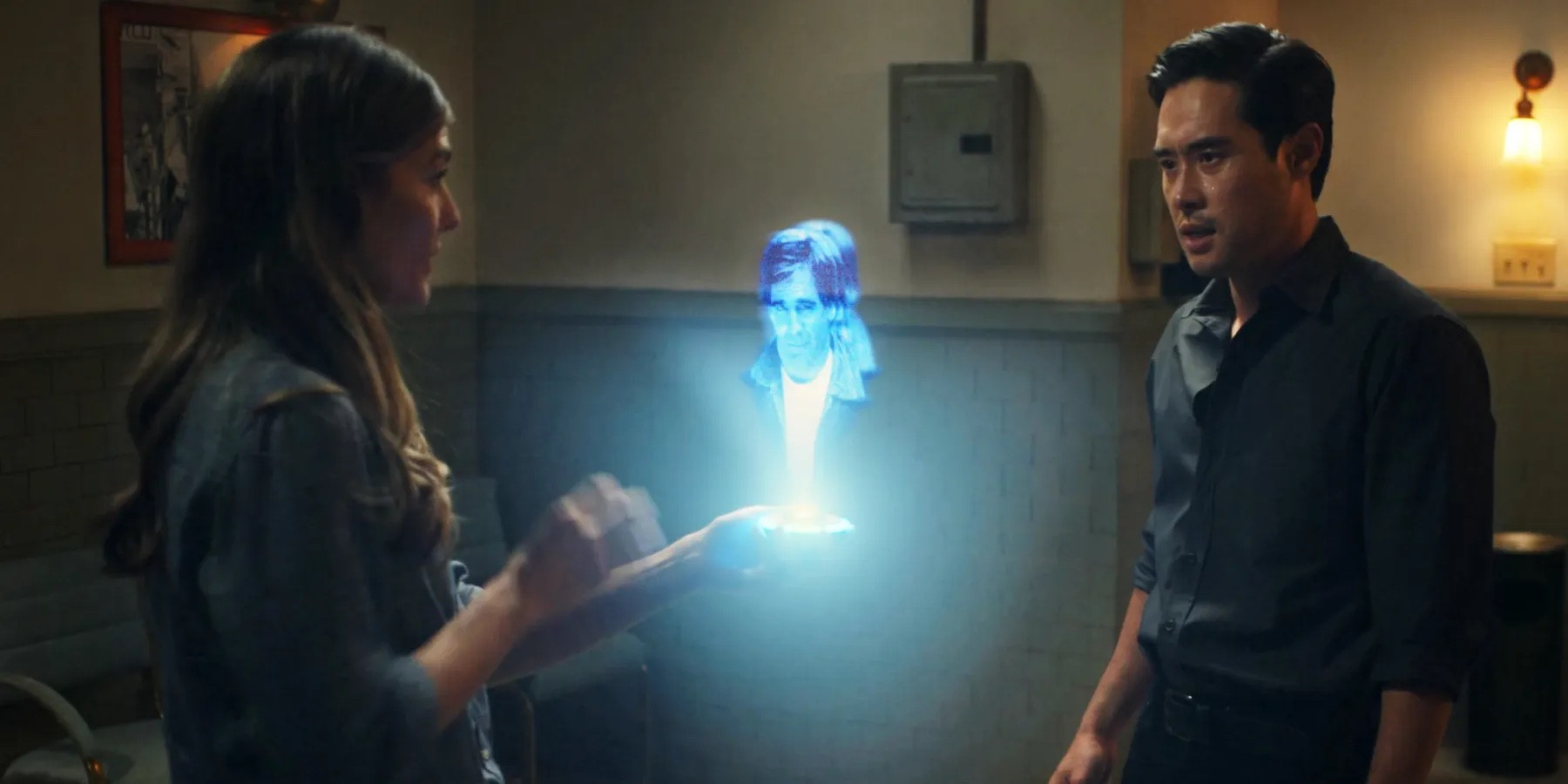
If sophomore TV seasons are notoriously difficult to crack, you'd figure it doesn't get much harder than the challenge facing the continuation of Quantum Leap. In Fall 2022, we found out how a sequel series would look decades after the original aired its final episode. And it was a departure, with the show sometimes struggling to balance weekly leaps with the action at headquarters. But the plot of Dr. Ben Song (Raymond Lee) leaping through time to save the life of his fiancée and holographic observer Addison Augustine (Caitlin Bassett) still skillfully used its serialized format to build an entire season around a main arc that anchors the episodes.

Ben's attempt to protect the Project from the mysterious "Leaper X" ended in a convoluted finale with enough alternate timelines to make your head spin. While sometimes difficult to follow, "Judgment Day" got the job done, tantalizing us with the possibility Ben could get the ending Sam Beckett didn't and return home. But with NBC quickly picking this up for another season, viewers would have to wait, while showrunners Martin Gero and Dean Georgaris hit the ground running, opting to blow everything up in these thirteen episodes. And that's no small risk for a major network series still finding its identity. 

There's a concerted effort to make this season cleaner and tighter, while also taking a page out of the original's playbook by focusing more extensively on these characters and the "empathy engine" that drove the classic series. But for as many call backs and tie-ins that there are, it's still a completely different animal, which can be both a blessing and curse. Fortunately, there are enough noticeable improvements to really appreciate what went into the building of this, despite that nagging feeling even more refinement could help when it comes to the actual leaps.

The near-perfect finale stands as a creative peak, seamlessly incorporating key themes into an explosive pay off that's groundwork can be traced to its predecessor. And in doing so, the show cleverly identifies its true villain: Time. Finding out the hard way that the road to hell really can be paved with good intentions, Ben and Addison are forced to make sacrifices that would seem implausible only a season ago. Now they're ready to embark on an entirely different journey, assuming the show's granted that chance to take it.

Ben fully expects to step out of that accelerator and return home, but instead finds himself still leaping, this time as a member of the Air Force, tasked with transporting a mysterious cargo plane over Russia. Addison is nowhere in sight when he's located by Ian (Mason Alexander Park) and informed the Project shut down after the team spent the past three years searching for him. 

With Ben presumed dead, a distraught Addison eventually moved on, turning to new boyfriend and government official Tom Westfall (Peter Gadiot) for support. He'll join her and Ian on the recently reunited team with Project head Magic (Ernie Hudson) and security specialist Jenn (Nanrisa Lee) in attempting to retrieve the newly discovered Ben. 

In continuing to process the end of his relationship with Addison, Ben cosmically crosses paths with waitress turned physics student Hannah Carson (Eliza Taylor) over various decades, their bond growing stronger with each leap. Meanwhile at HQ, Ian and Jenn's attempt to track Ben catches the unwanted attention of nefarious tech boss Gideon Rydge (James Frain) whose involvement could sabotage the entire Project and destroy Ben's hope for a homecoming.

Implementing a three year jump (in Project time) was risky, but it succeeds in preventing the writers from potentially repeating themselves. Things tend to run their course so quickly in episodic storytelling that separating Ben and Addison proves smart, throwing a wrench in their familiar dynamic by allowing the characters to grow separately. It also helps Lee and Bassett are again flawless in their roles, during moments both big and small.

If Ben's lost everything seemingly overnight, Addison now has to deal with the guilt of not waiting and having moved on with Tom. But it won't be until season's end that we realize just how carefully orchestrated this is and how it fits into the larger plan.

An opening episode ("This Took Too Long!") that's entirely leap focused and Project-free feels like a breathe of fresh air after last season's shakier attempts at balancing the two. And even when it does settle back into a more familiar rhythm, this new tension between Ben and Addison serves to make its seven pre-strike episodes more noteworthy than expected. 

This falling out also opens the door for Magic, Jenn and Ian to enter the imaging chamber and rotate in as observers. The fifth episode, "One Night in Koreatown" finally places Ben in the crosshairs of a huge historical event (the '92 L.A. riots) and provides a strong showcase for Hudson, who adds more personal layers to Magic's backstory. 

Even the suspicious Tom gets his shot at as the observer, further fueling doubts about Addison's new boyfriend's intentions. But just as the synchronicity between leaps and HQ seem more organic in this go around, the writers avoid playing games with this new character. Tom's essentially who he appears, even as we patiently wait for Addison to come around to the fact that their relationship can't last as long as Ben's around.

It's really "Closure Encounters" that kicks off the season's long game, as Ben first crosses paths with Hannah while leaping into a government agent investigating a potential UFO crash in 1949. In a narrative device reminiscent of The Time Traveler's Wife, he encounters her over various time periods, and as comfortable as he is to reveal his true identity and purpose, it's her willingness to believe him that proves even most important

As Ben's connection with Hannah creates more awkwardness with Addison, the writing is still clever enough not to turn this into some kind of love triangle. And in contrast to when Sam hopped into bed with various women during his leaps, Hannah actually gets to know Ben as himself. 

The pair fight 1950's Nazis in "Secret History" before reuniting in the Cairo set "Nomads," where Ben leaps into a CIA agent attempting to entrap a traitor. And for as much as he influences Hannah's life and future, it'll only take a bit longer before viewers discover just how much she's doing for him. Sharing an effortless chemistry with Lee, Eliza Taylor's performance goes a long way in establishing Hannah as whose inclusion pays dividends.

The other leaps are a grab bag of genres, with a hostage situation ("Ben and Teller"), a Salem witch trial inspired story of intolerance ("A Kind of Magic") and an Indiana Jones-style adventure ("The Family Treasure") We also get two real standouts with Ben's second outing as a Bounty Hunter in "Off the Cuff" and the Deborah Pratt helmed "The Outsider," both featuring tremendous guest turns from David Clayton Rogers as a slimy criminal lawyer and Nadine Ellis playing a disgraced but determined news reporter. 

While it's understandable how budgetary concerns impact the kinds of leaps we get and the social messaging can feel more direct than in the original, the basic QL blueprint still informs the series. And the fan service and call-backs make sense within the story they're telling, which culminates in a near-perfect finale few could find fault with.  

In trying so hard to do the right thing, Ben unintentionally unleashes a monster that threatens the very existence of the Project and any shot at returning home. We may have suspected Ian and Jenn's stolen chip would lead to disaster, Hannah meeting Ben wasn't a mere coincidence and the truth behind her son Jeffrey (Wyatt Parker) would be revealed, but the devil was always in the details. If last season's closer drew comparisons to Back to the Future Part II with its multiple timelines, this one's not just simpler, but seems more aligned with the film in spirit, right down to Ben offering stock tips that negatively alter the future.

Ben's actions carry unforeseen and uncontrollable ripple effects that start coming to light in the penultimate, Towering Inferno-inspired episode, "As the World Burns." Of the many action driven leaps we've gotten, this 1974 set adventure is probably their slickest production-wise. It also contains one of the season's most memorable scenes, as a trapped, fallen Hannah provides Addison (whom she can't see) with her swap code to send Ben home. But what constitutes "home" turns out to be debatable.

No matter what Ben did, Hannah's husband Josh (Josh Dean) was always going to die, serving as a reminder that for as many lives as he saves, others inevitably fall through the cracks. And sometimes his attempts to prevent such events can just as easily cause them. That Jeffrey would eventually evolve into power hungry tech billionaire Gideon Rydge actually makes perfect sense. The Ben he sees is a time traveling menace whose interference destroyed his parents' marriage and directly caused his father's death. 

The Chris Grismer directed "Against Time" sees Gideon take the reigns with his mercenaries and dispose of the team, leading to Frain and Lee's sole scene together, which is a doozy. But whereas Ben strives to put right what went wrong, a bitter, enraged Gideon delusionally views himself as a savior of this project and the hero of his own story. Frain's performance strikes just the right tone of unchecked menace, while still giving us glimpses of that playful kid whose optimism was shattered. Now in full control and preparing to enter the accelerator to replace Ben, it's clear he's far past help. Luckily, Jeffrey isn't.

Ben can easily stop everything, including Jenn's death, with one swing of a hammer. but in true Sam Beckett fashion he recognizes that destroying a grieving kid's dreams isn't the way because everyone deserves saving. Ben can talk about the Project's capacity for positive change until he's blue in the face, but Jeffrey needs to actively take part in saving a life if there's any chance in preventing him from what he'll become.

Ben's 1976 leap into a stock car driver Ricky Jarrett Jr. could have easily be a throwaway, in danger of being ignored amidst these high stakes. But his task in preventing the death of Ricky's legendary father (Judson Mills) from a massive heart attack takes on monumental importance when young Jeffrey's able to help do what he couldn't for his own dad. 

After being sidelined for a chunk of the season before sacrificing his own job to save Ian and Jenn's, Magic's back alongside a returning Beth (Susan Diol) and Janis (Georgina Reilly), whose original accelerator and old school handlink come back into play. 

The visual realization that their plan to thwart the season's "big bad" worked might be the series' most memorable moment, with Gideon's expression transforming as the successfully executed butterfly effect washes over the Project team. They may not remember any of this, but it happened, and its ramifications will stick.  

We also get a long awaited answer as to how much Beth and Janis knew about Sam's sacrifice for Al in "Mirror Image." Hearing Janis talk about how she wouldn't exist if not for Project Quantum Leap (complete with that classic music cue) is surreal, intrinsically tying into what Ben's fighting for now. Similarly, parallels are drawn between Beth and Addison's first-hand experience in deciding whether to wait for their missing partner. Acknowledging her regret, Addison's finally ready to put on that fermi suit and swap places with Ben, bringing everything full circle. Sort of. They're reunited, but in the past as leapers, with a fresh set of possibilities ahead.

Like many shows on the bubble since it premiered, the producers had to give NBC what they want within a tighter budget and time frame caused by the strike. So while it's understandable to miss the simplicity of the classic series, what we've gotten has certainly attempted to incorporate its legacy. And for all the continued debate surrounding whether this "needs" a Scott Bakula appearance, count me among those who still think it does, especially considering how much Sam's past has informed this incarnation, and how open they've been in acknowledging that. But it has to make sense and feel right. 

More than just warranting a binge for skeptical viewers who may have prematurely bailed, Quantum Leap's season finale can also potentially work as a series closer if it has to. But while going out on top is nice, it's really hard to settle after coming so far and realizing this doesn't feel done. For as much work that went into it, two seasons just isn't enough when you've been waiting thirty years and there's still story left to tell.                                

Friday, June 2, 2023

Champions


Director: Bobby Farrelly
Starring: Woody Harrelson, Kaitlin Olson, Matt Cook, Ernie Hudson, Cheech Marin, Madison Tevlin, Joshua Felder, Kevin Iannucci, Mike Smith
Running Time: 124 min.
Rating: PG-13
 
★★½ (out of ★★★★) 

It's easy to imagine the sports comedy Champions passed through half a dozen hands before landing on Bobby Farrelly's desk, likely the last stop in finding the most efficient, least problematic way to bring this to the screen. A long way from There's Something About Mary, it's constructed as a feel-good project that bends over backwards not to offend or court controversy, which is ironic coming from one half of a filmmaking duo who pioneered the most popular R-rated comedies of the 90's. Farrelly's solo directorial debut is noticeably safer, but in trying so hard to be sweet and harmless, it ends up sacrificing the laughs.   

This isn't exactly a subject that can go for the jugular, but as a mainstream family picture centering around a somewhat sensitive issue, you sense the hesitancy. And a run time north of two hours (like the 2018 Spanish film from which it's based) seems overindulgent, especially when much of it is taken up by montages hammering home the same point. So even with a likable cast, an ideal lead, and a satisfying enough result, it can get irritatingly repetitive. Too sincere to work as a vulgar comedy, but containing just enough crude humor to blunt the emotional drama, this just never quite connects like it should. 

When Iowa J-League basketball coach Marcus Marakovich (Woody Harrelson) is fired after shoving his friend and head coach Phil (Ernie Hudson) during a heated game, he hits the bar to drink away his frustrations. While driving home he rear ends a police car, resulting in him being sentenced to 90 days community service with a basketball team called the Friends, made up entirely of players with developmental disabilities. 

After initially showing little interest in guiding this team and using former assistant coach Sonny (Matt Cook) to land him an NBA coaching job, Marcus slowly warms up to the idea, taking an increased interest in the players' lives. This includes the aquaphobic Johnny (Kevin Iannucci), whose older sister Alex (Kaitlin Olson) he awkwardly knows from a recent one night stand.  But even with the injured Cosentino (Madison Tevlin) returning off the bench, their star player Darius (Joshua Felder ) refuses to play, jeopardizing the team's hopes of making Special Olympics, as Marcus' future and career hang in the balance.

Baring the usual hallmarks of athletic underdog stories, the movie at least knows what it is, even poking fun of Marcus' casual dropping of "the 'R' word" in describing the team. You knew this would come up and screenwriter Mark Rizzo wisely acknowledges that discomfort right away, while letting us know this guy just can't take a hint. And since Harrelson isn't exactly associated with characters who coddle or inspire, it helps in establishing Marcus as a hot tempered, bombastic blowhard. Of course, the whole point is that none of these players need coddling, but a little guidance and motivation, for which their irresponsible coach also seems woefully unsuited. 

The setup runs into trouble in trying to mix raunchy humor with uplifting details about how self sufficient these disabled people are off the court, somewhat condescendingly assuming viewers will see them as Marcus does. In what comes across as an effort to deflect any potential backlash, we get a montage where Cheech Marin's rec center manager Julio runs through the all the players' personal achievements. You appreciate the intention, but it's the film's first really clunky sequence, with more to come, including one that pounds us into submission with Chumbawamba's "Tubthumping." The big subplot involving Darius's reasons for sitting out works, but they really drag the mystery out, only beginning to culminate as we enter the last act.

Harrelson's cranky charm and the cast's overwhelming likability is a saving grace, with supporting players like Ernie Hudson and Kaitlin Olson investing more into their respective characters than flimsy descriptions imply. While Marcus' relationship with Olson's sarcastic Alex does contain manufactured complications, it's fine for what it is, even if fans of her TV work on Always Sunny may be frustrated she's not given something better to do here. Still, it's great to see her in a big screen comedy role, which feels overdue.  

Champions has one of those endings where victory can't be achieved entirely on the court, and compared to others in the genre, it's suitably handled. The real dilemma comes in how long the movie takes to get there, leaving blinking signposts along the way telling us how to feel. And for all the recent criticisms over bloated running times, you really do notice it in a comedy like this. If the jokes aren't hitting or the tone seems off, an extra half-hour or twenty minutes can be especially problematic. Considering that, it's a pleasant surprise this isn't far worse, making you wonder if a tighter version of the same material would more closely resemble the superior sports comedies it's trying to emulate. 

Sunday, April 16, 2023

Quantum Leap: Season 1 (2022)

Creators: Donald P. Bellisario, Steven Lilien, Bryan Wynbrandt
Starring: Raymond Lee, Caitlin Bassett, Mason Alexander Park, Nanrisa Lee, Ernie Hudson, Susan Diol, Georgina Reilly, Walter Perez
Original Airdate: 2022-23 

**The Following Review Contains Plot Spoilers For Both The Original And New Versions of 'Quantum Leap'**

★★★ (out of ★★★★)

If there's a film or TV series you hold in the highest regard, just the mere mention of a potential reboot or sequel is unsettling. Often these feelings are tied to a formative viewing experience, the memories leaving as lasting an impression as the actual entertainment itself. Even in a pop culture landscape where everything's on the table for reinterpretation, telling fresh stories off the backs of widely beloved characters and plots still triggers immediate cynicism. But even sometimes against our better judgment, we need to find out. So now, after decades of false starts, unsubstantiated rumors and conflicted feelings of dread and anticipation, a new Quantum Leap finally arrives. 

On May 5, 1993 the original series aired its polarizing finale, "Mirror Image." And something seemed different when Sam entered that mysterious bar and saw his own reflection.What few realized then, but many have come to appreciate since, is just how perfect an ending it was. 

Sending the time traveling Dr. Sam Beckett (Scott Bakula) home would have been so easy, providing closure for the selfless hero leaping to "put right what once went wrong." But creator Donald P. Bellisario had other plans. Such an ending may have satisfied fans, but it would have been a fleeting high. Instead, he crafted a piece of art that's continued to inspire debate and analysis in the decades since.

When the title card appeared on screen informing us of Sam's fate, it was an emotional gut punch, but also the most fitting send-off a series could get. It was about sacrifice and he still had one left to make for his friend Al (Dean Stockwell), who got his own richly deserved ending. Bakula and Stockwell would never act together again in a QL-related project and it's a testament to the episode's impact that you can strangely feel that in the closing minutes. While the door was intentionally left ajar, a follow-up never came and any chances of a continuation suddenly seemed impossible following Stockwell's 2021 passing. Even if Bakula could be coaxed into returning, discussion soon shifted to whether it was still worth doing anymore.

NBC's announcement of a new series was met with understandable skepticism and disbelief well before cameras even started rolling. But roll they did, with an announced cast, a change in showrunning duties (with Martin Gero stepping in for Steven Lilien and Bryan Wynbrandt, who stayed on as executive producers alongside Dean Georgaris and the returning Deborah Pratt), a reconfigured pilot and no Bakula, who many fans assumed would at least be partially involved. It's disappointing, but regardless of what factored into that decision, he's more than earned the right to make it after all he's done for the franchise.

This airing on NBC rather than Peacock was seen as another red flag, with increased worries that network tinkering would compromise what made the series special, abandoning the original blueprint in favor of attracting more casual viewers. But it turns out there was no need to hit the panic button. Even if the jury's still out on whether all the kinks can be worked out, it's a safe bet no one expected the show to dig this deeply into the time travel mythology, escaping the confines of a network procedural to appeal to hard sci-fi fans.

It's been thirty years since Dr. Sam Beckett vanished into the Quantum Leap accelerator and now the time travel project has been restarted with a new team attempting to unravel its inner workings. But when lead physicist Dr. Ben Song (Raymond Lee) inexplicably decides to enter the accelerator early after uploading a new program code, he gets stuck in the past, leaping into others. Guiding Ben along the way is fiancée and co-worker, Addison Augustine (Caitlin Bassett) who appears in the form of a hologram that only he can see and hear, just as Al did for Sam.  

Helping to retrieve Ben are the project's head, Herbert "Magic" Williams (Ernie Hudson), chief programmer Ian (Mason Alexander Park) and head of security Jenn (Nanrisa Lee). Recently deceased Al's daughter, Janis Calavicci (Georgina Reilly), is also involved, possessing valuable intel about why Ben leaped, her secrecy potentially stemming from lingering resentment over being shut out of the project. With each new leap Ben changes people's lives, but when an unexpected complication arises, he realizes there's far more at stake than him being permanently lost in time. 

While bringing Sam home was a main objective in the classic series, the stories were more character-driven, spending the entire length of its episodes on the leap at hand. Him returning wasn't the focal point so it was rarely essential to watch episodes in chronological order. Here, there's a long mystery arc doled out over the course of the season that's splitting screen time with the actual leaps. Because of this, there's a large present day focus on the new headquarters (now relocated from New Mexico to L.A.) with an expanded cast of regulars.

Whether it was partially due to budgetary concerns, getting only occasional glimpses of the project itself did sure work out well for the original, at least story-wise. But with the emphasis on serialized drama these days, there was little chance we'd see that again, or have a lead called upon to appear in each minute of every scene in all the episodes, as Bakula did. It's just a lot for any actor to take on without the support of an ensemble, so this project-heavy approach makes sense from a practical standpoint.

Fears about this change aren't immediately alleviated, as the show does take some time finding its legs. With nearly every network series being a procedural of some sort, the pressure's on to stand out in other ways and you sense that as the leaps and HQ scenes awkwardly battle for prominence early on. There's a ways to go before those feel seamlessly interconnected, but once we're past the background exposition to catch viewers up, a gradual uptick in quality is noticeable.

Ben and Addison as an engaged couple represents such a seismic shift in the leaper-observer dynamic that you almost have to believe it was a network decision. Yet it's easy to see why they did it as a way to raise the stakes and maybe eliminate the complication of our protagonist becoming romantically involved with supporting characters while physically occupying other people. Elements that worked with Sam just won't fly as well today so it's not difficult to believe this was a consideration. I initially groaned at the notion of them being a couple, but after seeing it executed, it's almost impossible to imagine a version of the script without their relationship, especially considering the whole series revolves around it. 

The idea of Ben leaping through time with a Swiss cheese memory (a carryover from the original) with Addison advising him does provide a hook. In the dark as to why he left, she can't completely trust him, and he can't fully believe in himself, at least until the amnesia wears off  The only character who does is the rebellious Janis, who provides the show's the most vital, sustaining link to the original. Denied the opportunity to help fulfill her dad's dying wish to find Sam, she's grown to resents mom Beth (guest star Susan Diol, reprising her classic role) and Magic for cutting her off from the project.

We know Janis can't be an outright villain, but she has answers, refusing to reveal the intricacies of Ben's motivations to the team. Whereas the original series saw Sam indiscriminately flung from year-to-year, Ben's journey is more coordinated, with a specific path mapped out before stepping into that accelerator. The entire season hinges on what that is, with a leap order that fits together to form pieces of a larger puzzle. 

Doing away with the infamous HQ "waiting room"  that temporarily held those being leaped into likely resulted from a desire to streamline the  process for new viewers. Its presence could have infused the project scenes with an urgency more closely tied to the leaps, but the team dealing with that in an already jam packed forty minutes is still a big ask. That this is a new project with more advanced technology probably supplied the writers enough headcanon to justify not addressing it. We'll just have to chalk this up to the tough compromises made in trying to please two audiences.    

You see that juggling act in the pilot ("July 13th, 1985"), where Ben leaps into an undercover cop thwarting an attempt to steal the Hope Diamond. In an extremely compressed time frame, the writers need to introduce the premise and its characters, provide a project history lesson and establish the present-day scenario at HQ. The episode was reportedly stitched together with a later one, but the potential is still evident. In an effort to grab viewers right away with action and adventure, the biggest worry would be foregoing the human element that made the classic series so unique.

Those concerns begin dissipating in the third episode ("Somebody Up There Likes Ben"), which not only calls back to Sam's leap into a boxer in "The Right Hand of God," but returns the show to its roots in dealing with serious issues like PTSD. And we see those themes emerge throughout, with Ben stepping into the shoes of those struggling with divorce ("What A Disaster!"), child abuse ("Stand By Ben") medical malpractice ("Paging Dr. Song"), discrimination ("Let Them Play," "Family Style") and even mental illness ("Ben, Interrupted"). Of course, that's an oversimplification of what actually unfolds in these leaps, which revolve around strong guest star performances from Jon Chaffin, Justin Hartley, Sofia Parnas, Jewel Staite, Deborah Ann Woll and Brandon Routh. And that's just to name a few.

If there's a recurring quibble it's that the episodes share a similar look from week to week, at times appearing visually indistinguishable aside from certain costuming and soundtrack choices. To be fair, the classic series frequently had the advantage of covering an earlier era that offered more opportunities in this regard. But even the episodes where Ben leaps out of his own lifetime do tend to more closely resemble how the past looks from a 2022-23 perspective. Since most of this could be budget related, it's worth keeping an eye on next season.

Give the producers credit for realizing the leaper and hologram need to be two different personalities from what we previously got. But they've definitely found the right guy in Raymond Lee, who you can't help but positively compare to Bakula because there are certain similarities. Charismatic and believable when in reluctant action hero mode, he also brings that much needed vulnerability to the season's more dramatic arcs, with a performance that steadily grows and impresses with each new revelation about Ben's history with Addison and his ultimate purpose.

Lee doesn't miss a beat, and if it seemed like a huge comedic event on the rare occasion Sam leaped into a woman, Ben frequently does this like nobody's business. That the gender swap isn't mined for laughs or treated any differently reflects current times, but also demonstrates how certain details of this premise have been retooled in ways you may not consciously stop to consider. 

In her television acting debut, Caitlin Bassett brings a playfully direct, no-nonsense energy to Addison, with the actress's own military background likely coming in handy while playing a character who's also a vet. As the only cast member consistently appearing in both the past and present, she has to do some heavy lifting, frequently functioning as the glue that holds these two timelines together. Not completely sure she can trust Ben's reasons for leaping and emotionally fractured by his memory loss, their relationship is fraught with obstacles. Clearly, her greatest fear is that he's destined to become another Sam Beckett and never return home, or possibly worse. 

Sam is referenced often enough you'd be fooled into thinking Ben stepped into the accelerator to find him, and while Janis' presence only seems to lend further credence to that, this is all about Ben and Addison, as it should be. But that's not to say proper reverence isn't shown toward the original, since it's sometimes shocking just how far down the rabbit hole this goes. 

Having already experienced his own brush with Dr. Beckett in the classic 1990 episode "The Leap Home (Part 2-Vietnam)," that Magic's now leading this team speaks to the impact Sam leaping into him had. As expected, Hudson's phenomenal as the show's firm, stabilizing moral center, still shaken by that event decades ago, tough as it may be to fully articulate. We see it through his relationships with Janis and Beth, at headquarters, and in his dedication to not letting history repeat itself with Ben. 

The cutting between Ben's leaps and the project takes some getting used to before hitting its stride at the season's midway point, and once the big mystery is revealed, all bets are off. During this and throughout these 18 episodes, the performances of Mason Alexander Park and Nanrisa Lee become exceedingly crucial. The former brings some well-timed sarcastic humor and heart to even the tensest moments as Ian, operator of the project's supercomputer Ziggy, who's either more or less important than in the original, depending on your perspective. 

The writers wisely acknowledge that the internet  sort of stole Ziggy's thunder, as Ian's increasing reliance on Reddit groups and Wikipedia conveys. Being slightly aloof and harboring a checkered past, Jenn at first seems to have more in common with Janis than the rest of the team. But Nanrisa Lee lands her character in a more relatable place, eventually emerging as an undeniable fan favorite.

The possibility we'd ever see "evil leapers" again seemed unfathomable, but that's kind of exactly what occurs. There's a twist to the concept, but it isn't long after Ben's memory partially returns that the mysterious "Leaper X"/Richard Martinez (Walter Perez) makes his first appearance. 

A solider with one goal in mind, Martinez sees himself as the true hero, with motivations that are  surprisingly timely. Crossing paths with Ben multiple times, their conflict reaches its crescendo in the final stretch, with our protagonist laying it all on the line to save Addison and potentially everyone involved with the project itself. It's here where things go a little caca, but not so much that audiences can't divorce themselves from the minutiae of every detail and just enjoy. 

Time travel fanatics will be dissecting this until their brains hurt, but it's really just a relief to have a major network series that doesn't insult the intelligence of its viewers, regardless of whether it all completely holds up. Just imagine Doc Brown's Back to the Future Part II chalkboard explanation on steroids, with leapers leaping into leapers, multiple timelines and even different versions of the same characters sharing scenes together. It's also tough to remember Sam ever being in the physical jeopardy Ben is in the season's pulse-pounding penultimate episode.

The sinking sense Ben may not actually survive doesn't let up in the finale ("Judgment Day"), temporarily causing us to forget there's another season to get to. It's fair to call this one particular story closed, with potentially larger issues still ripe for exploration. Unlike the original, Ben returning isn't out of the question, but it's even less difficult imagining a scenario where he'd somehow need to step into the accelerator again if he did. Since Addison already leaped in the original history, it's also conceivable any of the other characters could too, should the situation demand. And having already seen them all as observers in the finale, the floodgates have really opened in terms of how the writers want to shake this up.

When promos and commercials for the revival aired showing clips of watershed events like 9/11, the Berlin Wall falling and the O.J. Bronco chase, you see the untapped potential that can still be mined from one of television's most inventive premises. But regardless of whether we do get any of those teased "kisses with history," I'd still put money on Bakula appearing. If only even for a couple of minutes, seeing him and Raymond Lee bounce off each other would be something else. With this many episodes under its belt and a story already well underway, the encounter might make more sense now than it initially did. 

With many more viewing options now than when the original aired, it's somewhat ironic this returns as the traditional network model struggles to maintain relevance. As fun as it is to imagine the potential of a tight, higher budgeted 10-episode season on a streamer like Peacock, this is what we have, with the cast and crew doing an admirable job working within that creative sandbox. And any worries about the show finding an audience were unfounded, as the series was able to see its multi-episode arc through while setting the stage for more.

While fans shouldn't feel obligated to warmly embrace everything about the new Quantum Leap out of franchise loyalty, prematurely disregarding this solely on the basis it exists seems equally unfair. A weight's definitely been lifted by getting it, and whatever issues need ironing out have nothing to do with the original, which isn't going anywhere. Far from a desecration, it's a sequel that takes the story in a different direction that mostly works, making it easier to judge this for what it is rather than whatever we envisioned it would be.                                                   

Thursday, May 5, 2022

Ghostbusters: Afterlife

Director: Jason Reitman
Starring: Carrie Coon, Finn Wolfhard, Mckenna Grace, Paul Rudd, Logan Kim, Celeste O' Connor, Bill Murray, Dan Aykroyd, Ernie Hudson, Annie Potts, Sigourney Weaver, Bokeem Woodbine
Running Time: 124 min.
Rating: PG-13

★★ ½ (out of ★★★★)

After waiting decades and surviving the ill-fated 2016 reboot, many fans have long wondered what an actual Ghostbusters sequel would look like. Jason Reitman's Ghostbusters: Afterlife isn't exactly that, and the fact it doesn't misrepresent this can be viewed both positively and negatively depending upon your perspective. But the biggest surprise is it doesn't seem much like a Ghostbusters film at all, at least until it eventually tries too hard to be. And if someone were to be blindly seated in front of their screen and asked to speculate what this was, they'd probably say it was the first episode of the upcoming fourth season of Stranger Things. While that inspiration was evident in the trailer, little can prepare you for just how much the film resembles that Netflix series, nearly qualifying as a certified spin-off. 

At first glance, all of this seems like a great idea, if not for the nagging reminder that we've desperately wanted a second Ghostbusters sequel for so long that it almost feels like we're doing this just to get it out of the way. But if anyone can do it, Jason Reitman (son of the original's director, the late Ivan Reitman) would be the ideal candidate, despite it being the kind of escapist entertainment he's consciously avoided dabbling in for much of his career. Within its genre and entering with the barest of expectations, this is a fun, entirely predictable and obvious entry into the franchise's canon, even if you can argue we're not truly given what we came for until the final minutes. And by that point, it tracks so closely with the 1984 film that it could be mistaken for a full-blown remake, only with different actors in the roles. 

If the female-lead 2016 reboot was justifiably criticized for its gimmicky casting (though the real problem was always more about whom they chose and the execution), it's only fair to examine a similar call here by Reitman to cast an all kids team. While the intent is clearly to establish the next generation characters to carry the franchise forward, that's assuming it won't take another thirty years to get another one made and again convince the originals to return, especially the notoriously picky Bill Murray. And what would that film even look like? This doesn't offer many answers, as the casting decision was obviously intended to reel in younger audiences and get this particular project made and released now. Well, that worked, even while this doesn't quite fit the spirit of how the franchise was originally envisioned, or more importantly, where it could have possibly gone.

It's June 2021 and original Ghostbuster Egon Spengler has recently passed away, attacked by a creature at his desolate farmhouse in Summerville, Oklahoma. When his estranged, financially struggling daughter Callie (Carrie Coon) inherits the farm after she and her kids Trevor (Finn Wolfhard) and Phoebe (Mckenna Grace) are evicted from their Chicago apartment, they try to acclimate to their new surroundings. While the reclusive Egon was known locally as the "Dirt Farmer," his decaying residence can best be described as post-apocalyptic in appearance, further fueling Callie's resentment toward her late father, whom she feels abandoned her as a child. 

Phoebe adjusts the best, enrolling in a summer school program taught by seismologist Gary Grooberson (Paul Rudd) and making a new friend named Podcast (Logan Kim). Meanwhile, Trevor becomes infatuated with local drive-in restaurant waitress, Lucky (Celeste O' Connor), prompting him to take a job there. But when Phoebe discovers the farmhouse is haunted and learns more about her grandfather's legacy from Gary, it soon becomes obvious that Egon was onto something huge happening in town. Upon locating his underground lab, equipment and even the dormant Ecto-1 Cadillac, Phoebe, Podcast and Trevor must get to the bottom of what's causing this seismic supernatural activity, bringing them face-to-face with an indescribable evil lurking beneath Summerville's mysterious underground mine. 

Reitman takes his sweet time introducing the characters and situation, putting us far ahead of the central players in terms of grasping this family's current connection to the supernatural occurrences in New York City thirty years prior. It's almost about halfway through the film until those events are openly acknowledged (via YouTube no less) and that kind of works since Reitman already has a knowing and willing fanbase at his disposal that doesn't need anything spelled out for them. Most of the trailer took care of that anyway and he's in the rather fortunate position of being able to postpone the payoff as long as possible, spending most of the time building the story before blowing the roof off in the last act. The  character-centric shenanigans, while predictable and sometimes overly cutesy, is mostly a success, especially when it comes to the more emotional story arc of Callie's bitterness toward her late father and how it's affected the relationship she currently has with daughter Phoebe, an awkward, self-professed science nerd. 

Carrie Coon gives the film's best performance as this single, frazzled mom in over her head and broke, still suffering as a result of her father's tainted legacy, but determined to be the parent she thinks he wasn't. Reitman and co-writer Gil Kenan have a really good idea there and when that's front and center is when the picture's at its best, most notably in the final minutes. Grace McKenna is basically the lead, and while it's easy to question the reasoning behind having a tween character carry this, she's very believable as Spengler's quirky, likable granddaughter. The realization of who he was and how it helps her see what she could be is well handled, a standout amongst lesser scenes of the kids busting ghosts. And given screenwriters' recent obsession with podcasting characters, it was only a matter of time before we actually got one named "Podcast." Logan Kim's fun in the part, but when his supporting role is elevated to a co-lead, it's hard to argue that his goofy charms didn't work better in smaller doses. 

It's a bit jarring to see these kids with a proton pack and ghost trap, stepping into such iconic, identifiable roles even if they aren't necessarily being touted as "replacements" for the original actors who are now too up in years to carry this again.  Stranger Things' Finn Wolfhard already briefly wore the uniform on that series so you have to wonder if Reitman cast him as a deliberate attempt to further incorporate the tone of that show. He acquits himself fine, even if the sub-plot involving his crush on Lucky seems thrown in and doesn't really land. Paul Rudd is entertaining as usual in what can best be described as an oddly written science teacher/seismologist character who shows horror movies in class and bonds with the kids, while also trying to woo Callie. There's enough going on with this guy that he comes off as a composite of multiple characters, but Rudd is Rudd, so that helps.

The special effects and CGI are top notch, and while some have complained, the mini Stay Puft marshmallow men are a clever touch that calls back to the '84 film in much the same way a new ghost nicknamed "Muncher" does, making for a suitable Slimer stand-in. While it's not exactly a well kept secret that Bill Murray, Dan Aykroyd and Ernie Hudson all respectively return as Venkman, Stantz and Winston (along with Annie Potts' Ghostbuster secretary Janine Melnitz and Sigourney Weaver's Dana Barrett), the nature and extent of their roles vary some (Weaver's basically non-existent). No one's likely to be disappointed, as the core three are mostly back at the top of their games, with Aykroyd arguably turning in one of his more memorable recent supporting turns as Murray and Hudson smoothly slide back into their parts as if no time has passed. 

Its last act most feels like a Ghostbusters movie, both for better and worse. The performances are a highlight (including a great but uncredited Olivia Wilde as Gozer), as is the emotional payoff involving the late Egon and his family. In terms of providing fan service, Reitman's approach is to basically recreate the original's ending with a new cast, with Coon and Rudd's purpose becoming distractingly familiar. Viewers are put in an odd position when the entirely new touches are hit or miss and what's faithful to the original is almost too slavishly faithful, resulting in another one of those soft reboots that straddles the fence in not wanting to alienate anyone. Stranger Things aside, Close Encounters of the Third Kind is also a noticeable influence, so when you throw some of that in there it's all kind of a mess, albeit not an entirely uninteresting one.

The first Ghostbusters is largely thought of as an action comedy appealing to kids and nostalgic adults with a key difference being that 11 and 12 year-olds weren't the leads. But at least Afterlife prevents embarrassing The Karate Kid remake comparisons by leading with a multi-generational story that elicits high quality work from the young actors despite a questionable conceit. The movie is slick, well made and probably the nearest of near-misses, but it's arguably more effective as a Harold Ramis tribute than a Ghostbusters entry, at least in terms of whatever we now perceive that to mean.