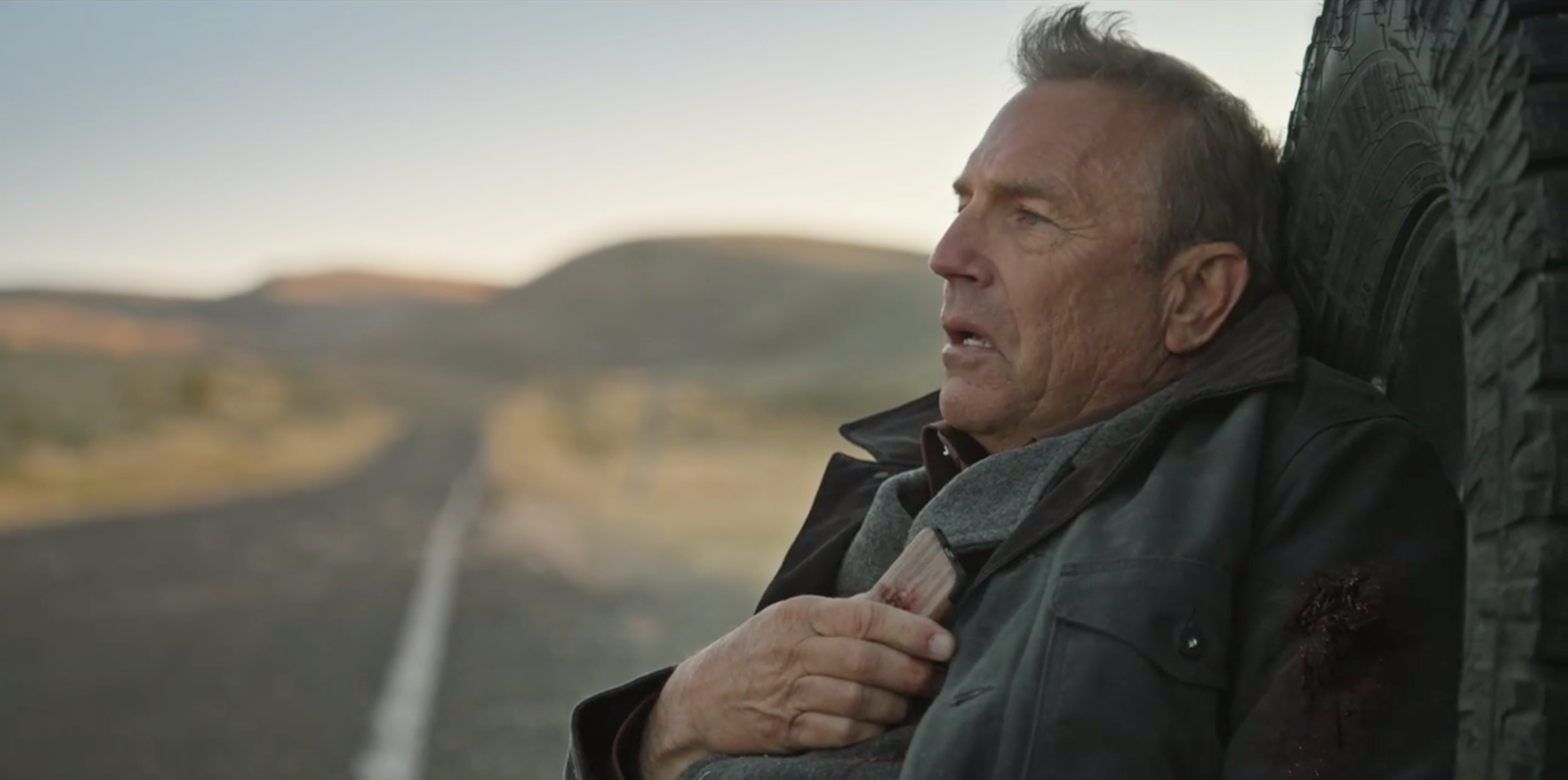
Friday, September 18, 2020

Yellowstone (Season 3)


Creators: Taylor Sheridan and John Linson
Starring: Kevin Costner, Luke Grimes, Kelly Reilly, Wes Bentley, Cole Hauser, Kelsey Asbille, Brecken Merrill, Jefferson White, Gil Birmingham, Josh Holloway, Ian Bohen, Denim Richards, Jennifer Landon, Eden Brolin, Forrie J. Smith, Wendy Moniz, Ryan Bingham, Karen Pittman, Q'orianka Kilcher, Michael Nouri, Gretchen Mol, Josh Lucas, Will Patton
Original Airdate: 2020
 
★★★ ½ (out of ★★★★)    
 
**The Following Review Contains Major Spoilers For The Third Season of 'Yellowstone' **
 
It was only a matter of time. For the past two seasons the threat of the Yellowstone Dutton Ranch being targeted for purchase by land developers has become increasingly imminent, whether John Dutton (Kevin Costmer) likes it or not. And of course, as we've come to know the character it's been no secret that he'd rather die than give up the ranch left to him by his father and he spent decades operating. Now, it may come to that, as Montana's powerful influential Livestock Commissioner is experiencing somewhat of a fall from grace in the third season of Paramount Network's Yellowstone. Having exhausted nearly every political loophole, bribed politicians and law enforcement and vanquished most of his enemies, it seemed at the end of last season that he'd finally cleared the board and could take a long, deep breath. 
 
You could almost say that peaceful calm appears to have washed over the Dutton patriarch as we start a season that could lead to his ultimate "unraveling," to borrow the title of the two-part first season finale. John's on a downward trajectory, even if he doesn't know it yet, and the rest of the family are fighting their own individual battles, which in the end will converge as one. As they always do. After an action-packed twenty episodes, this season is more of a slow burn, but an equally rewarding experience that results in its most jaw-dropping cliffhanger yet. 
 
We should have seen it coming since every piece of business was leading there, but when the moment does finally arrive, it still somehow lands like a punch to the gut. Everything was leading to this single event, or even more accurately, setting up the big question: "Who Shot John Dutton?" There's no need to mince words or avoid spoilers since the season can't possibly be discussed without acknowledging the giant-sized elephant in the room. All roads lead there since so few of his foes, family or supposed friends have managed to get at him until now. 
 
Cool, calm and collected, John's not someone who can be easily rattled since everyone in his insulated orbit is eventually forced to fall in line and do things his way. Or face the consequences. This season everyone's facing the consequences, with characters that already seemed all figured out pulling the wool over our eyes or pushing past boundaries they weren't aware even existed. If nothing else, it's revealing, placing the Beth and Jamie feud front and center with some big developments that explain a lot, while still leaving us in the final minutes with more questions than answers. But with this series at least we know they will come, and rarely do those revelations ever disappoint. 

After disposing of the Beck brothers and rescuing kidnapped grandson Tate (Brecken Merrill) at the end of last season, John's (Costner) position as Livestock Commissioner is in serious jeopardy, informed by governor and girlfriend Lynelle Perry (Wendy Moniz) that the ambush he led alongside Kayce (Luke Grimes), Rip (Cole Hauser) and the rest of the gang led to an amount of bloodshed that simply can't be brushed under the rug.
 
Agreeing that questions will be asked and investigations conducted, John amicably agrees to resign in an effort for everyone to save face. But as usual, he has his motives, installing Jamie (Bentley) as his replacement after favored son Kayce forcefully rejects the offer, viewing the position as too political for his liking. Priorities soon shift when Beth (Reilly) and Chief Rainwater (Gil Birmingham) agree to team up after uncovering that there are already plans for a new development in the valley spearheaded by the charismatic Roarke Morris (Josh Holloway) of Market Equities. 
 
After a local Native American girl goes missing, Rainwater appeals to Monica's (Kelsey Asbille) commitment to her people, as she dangerously accepts a new mission that concerns Kayce. As the arrival of an old nemesis of John's stirs trouble for Rip and the ranch hands, Roarke starts closing in on the purchase, forcing both Jamie and Kayce to take on new roles to help the family. But with Beth's relationship with Rip moving to the next level, she finally unloads the soul-crushing baggage at the source of her hatred of Jamie. If that doesn't fully rip the Duttons apart, then the secret Jamie discovers about his own past surely will, just as the family are at their most vulnerable. Roarke definitely smells blood, and no one may be able to stop him from going in for the kill. 

There's a lot of maneuvering this season, and at points you could almost literally feel the characters jockeying for position within the family, as writer/creator Taylor Sheridan introduces a new threat, albeit one who initially seems rather innocuous comapred to past baddies. In what must be his most memorable TV role since Lost ended over a decade ago, Josh Holloway brings his sarcastic charm to the role of Roarke, initially presenting himself as someone Beth mistakenly believes can be easily outsmarted, if not for the fact that she's doubting whether the ranch is still even worth fighting for.
 
The Duttons are far from presenting a united front, making it a bit easier for Roarke and his ruthless corporate attorney Willa Hays (Karen Pittman) to chip away at them. In response, John has his players perfectly aligned in the exact positions he needs with Beth on the legal offensive and Jamie installed as Attorney General, which leads to Kayce reluctantly stepping into Jamie's short-lived role as Livestock Commissioner after much coercing. 
 
Ironically enough, Kayce is a natural as Livestock Commissioner, connecting with ranchers in that way Jamie, or even John, couldn't dream of. That he manages to do all this while still upholding the law speaks volumes, especially under these circumstances. While they barely share so much as a scene together, it's still almost impossible not to draw comparisons between Luke Grimes and Josh Holloway, as there are definite similarities in not only their acting style, demeanor, appearance, but the sarcastic, anti-hero characters they've played. Kayce's more of an idealistic straight-shooter than the rougher-edged Sawyer was on Lost, but there's otherwise a lot of overlap there. And now, with Holloway getting the chance to play this full-fledged villain, it'll be intriguing to see Kayce and Roarke eventually cross paths in what's sure to be a memorable acting showdown.  
 
If Kayce truly comes into his own this season and thrives in his new position, Beth seems more vulnerable than ever, still obsessed over her hatred of brother Jamie.  And after much build-up and speculation, we do find out the source of all that resentment in a shocking, powerful flashback that pulls back the curtain on the defining event that triggered the fractured, toxic relationship between the two. 
 
Revealing more about Jamie than we had previously thought possible, episode 3.5, "Cowboys and Dreamers" establishes him at an early age willing to do anything to protect the family name or please his father. Or at least that's what he tells himself when as a teen he not only pressures sister Beth into aborting Rip's baby, but doesn't bother telling her the decision to do so will leave her unable to again conceive. 
 
It's pretty low, even by Jamie standards, completely reframing how to view the enormity of their feud, Beth's bond with Rip and the equally shocking discovery Jamie makes about being adopted. That he accidentally discovers this decades-long secret rather than hearing it from John, sends him into a tailspin, and a mission to track down his birth father, Garrett Randall (played by Costner's The Postman co-star Will Patton). Coming face-to-face with the grizzled ex-addict sent to jail for murdering his biological mother couldn't come at a worse time for Jamie, whose current identity crisis is trumped only by his blinding hatred for step-dad John. 

For Jamie, having another bomb dropped on him that he'll soon be a father as well couldn't come as worse news for someone so incapable of functioning as a responsible human being. Of course, Bentley's excellent as usual at portraying this tortured personality that we still somehow root for him to turn things around, for everyone's sake. But this is the first time where it's gotten so bad for him that the ship may have finally sailed on his potential redemption. Judging from the final few episodes, it seems more likely that his situation will only worsen from here. 

If the season's going to remembered for a single image, it would be a creepy and disturbing scene involving Rip that comes in the finale, the culmination of him proving his loyalty to Beth. I guess. The cemetary-set sequence really has to be seen to be believed, as it's difficult to extrapolate what exactly Sheridan was going for with it. In a lesser series without this one's stellar track record or an actor as talented as Cole Hauser there's no telling how awkward it would have come off. Still, there's no denying that it looks like something you'd sooner see on an episode of The Walking Dead than Yellowstone. 

While that's an extremely odd tonal departure for a show not at all known for it, Jimmy's recuperation from his bronc riding accident and growing relationship with new girlfriend Mia (Eden Brolin) becomes a major focus, as does John's ultimatum that he can't ride rodeo again. It's a decision he wrestles with, right up until the show's final moments, which again place him in a potentially fatal scenario. This guy just has the worst luck, as do Rip and Lloyd (Forrie J. Smith), who are shocked to discover that Walker (Ryan Bingham) is not only still alive after Kayce took him to the "train station," last season but still hanging around performing in bars. This realization, and how he's absorbed back into the ranch with a new mutual understanding of his arrangement is one of the season's biggest highlights. 

After the departure of the only female ranch hand, Avery (Tanaya Beatty) last season, the considerably rougher and tougher Teeter (Jennifer Landon) is brought in to fill that void. While the character gets off to a shaky start as an obvious redneck stereotype, the writers do eventually flesh her out after she and Colby (Denim Richards) are viciously attacked by Roarke's henchmen. But a potentially more interesting and higher stakes character is introduced with the arrival of Rainwater's cold, calculated lawyer Angela Blue Thunder (Q'orianka Kilcher), a mastermind dead set on doing anything to stop Roarke from developing on that land and extracting revenge for her people. 

If this season picks up steam more gradually than its preceding ones, an argument can be made that precipitates from the necessity to do a lot of table setting for the characters as the story gains momentum. By the time we reach the finale, it becomes glaringly clear that Sheridan's blueprint worked. In the ultimate cliffhanger, there's reason to fear at least three of the series' major characters' lives are in serious danger, most especially John, who we last see on the side of road after being shot multiple times. If anyone could survive this, it's undoubtedly him, having already defeated a bleeding ulcer and numerous other threats against his life by a variety of enemies. He's just too stubborn not to, even as he's unaware that the fates Beth and Kayce also hang in the balance, both having also been targeted.
 
There's this already established sense that Yellowstone is unpredictable enough to never discount the idea of a major character or two being sacrificed to serve the story's larger purpose. But when it comes to these three, any of them drawing their last breaths seems unlikely if the series it to continue at the level of quality viewers are accustomed to. Instead, with a rogues gallery of potential suspects lined up, Sheridan will likely spin this yarn around the themes this series' foundation has long been built on: loyalty and revenge. The Duttons will come looking for the latter, and when they do, business promises to pick up.          

Thursday, September 3, 2020

Bill and Ted Face the Music


Director: Dean Parisot
Starring: Keanu Reeves, Alex Winter, Kristen Schaal, Samara Weaving, Brigette Lundy-Paine, William Sadler, Anthony Carrigan, Erinn Hayes, Jayma Mays, Hal Landon Jr., Beck Bennett, Kid Cudi, Amy Stoch, Holland Taylor
Running Time: 92 min.
Rating: PG-13
 
★★★ (out of ★★★★) 
 
Before watching the long-anticipated third installment of the Bill and Ted series, Bill and Ted Face the Music, I couldn't help but consider how other recently sequeled and rebooted films and TV series have fared under the similar circumstance of waiting decades to see the light of day. 2014's Dumb and Dumber To and 2016's Pee-Wee's Big Holiday were both creative disappointments that grossly overestimated fans' loyalty and patience, proving that just a trip down memory lane isn't always enough. The former tried too hard to replay the characters' antics from the original, while completely losing sight of how their advanced ages would affect our view of their behavior. Pee-Wee fared only slightly better, if only because of Paul Reubens, who was let down by a toothless story that failed to grasp the subversive genius and lunacy of the character. Only Netflix's Cobra Kai has shown exactly how well this can be done, retroactively enhancing the legacy of The Karate Kid by actually improving and building upon what was most beloved about the original. 
 
Ideally, the Cobra Kai treatment is what we'd want for Bill and Ted, which has bar to clear that's probably a tad lower than those aforementioned properties, despite a still sizable fanbase. But after numerous false starts and promises for a sequel, is it too late? Well, if it's good enough, then no. That's always the answer. As to whether Bill and Ted Face the Music is actually worth the wait, that's a little more complicated since increasingly fewer sequels are. But that's not a criticism when you consider the time we had to build up our expectations and contemplate the paths a potential follow-up could take in failing to fulfill them. When put in those terms, this is a lot of fun, if overstuffed and spotty at points. 

To his credit, director Dean Parisot (Galaxy Quest) doesn't merely coast on the many thrills of Keanu Reeves and Alex Winter effortlessly sliding back into their iconic roles, even as we couldn't have guessed they'd be co-starring opposite two actressess capable of matching them. And while I can only imagine what those unfamilar with the franchise would think of it, they won't watch anyway, so the film gets away with indulging in some fan service. The originals were always kind of viewed through rose-colored glasses and that this has a self-referential awareness of that nostalgia only serves to make the experience more enjoyable.

Now married fathers, William "Bill" S. Preston Esq. (Winter) and Theodore "Ted" Logan (Reeves) have spent most of their adult lives fronting the band they formed as burnt out, dim-witted teenagers, The Wyld Stallyns, while still failing in their quest to write a song that will unite the world. Now playing family weddings as their Medievel princess spouses Joanna (Jayma Mays) and Elizabeth ((Erinn Hayes) look on in disappointment, they're about ready to hang up their guitars despite mini-me daughters Thea (Samara Weaving) and Billie's (Brigette Lundy-Paine) unending, headbanging adulation of their music. But after a visit from Rufus' time-traveling daughter, Kelly (Kristen Schaal), the guys are taken to the Great Leader (Holland Taylor), who informs them they have until 7:17 pm to write "the song" or reality will completely collapse upon itself, a process that's already underway. 

Armed with mentor Rufus' phone booth, Bill and Ted come up with a plan to travel through time and obtain the song from their future selves and bring it back with them, skipping the work of actually writing it. Blissfully unaware of the obvious flaws in that approach, they proceed to make an even bigger mess of things while their daughters also time travel to gather a hall of fame of great musicians to help their fathers craft this perfect song. 

Little do they all know a killer robot (Anthony Carrigan) whose name you won't soon forget is tasked with eliminating them, if only he can remain emotionally stable enough to do so. They also have a reunion with the Grim Reaper (William Sadler), with whom they still have lingering music business disagreements that caused a falling out. With pressure mounting, Bill and Ted may finally be forced to mature and write the one hit song that's always alluded them. And it's kind of a big deal, with the universe ending and all. 

It's almost as if every possible idea for this sequel that's landed on a studio executive's desk since 1991's Bogus Journey was crammed into this one's brisk 90-minute running time. That's not necessarily a bad thing when considering the overall zaniness of this series, but it does seem overcrowded and a bit uneven, resulting in a mixed bag filled with hits and misses. Luckily, there's more hits, with the proceeedings getting off on the right foot almost immediately when we meet the 2020 versions of these beloved characters still performing as they always have, albeit at far smaller venues this time around. The wedding that kicks things is one of the film's many laugh-out-loud moments and successful gags, giving us a pretty good idea of what's to come. 

Other than being a little older, heavier, and married, it's essentially the same Bill and Ted, almost as if no time's passed at all. Only, it has. But Chris Matheson and Ed Solomon's script doesn't run away from that and appropriately centers the story around these two middle-aged slackers being forced to finally grow up, if not for their own sakes, then to save their crumbling marriages. An early scene with the two couples in therapy is one of the cleverest, perfectly encapsulating the bone-headed philosophy of our two protagonists and providing relief that they haven't changed one bit. 

There's something substantially less pathetic going on here than we saw in Dumber and Dumber To, with recognition that they can't just repeat the exact same hijinx we saw decades ago and expect an identical result. Then again, the characters can't exactly change or evolve too much either. It's a thin line, but one the script mostly pulls off while keeping the spirit of the franchise intact. The movie gets into more problematic territory when confronted with the nuts and bolts of the plot, which somehow manages to make less sense than the previous installments. Needlessly convoluted at points, it does kind of have a thrown together feel, probably resulting from all the different incarnations this project must have gone through before Steven Soderbergh eventually stepped in as producer to help deliver what we have now.

The story thread involving Bill and Ted having various encounters with versions of their future selves is both wildly inconsistent and endearingly amusing at the same time, with the best of these sequences involving a face-to-face with their rich, pampered British rocker couterparts and a welcome Dave Grohl cameo. But it's the sub-plot involving their daughters that most obviously pays tribute to the original film, with Billie and Thea hopping through time to gather an all-star line-up of legendary musicians like Mozart (Daniel Dorr), Louis Armstrong (Jeremiah Craft) and Jimi Hendrix (DazMann Still, who looks distractingly unlike him). Then there's Kid Cudi, appearing somewhat randomly as a time displaced iteration of himself. 

While none of this carries the impact of Socrates and Lincoln's contributions in Excellent Adventure, it still works, as does the eventual excursion into Hell where they reunite with William Sadler's jilted Grim Reaper. This, and everyone's interactions with Carrigan's socially awkward robot Dennis Caleb McCoy feel the most Bill and Ted of everything in the entire film and something that would feel right at home in either of the prequels. Other elements click, but given the choice, there's something immensely enjoyable about how those two characters are incorporated into the plot and play off Bill and Ted. 

It may have been the role that made him famous, but even well into his superstar ascent it was difficult for Keanu Reeves to shake the "stigma" of playing Ted that seemed to trail him throughout his career. Then something changed and the more the actor spread his wings in a variety of different projects over the decades, it became abundantly clear the character wasn't a stereotypically airheaded reflection of the person playing him. So it's a good thing Keanu never took that idea, or himself, all that seriously, instead building a varied résumé of work to prove his adaptability as a performer. 

The tide has now turned toward fans wanting the actor to reprise the role, not as a joke, but because we legitimately think he could bring a fascinating new dimension to it in upper middle-age. While I'm still unsure the part even necessitates that level of depth or commitment, watching him do this again just feels right. Moving from flannel to sports jackets while maintaining Ted's same sense of dopiness, wonder, hazy-eyed cluelessness with complete sincerity, we may have finally realized the actor and character really are inseparable. The only difference now is that we mean it as a compliment.

Largely avoiding the spotlight while establishing himself as a force behind the camera, Alex Winter always semed to have a gift for making Bill seem like the more grounded of the pair. Running with it from exactly where he left off in '91, the timing's definitely still there, making it kind of remarkable we've seen so little of him on screen prior to what's now his most high profile project in years. His outing here serves as a reminder that this was never an indictment on his comedic chops, as he's close to being one of the best things about this sequel.

When the guys do permanently bow out of these roles (as the film's ending already implies they may have), we at least know now they'll have more than suitable replacements. As Thea, Brigette Lundy-Paine delivers the most ingenious impersonation of Keanu Reeves playing Ted you'll ever likely see, right down to his voice, hand gestures and speech patterns, all while still finding a way to make the character's spirit completely hers. You won't be able to take your eyes off her as she delivers what feels like the ultimate greatest hits compilation of every "Whoa, Dude" and "Excellent" fans practiced with their friends as a kid. And yet, it somehow ends up being so much more, doing a better version of Keanu doing Ted than Keanu does. 

Since Bill doesn't have quirks that are quite as easily identifiable, Samara Weaving isn't given as much to play with, but there isn't a moment where she doesn't seem to be every bit her father's daughter in terms of appearance and personality. It's just great casting with these two, who steal the movie from their co-stars, especially as we realize the story's as much about these aimlessly likable 25 year-olds as it is their dads. 

Just trying to find their way, the supportive Billie and Thea and blindlessly devoted to the Wyld Stallyns music, but burdened by many of the same distractions that prevented their fathers' careers from ever truly taking flight. It would have been the easy way out to build the whole plot around Bill and Ted trying to fix some kind of rift with their estranged daughters, but they instead took the far more effective route of just making the girls funny and strange, and their dads' biggest, goofiest fans. It's really why the whole movie works, most especially in its closing minutes. 

The absence of the late George Carlin as Rufus was always going to be an issue, and while his presence is sorely missed, enough time has passed that it isn't the giant, insurmountable problem we imagined it could be. A holagrammed version of him does briefly appear via CGI in a respectful, undistracting moment and fans will be happy to see that his phone booth is just as integral to the plot as it was in the previous entries. Considering Rufus can't be suitably replaced, it at at least makes sense that his daughter would step in as a nod to the character, even if most of Kristen Schaal's comedic scenes opposite the Great Leader kind of fall flat through no fault of her own.

After all the years of hearing about and subsequently not getting a Bill and Ted sequel, the fact that we would finally be getting one was starting to feel like a no-win situation, if only because of the expectations. But it turns out that those involved knew exactly what they were making and did their best to make it feel smarter than merely a reunion tour celebrating a movie from their youth that probably wouldn't play as well now. Which isn't to say this doesn't give us a very large helping of nostalgic comfort food that's evident the second we see that classic Orion Pictures logo flash on screen. And with all the years available to release this sequel, did they ever ever pick the right one to have Bill and Ted write their song that could potentially unite and save the world. Funny how those things just seem to work out.  

Friday, August 28, 2020

Yellowstone (Seasons 1 and 2)


Creators: Taylor Sheridan and John Linson
Starring: Kevin Costner, Luke Grimes, Kelly Reilly, Wes Bentley Cole Hauser, Kelsey Asbille, Brecken Merrill, Jefferson White, Danny Huston, Gil Birmingham, Ian Bohen, Denim Richards, Forrie J. Smith, Wendy Moniz, Ryan Bingham, Michael Nouri, Gretchen Mol, Josh Lucas, Neal McDonough, Terry Serpico
Original Airdate: 2018-2019
 
★★★★ (out of ★★★★) 

It's become almost a cliché to call a any overlooked series "the best show you're not watching," but in the case of the Paramount Network's Yellowstone it's an especially odd designation given that it's steadily become cable's most watched drama. It isn't overlooked as much as just critically underappreciated, since you hardly hear anyone talking about it nearly as much as they should. Or maybe, the show's quality just speaks for itself in a streaming era where everything has strong buzz for a week or two before fading from the public consciousness. Having premiered in 2018 and just wrapped its third season, Taylor Sheridan and John Linson's modern-day western focusing on a family-owned cattle ranch in Montana has quietly solidified its staying power by delivering some of TV's best storytelling.

A throwback in every sense, the series gives the legendary, long underrated Kevin Costner the role of his career, if not necessarily an unexpected one, given the actor's rich, on screen experience in this genre. While joining a long line of recent television anti-heroes, it still seems like the part he's been preparing for decades to play if only he was a given the chance. Now, with a character he can really sink his teeth into, that opportunity's finally here.
 
The Dances with Wolves, Waterworld and The Postman star casts a John Wayne-like presence over the proceedings as the show's grounding force, accompanied by a supporting cast that's just as strong, unspooling this family's story at a rapid but controlled pace that has you on pins and needles awaiting how the next threat or betrayal that takes everything in an entirely new direction. That old adage that you don't choose your relatives has never been more apt, with each having wildly competing, often selfish motivations that are not only tearing this unit apart from the inside, but frequently placing them in the line of fire, both literally and figuratively.

Set against a Montana landscape majestically shot by Beasts of the Southern Wild cinematographer Ben Richardson, the push and pull between those who want to protect the integrity and heritage of the land and developers looking to cash in with massive commercialization projects is a constant theme. But on either side, motivations are rarely what they appear, even as the show navigates the plight of Native Americans who still must deal with the ugliness of discrimination. In the narrative tapestry Sheridan weaves, life is a vicious cycle wherein the more things change, the more they'll stay the same. Until they don't.

Family patriarch and Bazemore's influencial, respected Livestock Commissioner, John Dutton (Costner) controls and operates Dutton Yellowstone Ranch, the largest of its type in the country, ruling over his family and employees with an iron fist. His oldest son Lee (David Annable) is a Montana Livestock agent while also working as the ranch's head of security. Youngest son Kayce (Luke Grimes) is a former Navy SEAL estranged from his father after leaving to live on a Native American reservation with wife, Monica (Kelsey Asbille) and their young son Tate (Brecken Merrill).

John's daughter Beth (Kelly Reilly) is a feisty, foul-mouthed alcoholic financier emotionally scarred from guilt over their mother's accidental death over twenty years earlier, as well as other traumatizing childhood events. She's extremely loyal to her father while and has been in and out of a relationship with the ranch's foreman and John's right-hand man, the intense Rip Wheeler (Cole Hauser).

Jamie (Wes Bentley) is the family's attorney and aspiring politician, but also the black sheep, torn between his unhealthy obsession with winning his father's respect and his increasing discomfort with the way the Duttons illegally conduct business. He's also the subject of sister Beth's hatred and scorn, as the two siblings are embroiled in a blood feud that frequently erupts in verbal and physical confrontations, during which she frequently gets the better of him.

The threats to the ranch come from all sides, as Chief Thomas Rainwater (an appropriately stoic Gil Birmingham) is determined to take back what he believes is stolen land for the Native Americans who originally inhabited it, planning to expand the reservation to include a casino. Meanwhile, billionaire land developer Dan Jenkins (Danny Huston), wants to drive the Duttons out, and isn't above resorting to threats and illegal activities to achieve his goal. From the series' opening scene we see the levels he's willing to sink to destroy John, proving he hasn't done his homework on the man who wields enough power in Montana to have both the state's entire police department and its governor, Lynelle Perry (Wendy Moniz) in his pocket. That is if he can trust them, or even his own family.

The Duttons are immediately rocked by tragedy, as the war over land and cattle leads to the death of oldest son, Lee, with Kayce caught right in the middle. Torn between his loyalty to Native American wife Monica and their son, he realizes the battle lines have been drawn and he may have to leave the reservation to return "home" to his estranged father, whether he wants to or not. Or at least before people start making assumptions about his allegiances. 
 
This inner struggle drives Kayce's arc throughout these twenty episodes, resenting his dad for disowning him when he had a child with Monica, while also realizing his ties to the family ranch give his young son Tate the best shot at a secure future. But it isn't necessarily a safe one, which causes a massive rift in his relationship with Monica, who already feels like an outsider due to her heritage. 

Like Kayce, Monica's prideful and stubborn, justifiably unwilling to take handouts or help from anyone, especially father-in-law John, whose initial objection to their union was well-documented. The feeling that as viewers we've been tossed into a story that's already logged in years (if not decades) is perhaps the series' greatest attribute, allowing us to gradually form judgments about these characters based as much on their current actions as their tangled histories. The relationship between Kayce and Monica burns slowly in that regard, with Grimes and Asbille bringing an understated power to their roles, as their story shifts and surprises with each new, seemingly insurmountable challenge.
 
At least on the surface, Costner projects John Dutton as a laid-back, easygoing guy who puts family first, which of course sharply contrasts with the meglomaniacal tyrant everyone views him as. Or does it? With this complicated individual, many things can all be true at once, with the actor proving himself brilliantly adaptable at summoning up all these various facets of his personality, the layers of which are continuously being peeled away. Full of complexities and contradictions, he'd just as easily blackmail or murder anyone that crosses him or his family as he would spend the day fishing with his grandson. 
 
Having his world turn upside down following the the death of wife, Evelyn, John's had rough, unexpected on-the-job training as a single dad, the results of which his adult children are still experiencing the fallout from. A reconciliation with Kayce and a chance to bond with young Tate feels like his way of making amends and reclaiming, and therefore extending, his family legacy.
 
As resistant as the angry but quietly noble Kayce is to returning to the fold, he's still easily the stablest of the siblings, if not necessarily the most loved. That designation easily goes to "daddy's little girl" Beth, who's had to live for years feeling responsible for her mom's death and the family setbacks that followed, uses older brother Jamie as her punching bag, letting all her rage out on him for reasons that won't be fully revealed until later. 
 
Kelly Reilly plays Beth as a fearless, take no prisoners pariah, who's more than happy to let Jamie know how worthless he is, or threaten anyone who even thinks they're taking this land. In playing the series' most exciting wildcard, Reilly rarely engages in the types of choices that would brand the character as a strictly one-dimensional psychopath. Like Bentley, she has moments where it's not clear whether we're looking at a grown adult or scared little girl still reeling from the fallout of her mother's death. And because of the circumstances surrounding that, she's had as tough a time coping as anyone, including her father. And besides constantly drinking herself into a stupor, she's taking it out on anyone and everyone who dare come near her daddy's ranch.  
 
Wes Bentley's performance as Jamie really is something else, as the actor primarily known for his acclaimed supporting work as the disaffected teen neighbor in American Beauty over twenty years ago completely reinvents himself here as weak, petulant man-child Jamie Dutton. Since receding from the spotlight, he's taken many parts since, but this feels like a full-fledged comeback for an actor whose low-key intensity is exploited to maximum effect. The harder this outcast tries live up to his dad's expectations, the more spectacularly he seems to fail, as evident during his clumsy pursuit of the state's Attorney General position, further establishing him as the family's expendable pawn. 
 
If only Jamie's heart or conscience was able to go along with it, as he's constantly attempting to take the moral high ground in the face of their illegal activities, all while denying himself the strength to avoid getting sucked back in. Bentley's so skilled at conveying fear and insecurity you can almost literally feel the character's nerves every time he's sharing air space with his dad or sister, both of whom reap a certain satisfaction from bullying a willing doormat. Even they start to realize he's so self concious that his intended help often puts everyone in danger's path. The sight of this grown man running and hiding from his father and kicked in the crotch by his adult sister should be a bad joke, if only it was, and Bentley didn't bring a sort of tragic pathos to the role that almost makes you sympathize with him. His future was carved out a while ago, molding him into the dysfunctionally stunted dope he's become. 
 
Unable to take a stand or make any kind of firm decision, Jamie's even taken advantage of by his girlfriend and campaign manager Christina (Katherine Cunningham), who's more intrigued by what he could potentially do for her than the man himself. But "potential" is Jamie's most dreaded word, as we discover in the second season the pathetic lengths he's willing to go to please his disapproving dad, mainly due to fear of how badly he'd falter on his own.
 
If Kayce and Rip comprise the muscles of the ranch operation then Beth is often that, plus the brains, consistently proving herself as not only the most dangerous and reckless of the Dutton clan, but the most cunning. Her relationship with Cole Hauser's Rip is among the show's more fascinating aspects, as are the wisely parsed out flashbacks depicting his arrival on the ranch as a troubled teen taken in by John and falling for the rebellious Beth. At first, it's tough to get a read on him, but with each passing episode his tough, humorless exterior gives way to the humanity underneath, with Cole Hauser expertly navigating all of it.
 
Sheridan's impactfully placed use of flashbacks accomplish exactly what's needed to enhance the present-day story. In his hands, it's not a device, but rather an essential, completely organic extension of the show's character building that never overstays its welcome. It also features some good, believable performances from Josh Lucas and Gretchen Mol as young John and Evelyn Dutton and Kylie Rogers and Kyle Red Silverstein as the teen Beth and Rip. Toward the end of season two, there's a flashback with Costner as John opposite the great Dabney Coleman as his dying father, John Sr., that's probably the most beautifully shot and performed piece of storytelling the show's done, emotionally but subtly cutting to the core of the legacies and bonds forged between fathers and sons through the generations.   

Violence is a big part of this world, often graphically depicted, but to the series' benefit because so much of it feels true to the environment these characters have inhabited their entire lives. Slick California billionaire Dan Jenkins thinks the Dutton Ranch is his for the taking, gravely underestimating the lengths this family will go to keep it, especially Beth, who plays him like a fiddle. Dan's business partnership with Chief Rainwater (whose motives at least don't seem as outwardly slimy) are similarly driven by profit and expansion, even as he realizes the trust of his people are at stake with a move that's drawing as much skepticism as praise from his contingency, still unjustly viewed as expendable. 
 
But the the most dangerous threat to all comes from Malcolm Beck (Neil McDonough), a ruthless businessman who, along with his brother Teal (Terry Serpico) intimidates and threatens to get in on the action, in the process crossing a line you don't dare go near with the Duttons. The result is an altercation with Beth and his men that should have netted Kelly Reilly an Emmy, as she delivers a painfully realistic, gut-wrenching performance as Beth fights for her life, emerging on the other side permanently scarred and changed from the experience.     

Far from exclusively peddling in gloom and doom, much humor comes from the supporting players, or more accurately, John Dutton's ragtag crew of rotating ranch hands taking up residence at Yellowstone. Jimmy Hurdstrom (Jefferson White) is among the most memorable, given an arc that isn't entirely dissimilar to Breaking Bad's Jesse Pinkman in that he starts as a low level, Eminem-looking thug whose criminal screw-ups land him on the ranch. 

The butt of nearly all the show's jokes, Jimmy's evolution toward becoming both competent at his job (and even at one point a successful rodeo star) mark one of the show's more fascinating character trajectories, growing into someone viewers can truly like and root for. Even as we worry what ridiculous predicament he'll find himself in next. But Sheridan balances that aspect nicely with the deadly serious code that comes with a job that most literally has you branded for life. Once you're in, there's no way out, unless you plan on taking a trip to the proverbial "train station," courtesy of Rip and senior rancher Lloyd (Forrie J. Smith). 

Someone who soon uncovers the trappings of working at Dutton Yellowstone and wants to fight that system is Walker (singer-songwriter Ryan Bingham) a guitar-toting ex-con frequently clashing with Rip, who recruited him upon his release from prision. It's a decision he quickly regrets, as their explosive, slowly simmering feud makes for one the show's more compelling sub-plots, revealing so much about what both men stand for. 
 
In addition to Bingham's contributions to the show's soundtrack (further complimented by Brian Tyler's memorable score and music from Costner's own band, Modern West), he's a calm, steady screen presence who exudes laid-back cool, delivering one of the series' most slyly effective supporting turns and emerging as the perfect opponent for a tightly wound, trigger-tempered Rip. 

Timely as ever, the series may as well be a microcosm of America and the problems currently facing what's become an increasingly divided and fractured country, with the Duttons representing us at both our best and worst. Unfalteringly loyal but reprehensibly corrupt, the family lives in a world where favors and people can always be bought, while still frequently finding themselves on the receiving end of those operating at a moral level far lower than theirs. At his worst, John Dutton is beholden to his own strict honor code, even if it's one that sometimes makes sense only to him, and makes few concessions for anyone in its way. 
 
Like a much harder-hitting Dallas mixed with the finest of Costner's own westerns like Wyatt Earp and Open Range, the series isn't only a narrative accomplishment, but a marvel to look at, starting with an iconic opening credit sequence and theme that already feels like a modern classic, calling back to a TV era when shows were took the task of crafting their lengthy intros as seriously as the material itself. Yellowstone is about survival, and the extraordinarily destructive and sometimes surprisingly caring lengths all these characters will go to do that. Sins and mistakes pass down from one generation to the next, but at the end of day all that's left of any family is its legacy. And the Duttons will stop at nothing to fiercely protect theirs.  

Thursday, July 30, 2020

Crawl (2019)


Director: Alexandre Aja
Starring: Kaya Scodelario, Barry Pepper, Ross Anderson, Anson Boon, Jose Palma, Morfydd Clark
Running Time: 87 min.
Rating: R

★★★ (out of ★★★★)

Anyone familiar with that memorably hilarious and gasp-inducing scene in 1997's Anaconda when Jon Voight's certifiable snake hunter Paul Serone is eaten whole before his winking corpse is regurgitated might soon get flashbacks. It's a spectacular moment in a less-than-amazing, but ridiculously fun film that's best enjoyed in the presence of a game audience in a packed theater. And it's hard not to think of it while watching horror maestro Alexandre Aja's Crawl and assume it had to be somewhere in the back of the director's mind as he crafted a horror disaster entry many assumed would veer closer to Sharknado, but with killer crocs. Instead, it is still somewhat funny and ridiculous, but in the best way possible, and also much better made than those aforementioned titles it seemed destined to resemble in quality. Quentin Tarantino going so far as to name this his favorite film of 2019 might come as a surprise to no one given his eclectic tastes, but he's on to something in that genre movies this well executed are too frequently dismissed out of hand on their premise alone. While I wouldn't rank it nearly that high (or maybe even at all), it's at least easier to appreciate that praise when final product does undeniably deliver a good time. 

After a disappointing practice, University of Florida swimmer Haley Keller (Kaya Scodelario) gets a call from her older sister Beth (Morfydd Clark) from Boston warning her that Category 5 Hurricane Wendy is about to make landfall in Florida and that she should evacuate. But when it occurs to Haley that she should check on her estranged father, Dave (Barry Pepper), she discovers he isn't at his condo, but their old Coral Lake family home she thought he sold when her parents divorced. After deceiving a police officer Beth used to date, she's able to get into the quickly flooding area to find him unconscious and trapped in the crawl space under the house, seriously injured from an alligator attack.

While attempting to drag her dad out, Haley realizes they have more company than anticipated, as multiple alligators have managed to sneak through the storm drain and have them trapped. With a rapidly intensifying storm and flood waters rising, Haley and Dave must fight injury and hungry gators to swim out of the basement to safety. But what's waiting for them outside isn't much of an improvement.

At first glance, it may not be obvious just how effective a thriller this is because so many like it are dumped into theaters each week before disappearing, often justifiably. If the set-up doesn't inspire confidence that we're in for something dramatically different, that's mostly because we're not. And that's okay since Michael and Shawn Rasmussen's straightforward script leaves so little room for missteps, allowing enough leeway for Aja to do what he's done "best" in some of his previous horror entries, frequently to the point of overkill. Usually, dabbling in more mainstream, accessible fare like this would seem to be the kiss of death for a director  synonymous with the disparaging "torture porn" label, but this time around he's considerably more focused on ratcheting up the tension. 

If alligators dining on humans is a major component, the survival story still takes center stage, with some of the best scenes and sequences revolving around this father-daughter tandem putting their heads together while working on their own personal baggage. The gator attack scenes are spectacular, as Aja takes a page out of the Spielberg playbook in resisting the temptation to overexpose them, making their well-timed appearances count. Doing a superior job to most in avoiding to break the rules of the world he's created, the CGI gators aren't some kind of hybrid reptilian mutants gifted with incredible speed, but instead moving how real ones would, and unexpectedly faster if necessary. This leads to many exciting scenes with Haley trying to outswim them as the always underrated Barry Pepper fights for his daughter and powers through the pain to concoct a plan.

Most recently seen as a bi-polar figure skater in Netflix's unfairly cancelled Spinning Out, Kaya Scodelario again makes you wonder how she isn't already a major star, physically and emotionally putting herself through the ringer as an athlete whose grit and credibility ground even the most questionable circumstances in a harsh reality. It's also easy to endorse a thriller that seems so invested in the fate of a dog, with hardly a moment going by where we're not at least made aware of the female terrier's whereabouts. I fully expected to only see the pet once or twice before they decided audiences just wouldn't care or think to remember, only to be thankfully proven wrong.

A young woman trying to save her father from alligators invading a basement during a hurricane explains all that's necessary in determining whether you're up for the ride. And yet that doesn't quite do Crawl justice. For what it is, it's kind of perfect. Strong, resourceful characters, a tight, no-nonsense script, a brisk running time and an impressive lead performance equals escapism done well. With a knowing, self-referential wink, it channels the spirit those cheesy 90's adventure thrillers while successfully managing to top more than a few of them. 

Friday, July 17, 2020

7500


Director: Patrick Vollrath
Starring: Joseph Gordon-Levitt, Omid Memar, Aylin Tezel, Carlo Kitzlinger, Murathan Muslu, Aurélie Thépaut, Paul Wollin
Runing Time: 92 min.
Rating: R

★★★ (out of ★★★★)
 
After a four year hiatus, Joseph Gordon-Levitt returns to the screen in Amazon Studios' self-contained hijacking thriller, 7500, a well put together, highly competent action excursion made in a similar vein to United 93. Putting on no false pretenses, writer and first-time feature director Patrick Vollrath makes it clear early he's under no illusions that this will in any way be a mainstream air disaster movie meant to "entertain" audiences with fantastic shootouts, incredible CGI, or villains being sucked into a plane's engine. We already have Liam Neeson movies for that. In his feature directorial debut, Vollrath instead gains points for both honesty and consistency, entering a pact to show a methodical, almost documentary-like account of every pilot and passenger's worst nightmare, without violating common sense. That's harder than it seems, and some more impatient viewers probably won't be along for the ride, which is a shame since the exceptionally tight screenplay builds to a sort of claustrophobic chaos that recalls other single location exercises like Phone Booth, Buried, Frozen and ATM. But mostly to its advantage, this takes itself a little more seriously.

You may as well title this, Cockpit, as all the action that takes place over its running time occurs within that constricted location, with a co-pilot suddenly forced to make life or death decisions when trapped in worst case scenario. There's initially a low-key rythem to the proceedings, but once the inciting event occurs and the focus shifts to JGL having to pull off a fairly challenging role with intelligence and believability, it becomes a pressure cooker. It isn't necessarily full of twists or turns, but is instead a well-paced, efficiently made pot boiler that makes logical sense, proving to be the ideal comeback vehicle for its star, while hopefully serving as a warm-up for another upcoming round of great performances in higher profile projects for him. Due to his work and a tight script, it all comes together surprisingly well, making for a tense 91 minutes.

Co-pilot Tobias Ellis (Gordon-Levitt) is preparing to embark on a flight from Berlin to Paris with pilot Captain Michael Lutzmann (Carlo Kitzinger), with both exchanging pleasantries while doing their checks before take-off. Tobias' girlfriend, Gökce (Aylin Tezel) is one of the flight attendants on board, as well as the mother of their son, and after a brief debate about which school he should attend, they're airborne. Once in flight, the cockpit is infiltrated by terrorist hijackers, who stab Lutzmann to death, while seriously injuring Tobias, who manages to fight them off long enough to lock two out of the cockpit while tying up their unconcious partner in the jumpseat.

After unsuccessfully attempting to revive the pilot as the terrorists bang violently on the cockpit door to get in, Tobias gets in touch with ground control, who inform him he'll need to make an emergency landing and warn not open that door for any reason, even as the hijackers threaten to execute hostages if he doesn't. With the PA system serving as his only conduit to the cabin, he must instruct the passengers while negotiating for their lives with the youngest terrorist, Vedat (Omid Memar), with whom he begins to form a connection. But they want control of the plane, and will stop at nothing to insure Tobias doesn't safely land it. 

The opening close circuit airport footage of the suspicious men who will eventually be revealed as the hijackers announces right up front the kind of film Vollrath intends to make. And he mostly does just that, emphasizing the real-life stakes of the situation with a real-time, stripped down approach free of the usual bells and whistles you'd find in a cheesy thriller. It's much appreciated, especially when dealing with the early interplay between Tobias and Lutzmann, who both seem like friendly, competent pilots who respectfully converse like normal professionals, their focus remaining entirely on getting to their destination. No one's drunk, popping pills, having an affair, going through a divorce, or secretly working with the terrorists, as we've come to expect from action scripts of this sort. With just enough to summise these are decent, hard-working men with families and no more, the hijacking feels even more like like a genuine interruption of their everyday lives, without any other plot device getting in the way of the trauma at hand. And other than fleeting glimpses on the cockpit's monitor, we don't actually see the passengers or cabin, conveying the attack as more immediate and personal for the pilots.

For a while it feels very real, especially when Tobias has to make some serious ethical decisions when the lives of the passengers and flight crew are threatened. Of course, his girlfriend is one of them, and when she's inevitably introduced into the equation the movie starts to go a little more over-the-top. But JGL keeps it grounded as an everyman who's understandably overwhelmed and scared, but clearly determined to do the right thing to get everyone out of this. He rarely wavers on exactly what that is, while remaining flexible enough to make adjustments to that game plan along the way. Everything taking place within only a few feet of space only serves to heighten the claustrophobia within the cockpit as it becomes clear that, despite the many lives in peril, it all rides on Tobias' actions and reactions. 

While movie's synopsis heavily emphasizes the commonalities Tobias discovers he shares with one of his hijackers, it's at best an overstated aspect of the story and at worst a cautious, preemptive apology for depicting foreign terrorists. It's almost as if out of guilt, Vollrath attempt to elicit an enormous amount of sympathy for one of them. He's well-played by Omid Memar in an appropriately panicked performance that adds a lot of juice to the third act as he battles his conscience and fear, but a transparent attempt at trying to show that terrorists are "just like us" is beneath a film as smart as this. That and that old trick of convincing the hijacker they're refueling the plane for their escape are about the only reminders of a popcorn-style crowd pleaser.

So steeped in his commitment to docu-style realism, we don't put it past Vollrath to kill off his protagonist, whom Gordon-Levitt plays with enough desperation and single-minded focus to sell the idea of him saving the lives of these passengers at the expense of his own. But the presentation of the young, frightened hijacker does pretty much foreshadow an ending that occurs exactly how and where it should, heightening the feeling that what we're watching takes place in real time. There's a sense of relief and satisfaction for viewers when that door finally opens, and what could have easily been another routine action entry overperforms, providing a solid template for how this kind of thriller can be executed under the most disciplined of circumstances.    

Tuesday, June 30, 2020

13 Reasons Why (Season 4)


Creator: Brian Yorkey
Starring:  Dylan Minnette, Alisha Boe, Brandon Flynn, Miles Heizer, Christian Navarro, Ross Butler, Devin Druid, Justin Prentice, Amy Hargreaves, Timothy Granaderos, Grace Saif, Mark Pellegrino, Tyler Barnhardt, Deaken Bluman, Jan Luis Castellanos, Gary Sinise, Steven Weber, Inde Navarrette, Josh Hamilton, Reed Diamond
Original Airdate: 2020

★★½ (out of ★★★★)

**The Following Review Contains Major Spoilers For The Fourth Season of '13 Reasons Why' **
 
"Super dark and meandering." That's one character's description of a college application essay in the final episode of Netflix's 13 Reasons Why, but they may as well be referring to this entire fourth season, or more specifically, the series finale itself, which clocks in at a punishable, self-indulgent one hour and thirty eight minutes. Note that this comment is being made to a ghost, as the show ventures down a supernatural path it's rarely traveled before, and never to this extent. After last season's whodunnit murder, creator Brian Yorkey takes many detours for these last 10 episodes, moving the show further away from the captivating drama it started as, bombarding us and its characters with nearly every social issue under the sun.

Since the controversial suicide of Hannah Baker (Katherine Langford) in the show's first season garnered the series justifiable acclaim and attention, it's tried to piggy-back off that success by stretching out what was initially intended as a single season adaptation of Jay Asher's YA novel. And since then, it hasn't been the same, spinning its story in a number of different directions, focusing on the Liberty High students as they confront heavy issues like addiction, rape, murder, school shootings, alcoholism and depression. The results have been mixed, in many ways serving as a case study as to why the most successful showrunners usually have a set end date as to when and how a series will generally end, and work backwards from there. But the Netflix perk of considerably more creative freedom can just as easily cause a show to run amok, overindulging without the presence of dissenting voices to pull back on the reins.

While there's no way to know the exact intentions here, it's undeniable that the writers went all out for its swan song, racheting up the hysteria like never before. Those hoping all the focus would again center around protagonist Clay Jensen (Dylan Minnette) get their wish, even if the show doubles down on the more unsavory aspects of his personality, while also burdening him with anxiety, panic atacks and mental illness.The season's basically an entertaining trainwreck, careening off the tracks by piling so many young adult issues and unwelcomed supernatural elements that it almost becomes a parody of itself.

There are creative bright spots, but it's likely the only thing anyone will be talking about afterwards is what happens in episodes 6 and 8, the latter of which finding the series cursed with almost improbable timing given recent issues in the world. Much like the suicide debate (which saw Netflix fold and remove the potentially triggering scene due to public outcry), many will be claiming the show's stepped in it yet again, as a major plot touching upon civil unrest and protesting represents the first time this series can claim to be ahead of the curve, of sorts. Accidentally. While everyone's mileage on how effectively it's tackled will vary, it's still a pretty unnerving coincidence that further muddies the waters of an already polarizing season. And yet, viewers have seemed more genuinely shaken and offended by the death of a major character that could have ranked among the season's better handled traumas, if not for the other nonsense detracting from it.

After collaborating to frame now deceased rapist Monty (Timothy Granaderos) for Bryce's (Justin Prentice) murder at the hands of Alex (Miles Heizer), the gang is ripping apart at the seams, terrified their dangerous secret will be exposed by former Hillcrest student, Winston (Deaken Bluman), transferring to Liberty with potentially damning evidence that would posthumously clear Monty of the crime. Wracked with guilt over the cover-up, Clay is hallucinating, prone to violent fits of rage and suffering from severe anxiety attacks and depression that land him in the office of concerned family therapist Dr. Robert Ellman (Gary Sinise). Girlfriend Ani (Grace Saif) doesn't know how to help him, hiding the news she's moving to Oakland. Tony (Christian Navarro) has thrown himself into boxing as an escape, looking to numb the pain of his family's deportation, as he and Clay worry about the already fragile Tyler's (Devin Druid) state-of-mind after noticing his inexplicable disappearances.

As outspoken class president Jessica (Alisha Boe) prepares to welcome boyfriend Justin (Brandon Flynn) home from rehab following his drug relapse, she discovers things can't just go back to "normal" for them. Haunted by visions of her rapist Bryce, she grows closer to his former teammate Diego (Jan Luis Castellanos), while fearing he's close to exposing the truth. Not handling any of this well is the formerly responible Zach (Ross Butler), whose undergone a massive personality shift, drowning his sorrows in the bottle. All this occurs against the backdrop of a Liberty High that's transformed into a war zone, as Principal Bolan (Steven Weber) installs metal detectors, police officers and a new Dean of Discipline, Hansen Foundry (Reed Diamond), to maintain law and order.  But someone won't stop until Clay's circle of friends are exposed for what they've done.

In what could almost be considered a direct response last season's heavily criticized focus on newly arrived Liberty student and semi-unreliable narrator Ani, she's pushed aside only for the spotlight to return to the embattled Clay as he deals with a myriad of psychological issues stemming from not only his role in framing Monty, but four hellish years of this high school. Proving to be as equally unreliable a narrator as Ani or Hannah, his frequent panic attacks and occasional blackouts are putting everyone on edge, alarming both his concerned parents (Amy Hargreaves and and Josh Hamilton), and most especially, adopted brother Justin, who's going to meetings and desperately trying to stay clean.

The central mystery is a strange one in that so much of the season is built upon the admittedly flawed premise that rapists Bryce and Monty are victims as much as anyone else, somehow deserving of not only being forgiven post-death, but "understood."  As if their heinous actions had no direct correlation to their murders, and everyone even tangentially involved with this cover-up should prepare to be haunted for the rest of their lives. And unfortunately, the series intends that to be taken literally, as the two appear so frequently to various characters as ghosts, hallucinations and in dream sequences, they may as well get top billing on the call sheet. Of course, this isn't the first time the show's done this, with the late Hannah's spirit appearing to Clay in the second season, but that was at least understandable given their relationship.

Despite the writers and Justin Prentice doing an an excellent job fleshing Bryce out as a complicated, multi-dimensional character last season, he still proved himself incapable of change and proudly declared an intent to strike again before Alex offed him. But Monty might even be worse, with his second season bathroom attack on Tyler deserving votes for most disturbing scene of the entire series. This isn't to say the show or characters' positions should be that they "deserved" it, but the school should technically be a lot safer with them gone. As we find out, it isn't. Or maybe the gang doesn't feel guilty so much as they fear getting caught, lending the series' closing message of tolerance an unwanted undercurrent of hypocrisy.

The fourth episode, "Senior Camping Trip," during which Clay's anxiety kicks into overdrive as everyone turns on each other attempting to uncover the culprit behind an incriminating e-mail, represents the season's lowest point, playing like a cross between I Know What You Did Last Summer, Friday the 13th and the worst aspects of CW's Riverdale. It's also where the writers lean too heavily on the supernatural, or more specifically, the increasingly frequent Bryce and Monty appearances.

Few recent teen dramas have attempted to go to the uncomfortable, controversial places this has, but perhaps because of that attention the writers or Netflix seem to have gotten cold feet in recent seasons, more closely resembling a traditional teen soap in narrative execution. While that episode is emblematic of this, flashes of greatness still shine through, most notably in the performances and their handling of specific story arcs like Tyler's turnaround from the brink of emotional self-destruction.

Having come a long way since Clay and Tony rescued him from himself (and his plans to carry out a school shooting), Druid's performance and the writing have done an exceptional job showing how Tyler's gradually maturing past it, while acknowledging the impossibility of ever truly leaving that event behind. The arrival of Monty's shy sister Estela (Inde Navarrette) helps both reopen and close those wounds, interested in finding out the truth about her brother's framing, without overlooking the monstrosity of his attack on Tyler. But if ever there was a trigger for him and everyone else, it's in the Brenda Strong-directed episode, "Thursday," during which the Liberty High goes on lockdown and a Code Red is declared due to another potentially active shooter situation.

Much like the show's first handling of this, it's a tension-filled hour, undercut again by the presence of resident apparitions Bryce and Monty. But the entire purpose of the episode is to drive home Clay's increasing paranoia and split from reality, which is rapidly growing to Tyler Durden-like proportions. In what was probably a well-intended, if over-the-top, attempt to bring attention to his serious psychological issues, the show swerves itself by making him right about pretty much everything.

In uncovering a massive conspiracy involving the school's faculty and parents to "keep students safe" that's too convoluted to even explain, Clay continues unraveling as battle lines are drawn between Principal Bolin's vision for law and order and the students' basic freedoms. This leads to the most uncomfortably timely episode of the series ("Acceptance/Rejection"), as Liberty essentially becomes a police state, giving way to rioting, protesting and violence. The overarching blackmail storyline involving Bryce's murder is now almost fully in the rearview mirror, with the writers basically washing their hands of it as they head down the final stretch. Even diabolically obsessed antagonist Winston seems to lose all interest.

Some of the Clay material, while ridiculous, does deliver, mainly due to Minnette's unfledgling commitment to the role. Alex's guilt, as well as his coming out as gay, also hits some strong notes, but this has all really been about Justin. After pushing Jessica away to focus on his sobriety, he's had to watch her not only fall into the arms of another guy for revenge, but stand by helplessly as Clay spins out of control. Post-Hannah, the writers have effortlessly nailed the evolving sibling bond that's connected Justin and Clay when the Jensens took in the latter after he was homeless, shooting heroin and selling himself on the street. We knew this, just as we're warned in the season opener of a funeral, so Justin's AIDS reveal isn't so much a complete shock as a devastating gut punch, especially given his tortured journey over the past two seasons.

Fans won't like any of this, arguing that Justin Foley's death comes at the show's eleventh hour for shock value and could have just as easily been presented as a story about living with, and even triumphing over, seemingly insurmountable obstacles. And while that could have be done, it may not have landed with the same effect, or given the talented Brandon Flynn such an emotional showcase. And at least the show tried not to fall into the series finale trap of sending every character off skipping into the sunset. Claiming a decision is wrong because fans are sad that their favorite died usually only proves that the writers did their jobs. The best recent example is the brilliant, unfairly Veronica Mars finale, which took a big gamble in doing what was creatively right for the show, knowing the inevitable backlash ahead. But this season is such a mess that it'll be a lot harder extending a similar courtesy. And it's especially difficult when they spend over an hour and a half apologizing for it. 

Even as the series finale ("Graduation") keeps with the show's tendency to honestly confront tragedy head-on, I still wish they didn't take so long to do it, coddling its audience and letting them know that everything will be okay. Plus, it's just too much to have a death, funeral, and graduation all in the span of a single episode that also follows a prom and unsuccessfully manages to shoehorn Hannah Baker back into the proceedings. The finale isn't a complete failure by any means, featuring a great Gary Sinise performance and speech as Dr. Ellman that helps provide sufficient closure to Clay's story. But that, and seeing Hannah, however briefly and pointlessly, only serves to remind us how strong this series used to be.      

The good news is that while 13 Reasons Why clearly overstayed its welcome, we were spared the indignity of following these characters to college, since we already know the diminishing returns of that approach. Having each of the series' four seasons correspond to their years at Liberty was logical, and this still wasn't enough of a botch to tarnish the legacy of a show that should be fondly remembered, primarily off the back of its spectacular inaugural season. But even the show's strongest defenders would have a hard time arguing this went out at the top of its game. 

Saturday, June 13, 2020

Charlie's Angels (2019)


Director: Elizabeth Banks
Starring: Kristen Stewart, Naomi Scott, Ella Balinska, Elizabeth Banks, Patrick Stewart, Djimon Hounsou, Sam Claflin, Jonathan Tucker, Nat Faxon, Chris Pang, Noah Centineo
Running Time: 119 min.
Rating: PG-13

★★★ (out of ★★★★)

Maybe it was a happy accident for me to have recently caught the opening minutes of the 2003 version of Charlie's Angels in passing before seeing last year's reboot. In many ways it served as an eye-opening reminder that there's a certain level of quality this franchise can attain regardless of the cast, director, script or marketing. Barring a complete overhaul of the original material that inspired it, we'll probably never get a great Charlie's Angels movie, which almost seems appropriate. And now, judging from the reception to writer/director Elizabeth Banks' updated take, we may not get another one at all, at least for a very long time.

Many aren't losing sleep over the film's tepid reaction, but it's still kind of a shame considering how tough it is to determine what viewers expected or even wanted from this. Bashed as a feminist propaganda piece showing us how women have been held down by men, Banks was criticized for crafting an empty manifesto protesting the sexual objectification of the Angels by male moviegoers and filmmakers everywhere. With her excuses for its box office implosion doing little to change this perception, you could imagine my surprise at discovering that's not even close to what we get. It's light, mindless fun, in line with previous incarnations, but with a slightly less ridiculous tone.

Save for some occasionally cringe-worthy dialogue, no messages are being shoved down our throats, as the joke would have been on Banks considering the franchise will always be viewed for exactly what it is: escapist entertainment both genders watch for the women and action. In the end, all that actually matters is whether the film's any good. And this works as well or better than the others, with some minor missteps along the way. Declaring it mildly recommendable may seem like damning with faint praise, but the two hours fly by and the casting and performances result in a interesting dynamic between the leads. The trio may even be the most distinctive in terms of personalities, with the seemingly odd Angel out really rising to the occasion and silencing the skeptics. Chalk it up to lowered expectations, but this is a good time, surprisingly delivering exactly what it should, and maybe even a little more

A year after a team of Angels led by the Townsend Agency's Edgar "Bosley," (Djimon Hounsou) successfully capture international criminal Jonny Smith (Chris Pang), engineer Elena Houghlin (Naomi Scott) helps develop a groundbreaking energy conservation device called Calisto for entrepreneur Alexander Brok (Sam Claflin). But after uncovering a plot by her boss, Peter Fleming (Nat Faxon), to hide its potentially fatal side effects, she brings her findings Edgar to investigate. But when he's murdered by a mysterious, tattooed assassin named Hodak (Jonathan Tucker), this brings in the Angels, wise-cracking Sabina Wilson (Kristen Stewart) and Edgar's ass-kicking protege, Jane Kano (Ella Balinska).

The Angels are given their new assignment by Charlie's assistant Rebekah (Banks), an ex-Angel who's taken over for Edgar and risen up the ranks following the retirement of senior operative John Bosley (Patrick Stewart). Using Elena as their undercover decoy, Sabina And Jane must now break into the corporate headquarters to steal the Calisto prototypes before they can be duplicated and eventually weaponized. But the plot ends up running deeper than any of them anticipated as they fight against and unseen mastermind whose motivations may be more personal than expected.

Casting can be a real difference maker if the script's a mess, but luckily Banks' screenplay, while a bit convoluted, does mostly deliver the goods after brief stalling at its mid-point before the action kicks into high gear. On paper, Kristen Stewart was always going to be the wild card since she just isn't an actress most would associate with a buddy female action comedy or really any light, mainstream entertainment audiences consider "fun."

Rightly or not, Stewart's been frequently picked apart for having a dour, awkward onscreen presence cultivated from appearing in the dark indie dramas she's gravitated toward since becoming a household name from Twilight. Now, she's gone so far in the other direction, with impressive results, that it seems impossible to believe she's even in a franchise movie again, especially one that seems so sharply opposed to her substance-over-style career approach. And that's exactly why she ends up being the shot in the arm this project needs, as there's no denying that as Sabina she displays a goofy, comedic edge and charm that's rarely been evident in even her lightest of roles.

If the general consensus was that Banks was trolling fanboys by casting an actress they couldn't objectify, she must have known something since Stewart gives the film's liveliest performance. By making her a total, unabashed goofball who quickly flips the switch to get down to business when the situation calls for it, she redefines the concept of an Angel, with her character providing a perfect contrast to the more stoic Jane. Played by English actress Ella Balinska, she's the more prototypical choice, box-checking what's been the long-established franchise template of crushing bad guys while managing to look great doing it. As a character, she's presented more seriously than many of her predecessors, with combat skills being emphasized over looks, the latter of which few would blame her for coasting on. But she doesn't.

As the Angel who's yet to earn her wings, recent Power Rangers and Aladdin star, Naomi Scott, brings the goofiness as clumsy brainiac Elena, the "origin" in this origin story. In over her head and guided through a criminal ordeal unlike anything her naive character's experienced, Scott is earnestly likeable as the eyes and ears of the audience, making up her own rules as she goes along. Of course, after some fun interplay, she'll eventually earn the begrudging respect of Bosley and the Angels, with all sharing surprisingly solid chemistry together.

The plot takes a number of twists and turns, some more expected than others, but comes out on the high-end in terms of minimizing the nonsense typically associated with a franchise that's always had a problem with tone, frequently straddling the lines of what it wants to be. This fares better than most. As for the action sequences, they're competently filmed and hold your attention, while fully acknowledging this probably won't be confused with the latest John Wick anytime soon. The good news is that these scenes play considerably better than the music video-style trailers and commercials teased, or threatened, in the lead-up to its release. 

The closing minutes hint that Banks had her creative engine revving for a follow-up and you can't really fault her optimism since that was undoubtedly the plan. Now, she'll have to shelve it as studio executives scratch their heads wondering what happened, surely contemplating another brilliant idea for rebooting this property. There's not a whole lot wrong with this, so unless they have this fresh, new approach to re-purposing a 1970's female-lead action-comedy adventure series on the big screen, it might be a better idea to just hire everyone back with a better, tighter script. Then again, it's entirely possible no one wants to see any Charlie's Angels movie, even one that manages to get a lot right.