Monday, December 31, 2018

The Best (and Worst) Movie Posters of 2018


One of the more frequently asked questions about my annual compilation of this list centers around how many of the posters I actually end up purchasing and/or displaying. And it's sort of a complicated question. While the short answer would be maybe only a couple or more per year, a longer explanation draws a line in the sand firmly separating what constitutes the "best" and a "favorite." Those two don't have to be mutually exclusive, and often aren't, as successfully selling a film to audiences doesn't mean it looks great hanging up. Similarly, strong runners-up that didn't crack the top ten have sometimes prove to have a longer shelf life, undergoing renewed appreciation as a result. Good posters have sat sat around while bad ones have gone up and vice versa, sometimes tricking me into believing there's often no direct correlation between this list and personal taste. Only...there is. My choice for the Best Movie Poster of 2018 will join the ranks of Funny Games, The Master and Men, Women and Children in that it not only occupies that top spot, but also a place on the wall. But more importantly, the best ones will always make you more interested in seeing the actual film. Or if you saw the film, remind you why you liked it so much to begin with.

That this remains a somewhat exclusive club should serve as a reminder just how hard it is to stand out when it seems every other poster these days seems to look the same or employ similar concepts. If there's a theme for this year, it's "HOMAGE." For better or worse, everything seems to be taking its inspiration from pre-existing ideas. When done poorly, "copy" is too generous a criticism, as all that remains is the shallow shell of whatever the initial intention may have been. Just refer to the year's worst below to find out just how clever or funny that can be. But when done well, an original concept can be expanded upon and even improved with some creative ingenuity, to the point that it feels wholly original and more than merely a visual shout-out.

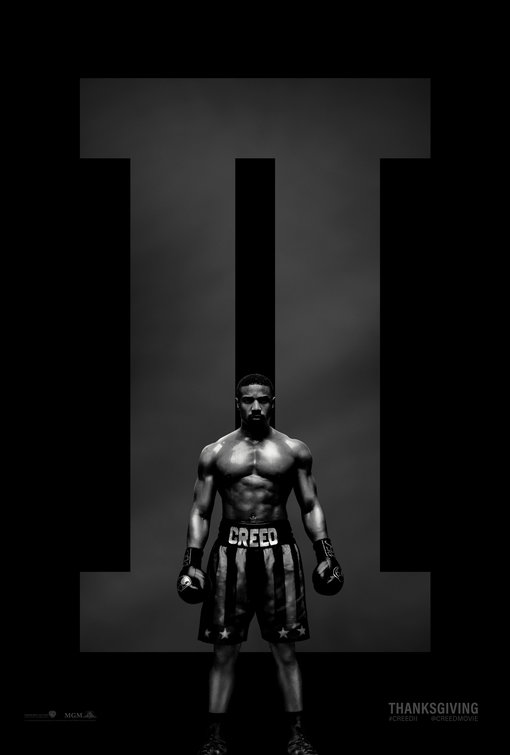
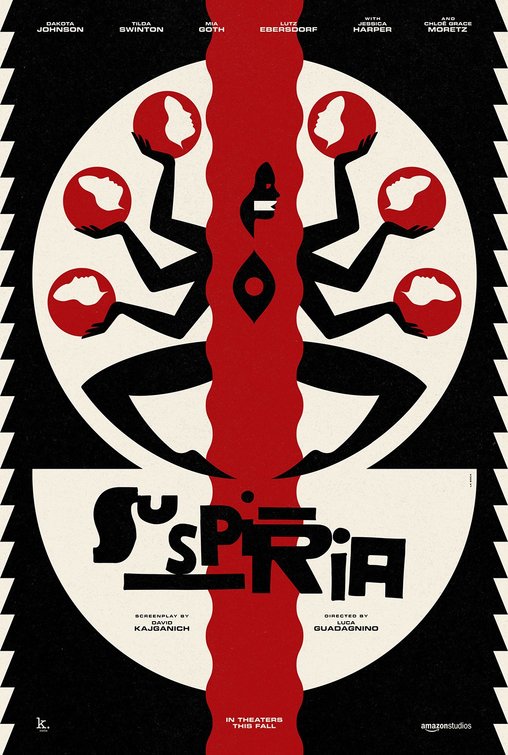
In that spirit, I tried to sort out a crowded field of one-sheets by asking what jumps out as different, and as the list will reflect, 2018 was once again a disappointment for anyone hoping the biggest mainstream blockbusters would have creatively inspired posters. We knew the day was coming, and for the first time, they've been completely shut out. Yet again, most of the choices below were from films few have seen, with an especially strong showing for documentary posters. It's also the first time the number one film appears on both lists for two entirely different designs, and deservedly so. Despite recent blog inactivity during what's been an unusually lean year for movies, you knew I wasn't missing this for anything. Remember that only official posters released in 2018 (including those for 2019 films) qualify. Runners-up and the year's worst also listed below alphabetically As usual, all images provided by Impawards.com.


The Best...

10. Mandy
 

I know what you're thinking. This must be some kind of mistake. Nicolas Cage making an appearance on the "Best" list. What's so magnificent about this appropriately crazy design for Panos Cosmatos' Mandy is that at first glance you realize it does contain all the insanity accompanying the decade-plus stretch  Cage's paycheck collecting phase of his career.  But an even closer look reveals just how artfully done it is, lacking the cheapo photoshopping that's made his posters as ugly as some of his choices.  Mandy, described by imdb as focusing on a couple being brutally attacked by a "nightmarish hippie cult," could still easily be one of those disasters, but at least it hit this out of the park.

From the vibrant pink and purple color palette to ethereal image of Andrea Riseborough presiding over a perfect hallucinatory pyamid of otherworldly evilness, it sure isn't easy to shake. At its center is Cage, looking as determined and ridiculous as ever. Has he finally made a good film, or at least an intriguingly bad one? This one-sheet sells it as the ultimate head trip, piquing my curiosity to find out. It looks and feels like his best shot. And any poster that can even trick us into thinking that's possible must really be doing something right. 


9. The Man Who Killed Hitler And Then The Bigfoot


While opinions may vary on the merit of these campy B-movie tributes that seemed cribbed from the Tarantino grindhouse playbook, lost amidst speculation about the zany title's possible implications, is this one-sheet, which is a sight to behold. If you were to attempt to visually capture on paper the spirit of a film titled The Man Who Killed Hitler and then the Bigfoot, this surpasses whatever that effort could have been (and no, I don't undertand that second "the" either). While floating heads on a poster never seem to work, something about these nicely illustrated ones just do. The whole concept is perfectly laid out in such a way that the supporting players provide just that: Support for the poster's central figure and the title character, played by the legendary Sam Elliott, who's never popped on a poster quite like this. Combine that with an unusual brown/amber color scheme, details like the Sasquatch footprint over the swastika and the flames and helicopter in the background, and we have a keeper.

What pulls this all together is that giant Sam Elliott head that's just simply an amazing depiction, capturing all the intricacies of the actor's appearance and presence. There's so much going on here and yet it doesn't seem overcrowded in the slightest. While I couldn't find what agency or artist designed this, it's safe to assume they weren't paid nearly enough, especially given how much this creatively overdelivers in relation to the film's cost. And if anyone's capable of killing BOTH Hitler and Bigfoot, Elliot's your man.


8. Matangi/Maya/M.I.A.


2018 wasn't just a watershed year for documentaries, but for their posters, as four made this Top 10. With all the big studio one-sheets looking exactly the same and even the indie ones attempting to rip each other off or being too clever by half, the poster for Matangi, Maya, M.I.A. seems especially bold in its simplicity. There's nothing flashy here, as what looks to be almost a publicity phot of M.I.A. staring straight through us shares vertical space with a helicopter, airplane and (of course) a paper plane, symetrically placed between each word of the title.

Aside from how efficiently laid out this is, what really sells it is the color scheme. How many posters have you seen that use THIS shade of green as prominently, or even at all? The contrast between that, the black and the white title and paper plane make this unforgettable. Considering the doc's focused on an artist known for going over-the-top, showing restraint by resisting the urge to have the poster resemble one of her crazy album covers, feels like the perfect choice. And the message that this a movie and performer meant to be taken dead seriously is expertly conveyed in an understated image even her biggest fans couldn't have seen coming.


7. (Tie)

The Old Man And The Gun


In the list's first example of a wildly successful homage, this Robert Redford centered one-sheet for David Lowery's The Old Man and The Gun harkens back a few decades to find inspiration from his visually similar 1972 poster for Jeremiah Johnson. Considering this laid back caper was heavily promoted as the legendary actor's final on screen role, it's only fitting it be bookended with this image, which finds him giving a literal tip of the hat to his career while cleverly calling back to one of his earliest cinematic accomplishments. Just like the poster that inspired it, this one is about as stark and as simple as it gets. Cast credits on the upper right, bold red titling on the bottom left and the Sundance Kid himself strolling in an off-white landscape of negative space. In most cases, obscuring a a major star's face would seem to be PR suicide, it's pulled off succesfully here because of the ubiquity of the performer. No introduction necessary, as we somehow know exactly who this is, and are given a subtle peek as what to expect from the film.
 
Hal 


The prolific Midnight Marauder's one-sheet for the documentary, Hal (focusing on the career of legendary director Hal Ashby) accomplishes a similar feat with its use of negative space and layout of credits. Where it wonderfully veers is in its vibrant splash of orange sun behind the black and white photo of a lounging Ashby. Besides there not possibly being a better pose that captures his attitude and philosophy toward filmmaking and life, it just pops against that grayish-white background. And while I'm not usually a huge fan of shadows, this actually works in that it seems so off-putting and unexpected. Love that corner placement of the "BELIEVE IN CINEMA" tagline. But the topper is the title being the subject's own signature, a clever choice that isn't used often enough in poster design.


6. BlacKkKlansman


Often, a single powerful image can convey better than any tagline, logline, synopsis or review what a movie's truly about. Spike Lee's BlacKkKlansman forces viewers to take a hard look at our country's shameful legacy of racism, so its only fair its poster be equally confrontational and controversial. And there's really nothing else that could more accurately convey its plot of a black police detective going undercover to bring down the KKK. Of course, we know Ron Stallworth (played by John David Washington) doesn't physically infiltrate the Klan as is depicted here, but that only makes seeing the manifestation of his efforts in this image that much more powerful.

The badge, the comb, the hood and the fist tell us everything we need to know and then some. Not to mention the effect of the burned, torn sides of the poster.  And now might also be the time to praise Spike Lee for his masterful play on the film title's spelling, done in a retro 70's blaxploitation font. I can't prove the movie wouldn't have done as well without the marketing campaign behind it, but there's no denying it helped tremdendously in properly positioning what could have otherwise been a really tough sell.


5. You Were Never Really Here (Three Versions)


Lynne Ramsay's largely unseen indie drama, You Were Never Really Here is described in its logline as being about an "embattled veteran named Joe (Joaquin Phoenix) tracking down the kidnapped pre-teen daughter of a state senator." Many have yet to catch up with the film, but it's strikingly original series of theatrical posters are much harder to evade. The inclusion of all three in this spot would seem to suggest they're each covering equal ground in terms of quality, which that wouldn't be far off. But that doesn't preclude the fact that the last one is simply astounding, as Phoenix literally breaks through the ocean surface title and plumetts underwater toward the credits below. It's hard not to just stare in awe at that design choice, as few recent one-sheets have used its title or spacing in as compelling a way. The first one is a real throwback in the best possible sense, with Phoenix's pensive-looking character carrying the girl through the darkness, her bloodied hands dangling next to the title. That motif is revisted in the Saul Bass-inspired minimalist design of Version B, that sees him immersed in the hand's bloody trail, as if the image itself is also leading us along with a unique overhead viewpoint.
   

4. The King


Eugene Jarecki's critically acclaimed bio-documentary, The King retraces Elvis' roots in his 1963 Rolls-Royce Phantom V, the Trump Presidency, race relations and many more important issues facing the country sandwiched in between that somehow all comes back to the legendary entertainer. It features a truckload of celebrity cameos and is supposedly very, very good. I'll confess to only knowing about any of this due to its eye-catching poster, designed by the aforementioned Midnight Marauder. And that should ultimately be any movie poster's goal: To shine a spotlight on and attract attention to films that otherwise wouldn't have been given a second look by most mainstream audiences. All eyes are immediately drawn to The King's giant shadowy visage, doubling as hills the car travels above a landscape featuring iconic American landmarks like Mount Rushmore, the Statue of Liberty and the Hollywood sign. But what's most impressive about this is the use of black and gold, creating a kind of nightmarish photographic dark room effect. Everything seems off-kilter, much like the film, which definitely doesn't look like your ordinary Elvis doc, whatever that's supposed to look like these days.


3. Shirkers


Here's one where it really does help to have seen the film before the poster, which is full of little details and Easter eggs that can only be fully appreciated after watching Sandi Tan's jaw-dropping documentary, Shirkers. Now that it's streaming on Netflix, more people have thankfully discovered her autobiographical love letter to adolescence, moviemaking and Singapore in the early 90's. Centering around the quirky little movie of the same title she made with her childhood friends that was stolen by a mysterious, charismatic figure with questionable motives, Tan tries to piece together the puzzle of its 20-year disappearance, opening up some old wounds in the process. And this one-sheet, designed by the great New Yorker illustrator and cartoonist, Tomer Hanuka, somehow manages to capture all of it and more in a multi-colored representation of the movie's many pleasures.

It's a single sheet "Where's Waldo?" as you pick up on all the little details he squeezes in there, like the crossing guard, the kid on the bike, the dancing dog and the man with the suitcase. But it's that central image of Tan, camera in hand and reels of film tied to the back of the mystery man's scooter that resonates most. With a face that's appropriately blacked out, he's literally driving her destiny, highlighting the central question at the film's center.

At a time when it seems everyone's been overdoing it with the illustrated posters to wildly mixed mixed results, this is a reminder of how special they can be when an artist gets it right. Even the Netflix logo, usually a cheap-looking eyesore, blends in well for a change. My knee jerk reaction was almost that's it's too busy, but that's the movie: Bursting at the seams with life and creative energy. This makes me want to escape back into that world and rewatch it right now.And he even fits in the movie within a movie's tag line: "There are Movers. There are Shakers. And there are Shirkers." Love it.


2. Her Smell

Before the film (which hit Toronto earlier in the year) arrives in U.S. theaters in early-2019, there's still time to decide whether Her Smell is one of the best or worst titles for a movie in recent memory. As you could have probably guessed, I'm going with the former, but even those who disagree have to admit it leaves the desired impact. You'll remember it, much like this one-sheet teaser brilliantly paying tribute to all those vintage faded, rainbow-colored rock concert posters of the 60's and 70's.

Starring Elisabeth Moss as a Courtney Love-like grunge rock frontwoman in the throes of a self-destructive downward spiral, this promises an experience every bit as aggressive and confrontational as its protagonist (antagonist?) But just look what they did, formatting the title and credits to PERFECTLY match the layout of those vintage posters, like the Toronto and New York film festival dates taking the place of what would otherwise be the concert date and venue. And the bottom credits serving as kind of an "opening act."

If this concept has a flaw, it's that it's too good, virtually indistinguishable from the real deal. If you put it side by side with the designs that inspired it, good luck telling the difference. Someone really did their homework. And if ther is a legitimate connection between a film's quality and its poster, Moss and her adventurous choices just might be the connective tissue, as she seems to have become a permanent fixture on this list for her critically acclaimed, risk-taking indie projects. With a design that feels like the perfect marriage of concept and execution, it was surprisingly difficult not to award this the top spot.      


1. The Front Runner


Jason Reitman's The Front Runner, which depicts Presidential candidate Gary Hart's doomed 1988 campaign, was fittingly released into theaters on Election Day, 2018. No one went. Few have even heard about it. Despite some decent reviews and praise for Jackman, no one's really discussed it since. Having not seen the film, I couldn't tell you whether that's fair or not, or even draw any clever parallells between the movie's fade into obscurity and that of its protagonist. Its commercial failure can most likely be blamed on everyone getting more than their fair share of politics in the news and deciding they couldn't bare to take any more at the movies. And it's tough to blame them. But what's less disputable is that this teaser poster by Manheim is a masterpiece, setting the film up for expectations it couldn't possibly deliver on, regardless of quality.

Unlike the one-sheet for Her Smell, which mimics a design that nearly everyone recognizes and is familiar with, this shout-out is subtler, but no less brilliant. And perhaps more so, since it works on a few different levels, the first of which is as a successful recreation of 70's and 80's campaign posters, right down to the exact font, colors and, of course, that glorious red and blue border. This is as solid an example as we're going to get of how much a border can enhance the overall look of a poster if properly incorporated into the design. This one not only does that, but manages to be thematically tied to the movie's subject as well.

With a design and style that also recalls classic paranoid political thrillers such as The Parallax View or The Manchurian Candidate, it's the illustration of Gary Hart's campaign bus literally careening off a cliff into negative space as reporters trail behind (through the poster's border!), that becomes the ideal visual representation of how his failed run forever changed the relationship between politics and the media, the reverberations of which can still be felt today. The tag line says as much, making the rare case for telling us exactly what the movie is really about, while managing to get every last detail down, including the title being presented in quotes. An embarrassment of riches, that all this is achieved in such a clean, stark, minimalistic image is what makes it so astonishing and destined for a shelf life far longer than both the story and film that inspired it.                


Runners-Up (Alphabetical)...


...And The Worst


Realizing I'm in the minority naming this one of the worst posters of the year (while also recognizing there are still far worse), it's difficult naming a major release with one as bland and nondescript as the one-sheet for the Coen Brothers' highly praised anthology film, The Ballad of Buster Scruggs. It's clear what they were going for in having the six stories branch off from the title, but it couldn't be any less interesting, serving as a great example why we don't see white titles against light grey backgrounds. You'd almost rather they aim for something excitingly awful and fail, than this washed-out design. But given it's the Coens, at least the movie has to be good...right? This alternate version is so, so much better. It's amazing what a little color can do.


Bohemian Rhapsody is beloved by audiences all around the world, most of whom have outright dismissed most critics' complaints about its accuracy, which is fine. But these posters look to have been printed the night before it opened in a studio executive's basement. They're paint-by--numbers photoshop, doing nothing to inspire confidence that the movie's anything other than a slick corporate product meant to cash-in on Mercury's life and legacy. And given the movie's pre-production problems, wasn't that everyone's worst fear going in? Hopefully that's unfounded and this is just another case of false advertising.    


If only for comparison's sake, this has to be included. The polar opposite of its teaser counterpart you saw in the number one spot above. While that was admittedly tough to follow, this is especially awful by even the worst straight-to-DVD cover standards. A befuddled Hugh Jackman in what looks like a bad wig photoshopped into a scene with flash-happy papparazzi. I understand the need to release an alternate theatrical poster heavily featuring the film's star, but if they're going this route, is that really such a great idea? And the bottom credits may as well be invisible.


Less a complaint against this particular poster for Lynn Shelton's Netflix indie, Outside In, than the tiresome design method they chose to go with. You may recognize it, as it's been used in what seems like every other poster for the past decade. A person's image is superimposed over another person's image that appears over a landscape shot. But I don't think I realized just how tiresome it was until seeing this one, which takes its title quite literally, not missing an opportunity to hammer home the point that "Things are Never the Same Outside." Because he just got released from jail. Get it? Ugh.  


While it's not really fair to be "offended" by Ready Player One's poster campaign centering around paying tribute to pop culture's most iconic movie posters when that worship is at the heart of the film itself, But I just can't help it because they're awful. They butchered all of them and I can't stand looking at that face on poor photoshopped recreations of what was originally great poster art. And shame on them for making me resort to calling the original Matrix poster great art. There are many more not even listed, but if I was forced to pick the only tolerable one of the bunch it would probably be this Risky Business parody if only for the clever detail of having the girl pose on the hood of a DeLorean. That least it seems like a more fitting tribute than that abomination you see above.    


Without quite being as spectacular a misfire as Ready Player One's collection above, the studio didn't do Skyscraper or Dwayne Johnson any favors by poorly aping posters for Die Hard and The Towering Inferno in its ad campaign. And in the case of latter, they didn't even bother to aim for accuracy, opting instead for a bizarre image of its perplexed-looking star. And that's coming from someone who really liked Skyscraper and thought it got a lot of things right in avoiding potential allegations they were poor man's versions of those films. As bad as some other posters were this year, these two just might have them all beat for the laziest.

Now this is more like it. Finally, an over-the-top, hilariously terrible poster sure to make even Nic Cage blush. In the subtly titled SPEED KILLS, "Travolta plays speedboat racing champion and millionaire, Ben Aronoff, who leads a double life that gets him in trouble with the law and drug lords." That's via imdb. And while it's supposed to loosely be based on a true story, whatever interest existed in that has apparently deteriorated into what you see above. In other words, a John Travolta movie. But this looks excessive even by his standards. Where's Warren Zevon when you need him? You know you've got it made when you're more concerned with buttoning your sports jacket than the cash flying out of...who knows where. That first one-sheet should be considered worse, if not for the promise (threat?) of a "Cinematic Virtual Reality Experience" in the second. For those who always wondered how Travolta's hair would hold up in VR, your wait is over.

Sunday, November 25, 2018

Skyscraper


Director: Rawson Marshall Thurber
Starring: Dwayne Johnson, Neve Campbell, Chin Han, Noah Taylor, Pablo Schreiber, Roland Møller, Byron Mann, Hannah Quinlivan, McKenna Roberts, Noah Cottrell
Running Time: 102 min.
Rating: PG-13

★★★ (out of ★★★★)

Judged exclusively by its trailers and commercials, you'd be forgiven for thinking the latest Dwayne Johnson action spectacle, Skyscraper, could be the silliest, most ridiculous big budget cash-in yet for the industry's highest paid actor. And the given some of the questionable creative choices he's made over the past five years, that's really saying something. With his movies further widening the gap between actual quality and box office dominance, we have to believe his success is entirely due to his drawing power and innate charisma, as considering the notion those projects did anything right other than give him top billing is a possibility I'm not quite ready to face.

This time, by diving headfirst into its fun premise and embracing it, Skyscraper becomes Johnson's first legitimately worthwhile project in some time. But since the trailers weren't exactly wrong about what's delivered and critics gave him their usual thrashing, it's a mystery why moviegoers stayed far away. Or at least why they decided to this time, since we know what we're getting from him and it never seemed to bother anyone much before.

While it would still be a stretch to declare this Johnson's trip out of his comfort zone, it's at least at the service of a solid story that manages to play within the rules and boundaries of its own universe, as over-the-top as those may be. Drawing some inspiration from the likes of Die Hard and The Towering Inferno, it also happens to be a lot of fun. Johnson may not have "needed" this and can't keep doing these types of movies forever, but until he's ready to flip that switch and truly be taken  seriously, this helps prove he's capable, putting his natural strengths as an actor to good use.

Johnson is U.S. Marine war veteran and former FBI Hostage Rescue Team Will Sawyer, fitted with a prosthetic after losing one leg below the knee in an explosion years ago. Now, he works as a security accessor, with his latest account being "The Pearl," the world's tallest skyscraper built in Hong Kong and funded by wealthy Chinese entrepreneur Zhao Long Ji (Chin Han). Working with Zhao and his friend and fellow ex-FBI agent Ben Gillespie (Pablo Schreiber), Sawyer's in the process of insuring that the building's fire and security systems are a go when he unwittingly becomes the target of international terrorist Kores Botha (Roland Møller). 

Eventually gaining control of Sawyer's tablet, Botha and his men start a fire on the building's 96th floor and disable the extinguishing system. But knowing that his wife Sarah (Neve Campbell) and two twin children, Georgia and Henry (McKenna Roberts and Noah Cottrell) are trapped inside, Sawyer formulates a plan to get above the fire and rescue them. But between being chased by police and targeted by Botha's henchmen, it'll be a race against time, and a rapidly raging inferno.

Once you completely let yourself go and buy into the premise, much of the material works, as does the manner by which writer/director Rawson Marshall Thurber (2016's Central Intelligence) translates it to the screen. The flashbacks to Sawyer's time in the FBI and the event that took his leg effectively set the stage early for a Johnson action hero that actually has some degree of physical vulnerability, giving him some slightly different notes to hit this time around. It also leads to more than a few clever situations involving the prosthetic limb, which is rarely forgotten about in the heat of the action, despite some of Sawyer's more superhuman feats.

If the conceit of the protagonist's diability seems right out of Screenwriting 101, those involved still deserve credit for making it work and appear substatially less silly than it appeared in previews. Like most everything here, it's CGI, but it's effective, as there were very few instances where the visuals stuck out like a sore thumb or seemed laughably inauthentic. Compared to most entries of its ilk, many of the bigger set pieces hold up well, and at just over an hour and a half, I'd be surprised if anyone would be looking at their phones waiting for it to end. In an era of bloated, nearly three hour cinematic endurance tests, its brevity becomes a relief that can't be understated. And even with very few surprises in the way of plot, there's still something to be said for executing a relatively straightforward story well.

As Sawyer, Johnson is his usual charismatic self, and if that doesn't come off as the most effusive of praise, it's only because he seems to have settled into a rather predictable zone that's likely a side effect of having become such a gigantic star over the past couple of years.The poor returns for this outing could be viewed as less of a reaction to this material than the result of audience burnout from his lesser projects. This at least gives Johnson the opportunity to showcase his action chops and sense of humor in a situation that falls just on the right side of ridiculous, even allowing him to inject an occasional infusion of credibility to the proceedings.

It's worth admiring the completely unexpected, but inspired casting of Neve Campbell as Sarah Sawyer in one of the very few instances of a male action star being paired with an actress who isn't half their age. The character isn't an afterthought either, as her history and relationship to him provides a level of involvement that wouldn't otherwise exist in lesser action spectacles. Unfortunately, what's missing is a truly memorable villain, replaced instead by your run-of-the-mill foreign terrorist baddies that seem ripped from a straight to cable 90's thriller. The only interest in them comes from their relationship to the meglomaniacal billionaire Zao, whom Chin Han plays with his cards close to the vest, providing some doubt as to his true motivations.

There's a visually sensational sequence toward the end of this film that seems to have been altogether ignored by both critics and audiences. In fact, it's so strong that it nearly justifies the project's entire reason for being, even while making you wish the rest of it was as inventive. It's a climax and pay-off to a projection technology introduced by the Zao character, culminating in a hall of mirrors reflection sequence that's notably impressive, regardless of how anyone feels about the story containing it. It's tough to watch that and claim Skyscraper offers nothing, even while continuing to hold out hope for the day when it feels uneccessary to grade Johnson's movies on a curve.

Tuesday, October 23, 2018

The Kindergarten Teacher


Director: Sara Colangelo
Starring: Maggie Gyllenhaal, Parker Sevak, Michael Chernus, Gael García Bernal, Anna Baryshnikov, Ajay Naidu, Rosa Salazar, Sam Jules, Daisy Tahan, Samrat Chakrabarti
Running Time: 97 minutes
Rating: R

★★★ ½ (out of ★★★★) 

If the goal of a teacher at all education levels is to help their students reach their fullest potential, just a nudge or push in the right direction can often let them know they're capable of more than they suspected. With the proper guidance, they can get there, and when it happens, this achievement accompanies a realization that the ability was actually in them along, and just needed some nurturing to reveal itself. In Netflix's disturbing and thought-provoking The Kindergarten Teacher, the title character lives and breathes to provide such inspiration for her students.

Under usual circumstances, this kind of devotion is admirable. What's not are the lines she's willing to cross to provide it, calling into question the very definition of the word "teacher," specifically when their involvement in students' lives starts to become about something other than the kids. Most would agree if there's a clear line, she jumps right over it, resulting in disastrous if not potentially dangerous consequences for those directly involved. It also has a lot to say about the pressures adults put on themselves and how easily they're capable of projecting them onto those least equipped to handle it.

Entrusted with a job requiring almost complete selflessness, she instead disappears into her own mind and insecurities, attempting to rectify her failures through an impressionable child. Using him to fill a seemingly unsatiable void in her life, it plays out like a horror movie with a situation that starts innocently, until escalating enough to where the tension reaches a boiling point.

While it becomes frighteningly apparent just how far this woman can go, we're still not quite sure the distance writer/director Sara Colangelo's script will, or how it can possibly resolve itself without manipulation. And yet it somehow does, in equally observant ways. Nothing that occurs couldn't happen, and it probably has, which only makes it that much more uncomfortable to watch. At its center is a revelatory lead performance from an accomplished but long underrated actress that's a subtle tightrope walk of emotions.

With two decades as an educator already behind her, New York-based kindergarten teacher Lisa Spinelli (Maggie Gylenhaal) is merely going through the motions at home with husband, Grant (Michael Chernus), while barely trying to mask her dissapointment in unambitious teen children Lainie (Daisy Tahan) and Josh (Sam Jules). Determined to become a published poet, she takes night classes, only to find her work routinely picked apart and dismissed by both her peers and their instructor, Simon (Gael García Bernal). Creative salvation soon comes from one of her students, 5 year-old Jimmy Roy (Parker Sevak), a child prodigy who's capable of unexpectedly blurting out beautiful poems at will.

Looking to harness and mold Jimmy's untapped potential, Lisa makes him her personal project, rushing for a pen and paper whenever inspiration strikes and even going so far as to actually present his work as her own. The more she smothers him with attention the clearer it becomes that it isn't even really about him anymore. And in trying to "rescue" Jimmy from a passionless world she views as incapable of faciliatating his unique talent, her obsessive mentoring soon crosses into territory from which there's no turning back for either.

Open-hearted, quirky and achingly sincere, Lisa can't seem to comprehend how a child with so much to offer the world isn't being encouraged or intellectually stimulated in any way. But what Colangelo's script (which she based upon the 2014 Israeli film) is good at emphasizing is Lisa's slow-building inability to grasp the reality that this is still a five-year-old we're talking about. He's somewhat shy and withdrawn, but at the end of the day, he just wants to hang out with his friends and and play like all kids his age. It's when she becomes aggressively involved in his home life, making judgments about his frequently absent father (Samrat Chakrabarti) and even the babysitter (Rosa Salazar), that this may be about something else entirely.

Giving her best performance since Secretary, Gyllenhaal plays Lisa as disarmingly normal and competent when we first meet her. Her head may be a bit in the clouds, but we never doubt she's a good teacher, or at least was. It's only when the layers get peeled back with the introduction of this student that she slowly unravels, using him as a vessel to fix what she believes is her own failure of a life. In a memorable scene at home, her daughter even says as much right to her face.

More impressively, Gyllenhaal and young Parker Sevak's scenes manage to find that realistic sweet spot in an extremely disconcerting dynamic that will give all parents another reason to worry about sending their kids off to kindergarten. As Lisa's teacher, Gael García Bernal may not seem to have much of a role, but his character is important in that he's also being manipulated. That he only starts to take both a professional and personal interest in her when she assumes this new persona is further ammunition for Lisa to hate herself more, and double down on the deception. But he's no victim, guilty himself of abusing his position, proving to be in this for more than just the sake of art.      

It takes the characters in the script longer to figure out what's going on than we do, but in this case, that makes sense because it takes a while for Lisa to unravel. Only when Colangelo takes the premise and milks every last minute of queasy suspense from it, do Lisa's intentions and actions arrive at a destination that only in hindsight seems to be the most logical of resolutions. Trapped and with seeimgly no way out, she must come face-to-face with her actions, receiving punishment from the person most affected by them. That even in her lowest, most desperate point, this woman still can't help but teach might be the The Kindergarten Teacher's most powerful and pitifully sad moment. As the true magnitude of her actions settle in, it's a lesson learned too late, but perhaps just in time for those affected by what she's done.

Sunday, October 14, 2018

Solo: A Star Wars Story


Director: Ron Howard
Starring: Alden Ehrenreich, Woody Harrelson, Emilia Clarke, Donald Glover, Thandie Newton, Phoebe Waller-Bridge, Joonas Suatamo, Paul Bettany
Running Time: 135 min.
Rating: PG-13

★★★ (out of ★★★★)

Sometimes it pays to go in with reasonably low expectations. Such is the case with Solo: A Star Wars Story, the latest in what was planned to be a long line of spin-offs (or "anthology" films) for the franchise, keeping audiences satiated between 2017's The Last Jedi and whatever comes next. Unfortunately, Disney miscalculated just how much recovery time fans would need following that polarizing experience, and despite the enormous success of the previous spin-off, Solo flopped, at least by Star Wars standards. As someone who was never behind the idea of these stand alones (thinking it would lead to oversaturation), but pleasantly surprised by Rogue One, I still entered this with heavy reservations.

From the questionable casting of the younger version of its title character to originally appointed directors Phil Lord and Chris Miller being fired, to hardly a postive word being spoken or written about the project, it really felt safe to assume the worst this time. What I got instead was an extremely enjoyable entry into the franchise's canon, whether taken on its own or compared to the three other entries since Disney bought the property from George Lucas.

While Solo definitely isn't flawless, it's hardly deserving of the vitriole it's received. And if part of that stance truly has to do with expectations, the other half may stem from it just feeling right to get a comparitively low stakes outing after The Last Jedi. That's not to say it's uneventful, but rather all the weight and emotions surrounding Star Wars as a cultural enitity doesn't rest on its shoulders as it did with that film. Even for those who greatly admired what Rian Johnson was trying to do, there's still no denying it's kind of an ordeal. One made by someone who, for better and worse, was ambitious enough put his own stamp on it.

Contrast that with Solo, where Ron Howard is most definitely hired to do a job, a reliable last minute fix due to unforseeable creative issues. He was chosen because he's safe and Disney knew he would deliver a timely, inoffensive, workmanlike piece of mainstream popcorn moviemaking. And you know what? He does. That this a compliment speaks to the film's efficency, immersing us in a simple story that works, sprinkled with familar characters and a consistent tone. The guy knows what he's doing, and after all the thematic heaviness offered up in the franchise, it works as a fun diversion, while peeling back additional layers to the mythology that feel surprisingly organic and necessary.

Taking place ten years prior to the events of A New Hope, a young Han Solo (Alden Ehrenreich) and his girlfriend Qi'ra (Emilia Clarke) flee the planet of Corellia, he escaping on an outgoing transport while she's captured and detained before boarding. Han vows to return to her, but after his expulsion from the Imperial Flight Academy, he falls in with a ragtag group of criminals on Mimban led by smuggler Tobias Beckett (Woody Harrelson).

Han soon finds himself recruited by Beckett and his wife Val (Thandie Newton) to join pilot Rio Durant and a Wookie named Chewbacca (Joonas Suotamo) on a mission to the steal heavily desired hyperspace fuel, coaxium, for scarred Crimson Dawn crime boss Dryden Vos (Paul Bettany). But when best laid plans disintegrate and Vos threatens their lives, their only chance at survival rests on a dangerous job on the planet Kessel.

Enter smooth-talking, two-faced smuggler and pilot Lando Calrissian (Donald Glover), whose reliable Millenium Falcon will provide the means of transportation, while his navigationally gifted droid co-pilot L3-37 (Phoebe Waller-Bridge) rides shotgun. Unfortunately, Han's biggest problem might be Qi'ra, who's now Vos' top lieutenant, and far enough removed from their time together on Corellia to give him pause about where her loyalty lies.     

For all the fuss about Rogue One lacking the legendary opening SW crawl, it's ironically present again here in a film many believe is undeserving of it. It's a small detail to point out (as if there's ever such a thing when talking Star Wars), but a sign that they were positioning this entry to be a big deal, with every intention of having it creatively hold up against the franchise's best. It doesn't, but comes closer than you'd think, while requiring an adjustment in perception in how we view the title character.

Whenever Harrison Ford's performance as Han Solo is discussed by fans, the conversation always comes back to that one scene in The Empire Strikes Back when he's being taken to his carbonite tomb and dryly responding to Leia's sudden declaration of love with a cocky,"I know." For years it's been held up as the ultimate anti-hero move, with Ford's brilliant improvisation exposing Lucas' writing deficiencies. That scene came to stand as the essence of what Solo should stand for and it was understood the actor stepping into Ford's shoes would have to posess that same rebellious charm and sarcastic spirit. In other words, good luck.

The problem with those expectations is that he's not that Han yet. He will be, and the strongest aspect of Solo is how you start to see the blueprint of it through this early adventure, which heavily shapes what he'll later become. For the origin story of Solo, the casting of Ehrenreich works to a certain extent, as he slides deeper into the skin of Han as the film progresses. But the story doesn't ride or die with his performance, and it thankfully isn't another Hayden Christianson situation where the actor isn't only miscast, but wooden, with the material he's given accentuating those weaknesses. 

While the first hour is full of fun little Easter eggs and character cameos and introductions, it isn't until about halfway in where the adventure really starts to rev up. The biggest relief is that the healthy balance of CGI with more practical effects Abrams and team have taken in the new series carries over here. There's a sense of fun surrounding this adventure that not only supplies an entertaining backstory to Han's first encounter with future sidekick Chewbacca, but a rebellious mentor who provides the template for what he'll eventually become, a romance threatened to be torn apart by a formiddable villain, and of course Han's infamous card game with Lando for the Millenium Falcon.

All is of this is solidly presented by Howard, making for an engaging space romp that calls to mind some of the more memorable scenes that took place on that ship and in the Cantina in A New Hope. Everything can't be gloom and doom all the time, so while the action is kept light and the narrative stakes lower than other installments, the thrills come from tracking these previous incarnations of familar characters. It's a small luxury, but one we weren't afforded in Rogue One, which fought and impressively won an uphill creative battle in getting us to care about an entire set of new characters embarking on an ill-fated mission.

While willing to accept a lot of this succeeds despite rather than because of Ehrenreich's performance, the same can't be said of Donald Glover's. On paper, his casting already looked promising, but on screen the Atlanta star becomes Lando, delivering a smooth, comic tour-de-force that's every bit what we've imagined the brash, younger version of the character to be. You can even see shades of Billy Dee Williams in it, as well as an ability to come through in some of the more dramatic moments such as a particularly involving one with an injured L3-37. He and Han's adversarial partnership might be the one big element in this story that successfully tracks with the original films. While I wouldn't go as far as to say it enhances the characters' "later" scenes together in The Empire Strikes Back, it does solidly support them. Even as strange as it is to consider that Ford and Williams were practically as young as Ehrenreich and Glover are now when they filmed them.    

As Qi'ra, Emilia Clarke gamely walks the line between her character's loyalty to Solo and her responsibilties to the sadistic Vos, with whom her survival rests. Originally meant to be depicted as a motion capture alien, they chose the right direction in using a facially scarred Paul Bettany, who has more presence than any technological effect. So does the biggest name in this, Woody Harrelson, who avoids the Samuel L. Jackson trap of making his role feel like a cheap Star Wars celebrity cameo, bringing some much welcome unpredictabilty and zaniness to Beckett.

Toward the third act, the plot takes a few turns that aren't only suprising, but make sense. They also go a long way explaining the type of smuggler and person Han becomes without flat-out explaining it, a flaw that sinks most prequels. There's also a major cameo that adds something and avoids serving as a distraction on the level of Leia's CGI appearence in Rogue One, which became more about technology than story.

In Solo, nearly everything comes down to the story, and one's reaction largely depends on what we wanted to know about the title character's past and how much of what's revealed matches or detracts from the info we already had. Or, more accurately, how pissed off will everyone get?  It's a shame to put it that way, but if The Last Jedi tought us anything, it's that. A closer, more objective look reveals that Howard and writers Jonathan and Lawrence Kasdan have a firm grasp on the Solo character, taking the series back to its roots in much the same way the The Force Awakens did. But as we're continuing to learn with this franchise, actual quality can become irrelevant in the face of fans' heightened wishes and desires.

Saturday, October 6, 2018

Adrift


Director: Baltasar Kormákur
Starring: Shailene Woodley, Sam Claflin
Running Time: 96 min.
Rating: PG-13

★★ ½ (out of ★★★★)

As a reality-inspired single location survival story, Adrift makes its biggest mistake in wanting to have its cake and eat it too, jumping between a young romance and harrowing disaster tale, all while making it glaringly obvious which it prefers focusing on. A lot of scenes work when taken separately and each would have made a fine film on its own, but taken together, it comes off as somewhat of a mess.

Hardly helping matters is a plot twist we've seen at least six or seven times before in this genre that sucks out whatever remaining suspense could have been generated from the set-up. But labeling this development "manipulative" almost feels inaccurate, naively implying it comes as any surprise at all. The device has been repeated so frequently we're almost past the point of complaining, and despite a true story at least supporting its inclusion this time, common sense still doesn't.

Even with relatively strong performances from co-leads Shailene Woodley and Sam Claflin, much of the picture can't help but give off a YA All is Lost vibe, using the same initial premise behind that greatly superior Robert Redford 2013 survival at sea drama to craft a picture that instead shares more similarities with Woodley's own The Fault in our Stars. All is Lost was a movie that was about what it was singularly about and all the more affecting because of it, leading to a open-ended conclusion  that showed respect for its audience and encouraged contemplation.

This treats its survival story as almost window dressing, or a narrative roadblock in the way of the studio reaching their ultimate goal of selling tickets to teens and tweens interested in two attractive young leads staring longingly into each others' eyes. It's not spoiling anything to reveal a rescue eventually comes, or that by the time it arrives the script gets so caught up in the love story that you forget there needs to be one.

It's 1983 when Tami Oldham (Woodley) and Richard Sharp (Claflin) embark on a 6,500 km journey on the yacht "Hazana" from Tahiti to San Diego, sailing directly into the path of Hurricane Raymond. With their boat destroyed and Richard missing, Tami must use her ingenuity and survival instincts to fight off the elements, as well as inevitable starvation and dehydration, while stranded at sea for 41 days. With little hope for rescue, she survives on canned food, builds a makeshift sail and attempts to navigate her way to Hawaii. This ordeal is intercut with flashbacks to her initial meeting with Richard and their developing realtionship, tracing the steps they took that eventually lead to them boarding that boat, a fateful decision that would forever alter both their lives.

Based upon Tami Olham's own autobiographical account of events, "Red Sky in Mourning: A True Story of Love, Loss, and Survival at Sea," the film's skillfully edited in hopping between the two timelines in a manner that rarely feels jarring or confusing. Still, you can't help but wonder how this would register if instead of jumping between the disaster and meet cute flashbacks, we were given the linear story told to its conclusion. And that's not because the scenes involving Tami and Richard's relationship are poorly conceived, as many are quietly affecting and even occasionally moving, at least as far as screen romances go. But with time being split with the far more engaging survival-at-sea sequences, everything kind of settles into a predictable rythym, the narrative ambling along with no real forward momentum or tension. It's no sooner than when Tami's fighting to stay alive on the damaged vessel, that we're taken back a few months to Richard serenading her in a resturant. And transitions like those happen a lot. 

While it's easy to appreciate what director Baltasar Kormákur was going for in getting us to care about Tami and Richard's bond (and largely succeeding to an extent), the survival aspect of the film isn't given the breathing room it needs to leave its necessary impact. Part of this could be attributed to the PG-13 rating, which really does feel like a concession in that there's a nagging sense that the studio or filmmakers were holding back in some way, at least compared to other more brutal, harrowing on screen depictions of nautical disaster. It isn't lacking in realism so much as pure intensity, most of which is made up for by Woodley's performance.

As the firecely independent, free-spirited, relentlessly creative protagonist, Woodley's depiction of Tami is what the film really has going for it, her authenticity helping to cover that aforementioned imblance and fluff that exists within the narrative. Claflin's a natural too, but most of the workload falls on her in terms of carrying this through. Woodley's put through the emotional ringer and believable enough that her work walks right up to that line of award-level greatness without ever truly crossing it, if only due to the inherent limitations of a script that's frequently undercutting it.

That Tami's survival instincts almost completely hinging on the affections and support of a man results in an experience that couldn't feel less timely or more regressive given the curent cultural climate. If they goal was to make Adrift a full-fledged love story, maybe they just should have done that since it's nothing incredibly special otherwise. Instead, we're left with two halves of what could have been, struggling to form a cohesive whole.