Tuesday, December 26, 2017

The Best (and Worst) Movie Posters of 2017


While it wouldn't be completely fair to categorize 2017 as a "weak year" for movie posters given the amount of great work to be uncovered if you hunt hard enough, it won't be remembered as one the strongest. But the good news is that since I first started doing this list over a decade ago, there's been a huge surge in design quality, quietly reversing the fortunes of an art form once at risk of being absorbed into soulless studio PR departments obsessed with the bottom line and lacking any creative vision. At least that's what it felt like in 2006. Perhaps, similar to the reemergence of vinyl records, more film fans started to appreciate and respect the role of the one-sheet in not only effectively selling a movie to the masses, but giving us a tangible piece of art to admire, display and even collect.

Whereas the big complaint ten years ago was the lack of illustration and the growing irrelevance of legendary poster artists like Drew Struzan in an era of excessive photoshopping and floating heads, there now seems to be a legitimate return to illustrated designs. There's still a lot of that terrible stuff coming from the major studios, but for the first time a while, there's an almost equal amount of  inspired work as well. With the rise of companies like Mondo and increased popularity of alternative movie posters, independent artists now have a larger than ever online platform facilitating creativity. And now finally, the major studios are catching on. In fact, you could argue we have a new problem of too many high concept posters competing for attention to the point that they're all starting to look the same. In this way, "geek culture" and superhero fandom has both helped and harmed the movie poster business.

An over-reliance on artistry may be a good problem to have, but it should also serve as a reminder that a movie poster should still look like one. Of course, I say this knowing full well my selection for the top spot this year looks like it should be hanging in an art gallery instead of a theater. But despite echoing the sentiments of the pack and endorsing aesthetics over concept, few could argue 2017's winner is simply the strongest design by a considerable margin. And that's not to say the concept isn't just as strong. There's a reason this poster's topped or appeared on just about every other list out there, with most agreeing it at least equals or surpasses the polarizing film itself.  Regardless of anyone's feelings on the movie, we should all just be grateful that one-sheets from risky, underseen projects are being seen by a much greater number of people.

By now, you know the rules. Any 2017 official theatrical poster is eligible for consideration, even if it's for a movie scheduled for release during the following year. Alternate movie posers, fan-made art of any kind, or a one-sheet not commissioned by the studio releasing the film do not qualify. Below are my choices for the ten best, followed by an alphabetical listing of the runners-up. And of course, they're followed by my depressing picks for the worst. All images are courtesy of Impawards.com


The Best...

10. Star Wars: The Last Jedi


What a difference two years can make. In 2015, an embarrassingly cluttered, heavily photoshopped The Force Awakens poster made the cut for one of the worst that year. And for good reason. This, on the other hand, feels as if balance and order has been restored to the force, recalling that classic Tim Reamer design for 1983's Return of the Jedi, and really all the posters from the beloved original trilogy. Clean, simple and striking, it gets everything you need to know about The Last Jedi across within a single image. The contrast of red against the retro-infused white border and blue lighsaber is eye catching and that familiar trope of the two floating heads spliced together actually seems completely fresh for a change because of its context.

Everyone suspects Luke Skywalker and Kylo Ren will be on a collision course with Rey caught in the middle, so besides the choice being visually mesmerizing, it makes creative sense.  And how about that symmetrically perfect placement of the title treatment on the bottom center, where it's never looked as bold. Ironically enough, the ubiquitous artist known as LA also designed that aforementioned Force Awakens disaster, lending credence to claims the designer may just be giving the studio what they want when it comes to a huge franchise like this. Either way, I like what they wanted this time. A welcome return to basics.


9. Baby Driver


At first glance, the official theatrical poster for Baby Driver doesn't seem like much, aside from the fairly unusual color combination. Like me, you could even initially be fooled into thinking that it's another one of those jumbled photoshopped character collages where they try to contractually jam everyone onto the page. But look closer. Someone actually drew this (a really talented illustrator  named Rory Kurtz), and even from a close distance the artwork is so painstakingly realistic you'd never be able to tell it isn't a cast shot. Of all the posters on the list, this is the only one I own, and while that was kind of unplanned, I still can't help but marvel at how meticulously designed it is, especially for a major commercial release.

Besides the detail on the illustration itself, all the characters are incorporated into the print without it looking too busy or anyone seeming unnecessarily shoehorned in. Neon pink (which after Drive, must now be the official getaway driving color) and tan already feel like an iconic pairing that instantly brands the movie, whether that be on a subway billboard, an on-demand thumbnail, Netflix menu, or full-size poster like this. It just works, as do the speeding vehicles careening diagonally as if they're literally racing off the page, creating what's nearly a three-dimensional effect. The credits are perfectly placed on the right, and while the title treatment isn't too flashy, it doesn't need to be because everything else is, allowing it to stand out. It's just a cool, crisp, efficient design, further proving  just how much Mondo and other alternative outlets have infiltrated and influenced the major studios in positive ways.


8. Get Out


As a big fan of using blank or "negative" space in movie posters, I couldn't help but grin with approval upon laying eyes on the one-sheet for Jordan Peele's Get Out, which actually had a lot of options on the table as far as what could be done. And yet, because of the controversial subject matter and sly social commentary, most of those options probably weren't all that feasible. And that was for the best, as the one thing you didn't want was to go over the top, for both the risk of spoilers or marketing the film as something it's not (an exploitive race-baiting thriller). Sometimes the simplest, most obvious solution is wisest, resulting in a design that's subtly powerful precisely because of how much it holds back.

The movie itself is a slow burn and this poster reflects that, as well as the growing disorientation and fear of the protagonist, Chris Washington (Daniel Kaluuya), whose teary eyes have become the indelible symbol of the story's horror. And maybe even 2017's. Love how the design recreates that claustrophobic feeling of him being completely boxed in and totally gut-punched by the shocking circumstances he's encountered. This poster, possibly even more than the film, may as well be a case study for using minimalism for maximum impact. The black lettering against a stark white background is most definitely not a purely artistic choice, but it's really all that spacing that makes everything stand out, especially the ingenious tag line: "Just Because You're Invited, Doesn't Mean You're Welcome." Isn't that the truth?
  

7. Lady Bird


This one breaks every rule. A simple side profile shot of the film's star doesn't exactly scream excitement or inspiration. And it probably won't persuade moviegoers unfamiliar with the film's premise to line up at the multiplex. But who are we kidding? Anyone who wants to see Greta Gerwig's acclaimed coming-of-age drama, Lady Bird, already knows what it is, and those who don't, will or won't go anyway based on recommendations and Oscar buzz. Unlike the two previous entries, this is free from the constraints of having to do a hard "sell," resulting in magnificent, stately image that casually envelopes you in the movie's tone and feel.

By taking something we've seen hundreds of times before with a head shot of the title character and making it undeniably captivating, it's as if we've never laid eyes on anything like it. Or her. Saoirse Ronan casts a great profile, the red hair gets your attention and that rainbow-colored stained-glass border with matching credits definitely isn't something you see everyday. And don't even get me started on that classic Gothic title font, which fits like a glove in this particular instance. Even the concise, strangely moving tag line, "Fly Away Home" feels completely right for a female-driven drama. Sometimes it's the smallest touches that add up big and while it's often foolish to equate a movie's quality with its poster (especially before you've seen it), if the advertising can do this with such a basic concept, it's probably a good sign the film has something special up its sleeve.


6. Colossal


One of 2017's most unfairly overlooked films features Anne Hathaway's best work in years, but also presents a conundrum in terms of marketing. This could explain why Colossal, in which the actress plays an unemployed alcoholic unknowingly controlling the movements and actions of a giant monster rampaging through Seoul, Korea. And that just scratches the surface, so you'd imagine there's no guidebook on how to design a poster for such a high concept project. But you have to imagine what Boland Design Company and artist Tim Biskup come up with here is as good as it possibly gets at selling the challenging idea. The title treatment (love that Pac-Man "C"), a highly unique purple/midnight blue color scheme and a really bold video game styled illustration featuring Hathaway and the ubiquitous creature eliminates any need for further explanation. And the tag line, "All She Could Do Was Save The World" couldn't be more fitting.

This was a campaign full of great one-sheets, like this minimalist teaser, as well as the hand drawn Akiko Stehrenberger illustration and U.K. quad version also featuring Jason Sudeikis' character and an arguably even more sensational title treatment. But it's this one that was seen everywhere, justifiably leaving the largest impact. No matter how strange a movie gets, you can usually count on someone having a really clever idea for its poster, or in the case of Colossal, quite a few of them. All the complaints that too many posters get released for a single film is temporarily disproved here, with each serving its own creative purpose.


5. Ingrid Goes West


The whole social media-inspired movie poster phenomenon began a couple of years ago and has been done to death ever since. Whether it's making the one-sheet resemble a Facebook post, a tweet, an Instagram profile, an Iphone screen or some other nonsense, you can't help but roll your eyes or cringe each time you see another one. Some are better than others, but it's still one of those design fads that's spiraled completely out of control, to the extent that nothing would make me happier than a nice, long break from them. But this beautifully illustrated design from the aforementioned Akiko Stehrenberger for the indie dramedy, Ingrid Goes West, nails it.

Starring Aubrey Plaza and described as being about "an unhinged media stalker who moves to LA to insinuate herself into the life of an Instagram star," this entire concept actually makes sense for a change because it's germane to the film. And while that helps, let's not kid ourselves as to why it's really here. It simply looks better than all the others that have attempted to go this route. An already masterful, uncanny illustration of Plaza is heightened considerably by the grid and title design, as it vaguely recalls another classic poster about media celebrity, the ahead of its time The Truman Show. The Instagram-style credits on top are clean, unfussy, and unpretentious. The same can be said about the entire poster, making it a  creative rarity among social media inspired poster art. 


4. Free Fire (Character Posters)


Talk about negative space. You probably wouldn't be surprised to learn that out of all these cool, retro-style character posters for Ben Wheatley's 70's set self-contained shootout thriller, Free Fire, the Brie Larson one is my favorite. But they're all almost equally great, providing a welcome respite from the tiresome trend of every release having over a dozen character prints each. If only even half of them were as creative and eye-catching as these. While I've yet to see the film and plan to, it should be unofficially awarded 2017's best print ad campaign, despite its posters going inexplicably M.I.A. on most year-end lists. Part of that can be attributed to the movie being released stateside way back in April and flying under the radar, but let's instead just blame the fact there were too many creative designs to choose from.

There were also a number of alternative options that couldn't qualify, like this similarly old school print from Mondo's Jay Shaw and a Little White Lies magazine cover illustration of Larson's character that's leagues better than almost everything in this top 10. But it's Empire Design's set above, which superimposes black and white, mid-action images of the film's characters onto their own retro-style, grainy, color coded one-sheets that earns the spot here. The color contrast, 70's title treatment (more like a logo) in the bottom left, and what seems like miles and miles of blank space help create the ultimate in retro cool. And look at those shadows in the "Vernon" and "Chris" posters. Impressive attention to detail. 


3. Carrie Pilby


Much like you, I have little idea what Carrie Pilby is and had never even heard of it before seeing this unforgettable poster designed by The Refinery. What I do know is limited to an imdb logline describing it as being about "a person of high intelligence struggling to make sense of the world as it relates to morality, relationships, sex and leaving her apartment." And it's currently on Netflix. But that right there is the very point. We don't need to know anything about it precisely because of this arresting one-sheet. The poster has done the work for the film with a single desperate, illustration of star Bel Powley. In many ways, elements of it recall that classic 2008 Funny Games poster that featured an even more haunting, desperate close-up of Naomi Watts. While this is a tonally similar idea with far different execution, it also proves to be a rare exception to the rule that extreme, giant close-ups of a star's face can't still be presented in a fresh, innovative ways.

The blueish-gray color scheme is captivatingly original and the placement of the title and billing across the side of her face, column-style, is a bold choice. Also noteworthy is how the left side of her face just kind of disappears, merging into the background of the poster. It's entirely possible these types of giant close-ups are frowned upon because its hard to find faces that lend itself to such an intimately invasive treatment. With eyes that immediately grab your attention and successfully function as the print's centerpiece, that clearly wasn't an issue with Powley.


2. Battle of the Sexes


It definitely didn't have to go this well. Given the subject matter and track record for this sport on the big screen, it's safe to say we had a pretty good inkling of the posters we'd get for Battle of the Sexes, which chronicles the circumstances surrounding that infamous 1973 tennis match between number one-ranked player Billie Jean King (Emma Stone) and flamboyant former champ and shifty hustler, Bobby Riggs (Steve Carell). We did eventually get those predictably awful posters, complete with the two stars' faces plastered all over them. But that's the great thing about a teaser. It's just meant to set the table and whet the public's appetites by giving them just enough, but not too much. And let's face it - the teaser is usually about ten to fifteen times better than whatever designs follow, and this is no exception.

This approach is so winning that I dare say it actually makes the movie look cool. What happens when the credits roll may be a different story, but this design does supply some hope we'll get the first quality film about the sport of tennis. Variations on this concept have been attempted before, but this is functioning at another level. The fake folds, the optic yellow background, white border and 70's scoreboard title font all successfully contribute to its throwback look . Symbolically topping it all off is that ball with the lit fuse, as fitting a visual metaphor for this movie as it gets. Everything is in its right place here, resulting in the cleanest, most efficiently designed poster of the year. The second you see it, there's no mistaking what film it's for.


1. mother!


If not for Jennifer Lawrence pulling her heart out of her chest, artist James Jean's jaw-dropping design for Darren Aronofsky's twisted mother! more closely resembles the type devotional imagery or religious iconography you'd see hanging in an art gallery. And that's not to mention the fact we're talking about a film that features one of the world's most popular actresses. But it's also everything it appears to be and more, the best of a really strong series of posters for this film, including that impressive Rosemary's Baby homage below that, while thematically relevant, still isn't half as terrifying, strangely beautiful, or compelling to take in as this. I've heard all the complaints that the illustration doesn't "look enough" like Lawrence or that the purpose of a poster is to make you want to see the film rather than run in the opposite direction. And while both viewpoints are duly noted, they fall by the wayside when considering this final product, a visual assault in illustrative form that somehow invokes the same queasy, confrontational feelings as the picture.

Such an extreme juxtaposition of angelic imagery and pure horror has ben previously attempted with similar concepts, but it's interesting to note that for the past three years my top posters of the year have featured visual representations of a female protagonist in a state of serious psychological distress. And two of them were illustrations. As disturbingly flawless as the actual artwork is here, it's the minimally classy title treatment that makes as much of an impression, giving the teaser an even more distinctly non-movie poster aura. As a work of poster art, it stands as an ideal representation of the film's huge ideas, many of which shell-shocked audiences are still attempting to recover from.


Runners-Up (Alphabetical)...


And the Worst...


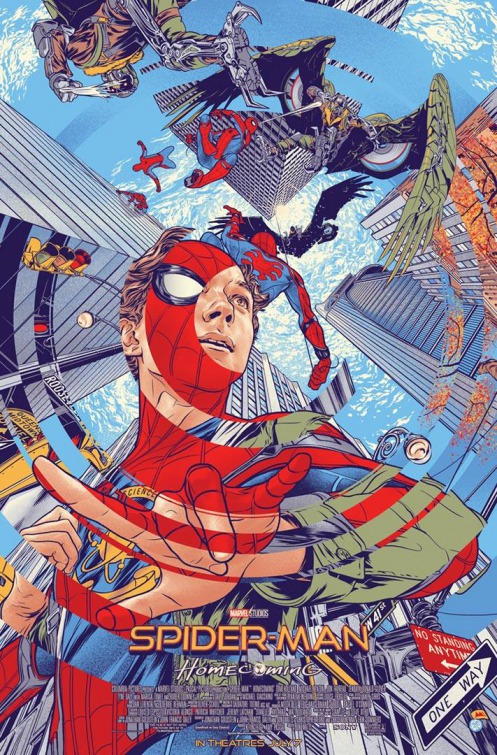
Yes, I get what they were trying to do here. But does that really make the execution any better? Supposedly, Spider-man: Homecoming isn't that bad for an even more unnecessary than usual reboot, but you'd never know it looking at this mess. As far as uninspired ideas go, giving us the same jumbled presentation as any other superhero one-sheet, but hiding behind the scribbled book cover concept, scrapes the bottom of the barrel. And it's aesthetically unappealing to boot. The literal definition of a cut and paste job. Even Spider-Man deserves better than this.


And yet, this might be worse. In an image so poorly photoshopped it'll have you yearning for the 1970's cartoon, Spidey is hanging from something that appears to be a highway sign overlooking what appears to be a city. What's scary about this design is how it seems no one bothered to care at all. "Just put him on the poster and get it out there. They won't know the difference." Sadly, those Marvel execs are probably right.


So, this is what it's come to: An Iron-Man poster for a Spider-Man movie. And a really lazy one at that.


Just so you don't think I'm picking on superhero franchises, I really liked this Justice League teaser, which actually had a cool, original comic book vibe to it. This Batfleck character poster for the same film makes no visual sense whatsoever, despite working with what was probably a solid initial concept. I'm assuming that idea was having a split Bruce Wayne/Batman one-sheet. Instead, this happened, overcomplicating a relatively simple idea. What's going on here with the shading?


There's little doubt a tasteful 9/11 film can be made, as both United 93 and even the lesser World Trade Center have previously proven. I'm not sure why anyone thought a photo of Charlie Sheen (alongside less controversial co-stars Whoopi Goldberg and Gina Gershon) in one of the doomed towers would prepare audiences for anything other than tasteless exploitation. And it may not even be that, which would only make this approach even more head-scratching. Needless to say, few can remember this film even being released anywhere, if at all. While you shouldn't judge a project by its poster, it's just too tempting here.


Following the season premiere of Gotham on FOX, don't miss Christopher Nolan's latest chapter in The Dark Knight saga and fall's most anticipated TV event, Dunkirk: The Series. We know Nolan projects have very distinctive branding as far as imagery and title treatment (blue meet gray), but you have to wonder how it didn't occur to anyone this slick approach would be tonally incongruous with a World War II movie. The scary part of this is that it may not be, which poses an even bigger problem.  


I'm all for ripping off the Jaws poster, but you have to commit to it. For legal reasons, I'd see how that wouldn't entirely be possible, but this looks like an uncomfortable straight to VOD hybrid of Open Water, The Shallows, Jaws: The Revenge, 47 Meters Down, Piranha, or whatever else tickles your underwater horror fancy. This really does look like five or six posters in one, with the layout and design doing none of them any favors. .


This is supposedly a really good film, and given its director, I wouldn't be surprised. But don't you just detest that title, Brad's Status? Or the bland, drab, almost colorless way it (dis)appears on the poster? How about co-star Austin Abram's completely nonsensical silhouette, through which the barely readable cast list appears? Light blue against even lighter gray probably isn't the best idea if you want people to, you know, read text. For a small, character-driven piece from an acclaimed independently-minded filmmaker, it's all surprisingly inept.


I kind of feel guilty including this since an attempt was made to be different, and of all the bad designs, it's definitely the least worst. So, that's saying something. Or, Something, Something. But it's okay to appreciate motivations while realizing the end result is somewhat of an eyesore that looks too mainstream truly to capture the authentic, spontaneous "lightening in a bottle" feeling they're aiming for.  But for those already dead-set on seeing this adaptation of Nicola Yoon's YA novel, none of this will likely matter one bit.


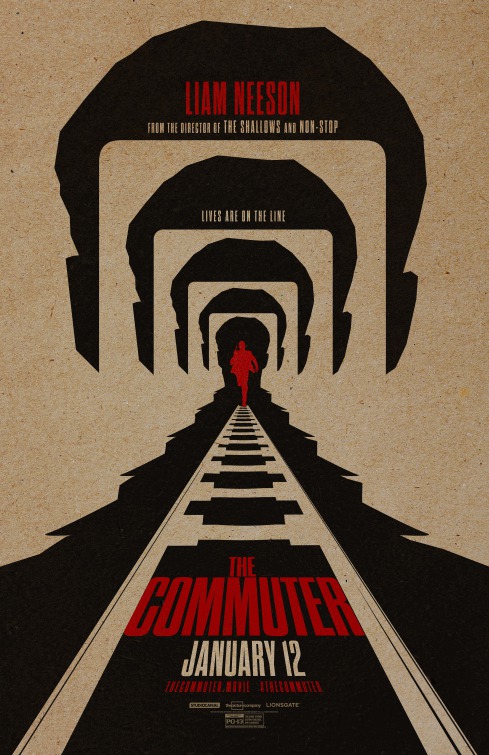
And you'd have to be to successfully read the type or find anything worthwhile about the one-sheet for this unknown vehicle starring Alec Baldwin and Demi Moore that went as quickly as it came. It's a different color scheme, but that's offset by the utterly ridiculous shot of Baldwin, looking as if he was just caught in the middle of another horrid SNL sketch.


You know what we need: Another Little Miss Sunshine, but without any of those expensive actors. And more more photo boxes. Hey, is that the resurrected Orion Pictures logo on the bottom right? The only good thing about this.

It would be insulting that they tried to squeeze all these actors' heads onto one poster except for the fact that no one's actually on it at all. Cut-outs of their likenesses from various other projects are. Forget about finding the father, that they successfully glued on all those heads, decided where everyone should go, and determined who got top billing is the real miracle.


James Franco will do anything for his art. Anything. Whether it's hosting the Oscars, appearing on a daytime soap, starring in a Lifetime movie, teaching college courses, or playing Tommy Wiseau, there's nothing this man won't try. Including that mustache. Or starring in The Vault, which has a poster so bad you have to love it. You can't tell me the studio wasn't completely aware of how gloriously awful this looked and are just messing with us. And that's why the perpetually meta performance artist Franco never seemed more at home than on here. It's everything a bad poster should be and makes you want to see the movie just to say you did.

Wednesday, December 6, 2017

The Book of Henry


Director: Colin Trevorrow
Starring: Naomi Watts, Jaeden Lieberher, Jacon Tremblay, Sarah Silverman, Lee Pace, Madddie Ziegler, Dean Norris, Bobby Moynihan
Running Time: 105 min.
Rating: PG-13

★★ ½ (out of ★★★★)

      **The Following Review Contains Major Plot Spoilers. Read At Your Own Risk**

We frequently complain movies are too predictable. That they don't take enough risks. Be careful what you wish for?  In Colin Trevorrow's The Book of Henry, what starts as a Spielbergian 80's throwback centered around a precocious youngster set in a Norman Rockwell-esque town, jarringly transforms into an assassination thriller. The premise is so preposterous and insane, it's tone shifting so dramatically, that there's a real temptation to praise it on sheer guts alone. For just daring to give us something completely different and unexpected, especially for family entertainment. Then common sense kicks in and you realize a film should generally know what it is, despite Trevorrow doing as good a job as possible at attempting to manage a tonal tidal wave and the performances being generally excellent.

This is hard to detest, if only for the audacity and spectacle of the whole thing. Where it goes awfully wrong is in taking serious, heavy issues like child abuse and murder and incorporating them into a wholesome family feature, wanting to both have its cake and eat it too. Obviously, it can't, and results in the narrative flying off the rails at the midway point, creating a viewing experience that's equal parts fascinating and horrifying. It's truly a wreck you can't look away from, but also an eye-opening wake-up call that most bad movies would be a a lot more fun if they failed as ambitiously as this. For that at least, Trevorrow deserves a ton of credit, salvaging what he can from what's clearly a misguided mess, while still falling short of the complete disaster critics have labeled it as.

11-year-old boy genius Henry Carpenter (Jaeden Lieberher) and his younger brother, Peter (Jacob Tremblay) are being raised by their single mother, Susan (Naomi Watts), who waitresses while working on her yet-unpublished children's books. Frequently doubting her own ability to parent,  Henry handles all the bills and finances and uses his abnormal intelligence to successfully invest in the stock market, earning them a considerable degree of monetary comfort. In a somewhat disturbing role reversal, it's Susan who swears, plays video games and gets drunk with best friend and co-worker Sheila (Sarah Silverman), as Henry serves as the family's protector and provider.

When not saving Peter from school bullies and building complicated Rube Goldberg-like machines with a steampunk slant in their tree house, Henry starts to see disturbing signs that his next door neighbor and class crush, Christina (Maddie Ziegler) is being abused by her stepfather, and local police commissioner, Glenn Sickleman (Dean Norris). An "upstanding member of the community," the allegations will be tough to prove, but Henry comes up with a dangerous, last resort plan that could save Christina if successful. But it's Susan who must decide whether to follow through with it, pitting the trust she has in her genius son and the welfare of a young girl against the dire risks of its potential failure. 

Taking place in a universe where kids create and innovate, it seems to be fall all year-round and people look after each another, Spielberg's classic "Amblin" entertainment logo wouldn't look the slightest bit out of place preceding the film. While certain elements seem odd or out of place early on for a family crowd-pleaser (most notably every scene involving Sarah Silverman's boozy, chest tattooed waitress), you're still prepared to follow this wherever it goes since the script establishes itself early on as as having this kind of retro quality that's both sweetly endearing and inoffensively weird. The kids are quirky, but likable, and there's this fleeting sense that the filmmakers get it and your intelligence won't be insulted. And then the craziness begins.

Read no further if you don't want the rest of the film spoiled....

Almost completely out of nowhere, and rather abruptly, Henry dies from an incurable brain tumor, leaving behind a book of detailed instructions for his mother. Instructions for how to kill Mr. Sickelman. Filled with enough post-death planning to make Jigsaw jealous, this book is a step-by-step murder guide featuring sketches and illustrations from an 11 year-old on how to take out the corrupt, abusive police commissioner. And if this isn't enough, he also recorded an audio tape to walk her through it.

The problem with this entire scenario (besides the glaringly obvious) is that in keeping with the family friendly vibe thus far, Sickleman hasn't really been established as being guilty, much less that bad of a guy. And certainly not enough of one to warrant this. Maybe to these characters, but not to us, since Gregg Hurwitz's script is too afraid to show us the evidence and repercussions of said abuse. And while I'm certainly not advocating some kind of graphic depiction of child abuse for consistency's sake, we needed more than scenes of a sullen, depressed Christina in class and close-up shots of a shocked Henry looking into their window at night.

Making matters worse, Dean Norris has only about two scenes prior to all this, one of which involves his character innocuously asking Susan if she could keep her leaves off his lawn. This combined with the fact that Norris is riding a lifelong wave of audience goodwill from Breaking Bad presents an uphill battle for the film, creating an illusion that this child prodigy's dying wish was for his mom to kill an innocent man. Of course, this isn't true, and as much as I respect the film for not flaunting the naturally intimidating Norris as an over-the-top, mustache-twirling villain, when something as serious as child abuse is introduced as a story device, it needs to be treated with gravity and significance. There's no hedging your bets or it risks coming off extremely tasteless at best and offensive at worst. In other words, they had to definitively show this evil guy has it coming, family friendly or not.

Tonally, there are even stranger creative decisions, like an uncomfortably creepy scene involving Sarah Silverman's alcoholic waitress and a dying Henry that will have you questioning who the town's real child abuser is. Lee Pace appears as neurosurgeon Dr. David Daniels and while he's completely believable in the smallish role, his character takes this active interest in Susan and the family that comes off as weird and unprofessional because the script's so fuzzy about his intentions in order to preserve its wholesome aura. Had the script simply acknowledged all these eccentricities bubbling under the surface instead of pretending to be what it isn't, it could have added depth to the story instead of a series of head-scratching moments.

There are two scenes that are unequivocally great, even if the latter could have some feeling guilty for how suspenseful they find it. The first involves Dr. Daniels explaining the fatal diagnosis to Henry in terms a child could understand, not realizing layman's terms aren't necessary for an 11-year-old as extraordinarily gifted as this. That Henry's already a step or two ahead in figuring out his fate makes their conversation even tougher to watch than it already is. Then there's the pivotal sequence during which a school talent show is intercut with Susan's assassination attempt on Mr. Sickleman.

The idea that this murder mission is supposed to be some kind of inspirational assertion of Susan's parental independence is absurd, but boy does Watts ever sell it.  Most actresses wouldn't have been able to pull off nearly half the insanity she does in the third act with a straight face, but she's downright committed all the way through, drumming up a surprising amount of tension for an admittedly ridiculous situation. You're almost mad at yourself for being on the edge of your seat because it's so silly, but somehow this whole section works almost in spite of itself. And given how scared the movie is to go near the child abuse issue, Trevorrow was at least smart enough to rely on Maddie Ziegler's dancing skills and body language to convey the shame and sadness surrounding Christina's situation that was glaringly absent from the screenplay.

Undoubtedly drawing comparisons to the somewhat similar part he played in 2016's Midnight Special, Jaeden Lieberher takes what could have been some of the more cliched elements of the familiar "gifted child" trope and imbues Henry with a warmth and humor that often overcomes the occasionally frustrating story. Jacob Tremblay isn't given the kind of dramatic showcase here he received a couple of years ago with Room, but brings that same precociousness and intelligence to little brother Peter, who adoringly follows his genius sibling's lead in everything.

You have to wonder if this would have gotten as much hate from critics if it wasn't made by the filmmaker selected to direct Star Wars: Episode IX. Or at least he WAS. While it may make for exciting headlines speculating that this film's failure directly caused Trevorrow's departure or removal from that project, the real story is likely a lot more complicated and less sensational than that. It's a misfire for sure, but one that could have actually been a whole lot worse in the hands of a less talented director. 

Dusting off a frequently rejected script that's been sitting on the shelf since 1998 probably wasn't anyone's idea of a good start, and after seeing it, it becomes even easier to understand why. The Book of Henry deserves credit for legitimately attempting something we've haven't seen before, while also serving as a harsh reminder that certain established movie rules exist for a reason. They work, even if the most fascinating way to fail is by attempting to break them.   

Saturday, November 25, 2017

Baby Driver


Director: Edgar Wright
Starring: Ansel Elgort, Kevin Spacey, Jamie Foxx, Lily James, Jon Hamm, Eiza Gonzalez, Jon Bernthal, CJ Jones, Sky Ferreira, Flea, Big Boi, Paul Williams
Running Time: 113 min
Rating: R

★★★ ½ (out of ★★★★)

For anyone ever wondering what would happen if Quentin Tarantino made a musical, Baby Driver is just about the closest we're going to get.  While it's instead directed by Edgar Wright, it's impossible to watch without thinking his fingerprints are, at least in some small way, all over it.  And that's not necessarily a bad thing, especially considering this is likely a lot less chatty and self-referential than his version would be. But the common ground they both find is in the music, which in this case is literally and figuratively driving the action forward at a breakneck pace. From the opening title sequence, during which our music-loving protagonist is lip syncing and dancing down the street to Jon Spencer Blues Explosion's "Bellbottoms," we know we're in for something a little different. And that's exactly what's delivered, as this story about a quiet getaway driver in over his head is underlined with car chase scenes that look and feel like real car chases, mostly because they are.

The astonishing contradiction within Wright's overstylized, hyped-up universe is that it's grounded in a reality that feels authentic, even when it seems ridiculous. And there's plenty of ridiculousness. But it's never boring, as its nearly two hour run time flies by, until arriving at a third act that isn't quite as inspired as what preceded it, but undeniably exciting nonetheless. The calm center of this violent storm is Ansel Elgort's charismatic but low-key performance as the title character, officially marking his arrival as a major star, but more importantly, a talented actor worth watching.

Breaking one of the key rules of a lead character, we watch as everything happens to and around him, until he realizes his survival depends upon taking action. Despite a myriad of influences, Baby Driver never feels like a replication of anything, and that's praiseworthy in itself, proving a productive soundtrack can do more than provide background noise. Here, it's the foundation on which the entire film is built. Inseparable from the first frame, the music informs the action and that action returns the favor ten-fold.

Essentially a good kid who made a dumb choice, Baby (Elgort) is a getaway driver in Atlanta, behind the wheel for a crew of armed robbers assembled by criminal mastermind Doc (Kevin Spacey), who he's indebted to after stealing one of his cars. He's also really skilled wheel man expertly helping Doc's gangs continually evade capture after some big robberies. Blasting the music from his many iPods to drown out the humming in his ears caused by a childhood car accident that killed his parents, Baby anticipates his last job may finally be on the horizon.

Being free from his his debt could offer Baby the opportunity to properly look after and provide for his deaf foster father Joseph (CJ Jones), as well as cut ties with a seedy criminal underworld of thugs like the impulsively dangerous Bats (Jamie Foxx), former banker turned robber Buddy (Jon Hamm), and his wife, Darling (Eiza Gonzalez). And it's just when he appears to be done and grows closer to friendly diner waitress Debora (Lily James), he realizes there is no "out" with Doc. Or at least until he helps pull off one last big heist. But with volatile personalities and unanticipated complications involved, he'll have to make a choice between protecting those he loves and escaping alive.

For as comical and clever the dialogue is and the amount of fun, thrilling high-speed car chases there are, it's surprising just how much of the film is driven by fear and tension. The baby-faced hero has unwillingly entered a world in which he just doesn't fit and has been thrown into for reasons we know are at least partially his doing. There's a fragility to the character as Baby silently takes in Doc's carefully orchestrated plans and his makeshift band of thugs do their best to intimidate and bully him at every turn. It doesn't work. Or does it? We're not quite sure, which is one of the more intriguing aspects of the character, who makes mixtapes out of conversations and basks in the classic R&B pumping through his earbuds . There's a part of you thinking he must be scared out of his mind, while entirely different aspect to Elgort's performance is still suggesting this kid's been through too much in his life to even care.

Wright crafts a clever backstory, sporadically shown through flashbacks, that hints at this and offers up an effective explanation for his ipod obsession, while also working really well as tech nostalgia for viewers. After making gigantic impressions in The Fault in our Stars and even Men, Women and Children, Elgort takes it to a new level here, which isn't to suggest he does anything that's over the top. It's just the opposite, as so much of what he conveys is through silence and facial expressions, with most of his talking being with Debora, as they bond over their shared musical tastes. There's an easy rapport between the two that's never too schmaltzy or eye-rolling, and while it's easy to argue Lily James is saddled with a limited girlfriend role, at least she excels at it, sharing great chemistry with Elgort and becoming more important to the narrative as the film wears on.

Jon Hamm is given his best and most substantial big screen showcase to date as the smooth but dangerous Buddy, playing way against type in a villainous role he probably couldn't wait to sink his teeth into. Jamie Foxx is suitably scary, unpredictable and intimidating as Bats, a certifiable, button-pushing lowlife you just can't wait to see get his. There's also a fantastic cameo by Paul Williams (yes, THAT Paul Williams) that should have fans of his grinning from ear-to-ear at its sheer lunacy.

While it feels strange eulogizing the career of a still living actor, there's no avoiding the giant elephant in the room that is Kevin Spacey, since this could be the last time we see him featured this prominently in a top project. Luckily, it's a good one that reminds us how skilled he is at played sleazy schemers in positions of power. Make what you will of that statement, but supporting roles like this won't be nearly as interesting without him in them. The scenes wheres he faces off with Elgort are among the most memorable and the characters' working arrangement doesn't go completely as predicted.

The real star here are the chase scenes and soundtrack highlighted by a seemingly endless stream of 70's hits and non-hits. When the plot's heists go exactly according to plan, it's a joy to watch the mechanics of it all unfold, but when it doesn't, that's when things really get fun and the excitement comes in seeing the characters scramble and improvise. That's essentially the entire last act, highlighted by a sequence in which Wright brings the same propulsive energy and seamless stunt choreography of the car chases to one that takes place entirely on foot. That's impressive, but you get the feeling that little of it would be possible without that soundtrack, which ends up not only being the co-lead and star, but so much more a part of Baby's DNA than any superficial trait a lesser filmmaker would have concocted for him.
         

Saturday, November 18, 2017

Stranger Things 2


Creators: The Duffer Brothers
Starring: Winona Ryder, David Harbour, Finn Wolfhard, Millie Bobby Brown, Gaten Matarazzo, Caleb McLaughlin, Natalia Dyer, Charlie Heaton, Noah Schnapp, Sadie Sink, Joe Keery, Dacre Montgomery, Sean Astin, Paul Reiser
Original Airdate: 2017

★★★ ½ (out of ★★★★)

The verdict is in: The Duffer Brothers clearly know what they're doing and there are strong indications they have a long-term plan in place that doesn't involve making things up as they go along. While this seems to be pointing out the obvious, it was far from a guarantee they'd be capable of delivering a sophomore season as strong as the first. In fact, it was extremely doubtful.  But wherever you land on Stranger Things 2, everyone could agree that the only major factor missing this time around is the shock and awe accompanying a new series without expectations. The thrill of discovery surrounding a project that was shopped around to every studio before Netflix took a calculated risk that paid off hugely. These guys had years to hone that first season so it was just right, and couldn't have anticipated they'd be writing any beyond that. Now, the game's changed. It became a worldwide sensation and the kids are superstars. The real challenge begins.

Stranger Things 2 Title Card
The test is to now somehow write and shoot a worthy follow-up within a year's time or face the wrath of extremely fickle binge-watchers more than happy to move on to the next big thing. And with the expectation there will be a few more seasons, they can't burn through the story too fast, as the child actors are aging and maturing on screen at an increasingly rapid rate. But don't go too slowly either and risk falling into the trap of The X-Files or Lost because we want answers, dammit. The great thing about this series is that it actually gives us those, and quickly, sometimes within the confines of a single episode before moving on to what's next. That's the benefit of a single digit episode order. It moves quickly enough to never be bored and isn't around long enough to overstay its welcome.

So, yes, second seasons can be really tough. And it's important to point out just how creatively trying they can be in order to truly appreciate what's done here. Yes, they've essentially replicated the same formula, but isn't that what we wanted?  By expanding the scope of the universe we were blown away by last year, they raise the stakes, further developing characters we grew attached to while even incorporating purposeful, intriguing new ones into the fold.

In its own way, this follow-up is as much of success as could be hoped for, and a good cause for relief and excitement that this wasn't the one-trick pony some skeptics had assumed. That for all its 80's influences and Spielbergian touches, it isn't just some trip down nostalgia lane. While opinions will vary as to how well it stacks up against its preceding chapters as it heads toward the finish line, it's still as tight and meticulously plotted as anything else out there. Logically continuing what preceded it while whetting your appetite for more, it's a real stretch to find any source of disappointment in the thrilling nine episodes of a series that quite literally turned the sci-fi genre upside down last year.

A traumatized Will returns to school
It's almost one year after Will Byer's (Noah Schnapp) disappearance into the Upside Down, and despite returning home to his mother Joyce (Winona Wyder) and older brother Jonathan (Charlie Heaton), he's still having problems coping, plagued with continuous nightmares and visions of his traumatic experience. It's also been that long since Mike (Finn Wolfhard), Dustin (Gaten Matarazzo) and Lucas (Caleb McLaughlin) have seen Eleven (Millie Bobby Brown) whose whereabouts are still unknown after using her psychokinetic powers to defeat the Demogorgon.

As the lovesick Mike mourns El's absence, the boys have turned their attention to the new girl in town, a red-haired, skateboarding, arcade champ named Max (Sadie Sink), who's moved to Indiana from California with her sociopathic step-brother Billy (Dacre Montgomery).  He also steps on the turf of Hawkins High School's reigning alpha male and returning hero, Steve Harrington (Joe Keery), whose relationship with Mike's sister Nancy (Natalia Dyer) is again on shaky ground as she becomes obsessed with exposing Hawkins Laboratories' role in Barb's death, enlisting Jonathan's help.

Gruff, grumpy Hawkins Police Chief Jim Hopper (David Harbour) is also attempting to move on, investigating a mysterious rash of contaminated pumpkin patches that may or may not be connected to the new tenant at Hawkins Labs, Dr. Sam Owens (Paul Reiser) a Department of Energy executive who's also taken an interest in Will's condition. But Hopper's continued concern for Joyce and Will is somewhat infringed upon by Joyce's new boyfriend, the dorky Bob Newby (Sean Astin), a former classmate who now runs the local RadioShack.

Dusty, Joyce and Max express concern for Will
All these characters will be jolted out of their relative complacency when a dreaded threat returns to Hawkins, more dangerous than ever. The question is whether they'll be able to fight it this time without El's help. Or if she'll even be able to return to reunite with her friends, and possibly get a chance at trying to live a somewhat normal childhood, free from government experimentation and interference.

This season is all about tandems, with our already well-established favorites and some newcomers pulled in different directions, often opposite characters you wouldn't expect. El and Hopper. Steve and Dustin. Joyce and Bob. Nancy and Jonathan. Max and Lucas. Max and Dustin. Max and Lucas and Dustin. Dustin and a slimy pet Pollywog. Once again, after being absent for most of the first season due to his abduction into the Upside Down, Will is the odd-man out, as his friends have attempted to resume their lives while realizing something is still very, very wrong with him. Whether this is entirely psychological (in the form of some kind of PTSD) or physical or something else, it forms much of the groundwork for these nine chapters.

We do find out what Eleven has been up to since she single-handedly saved Hawkins and Hopper was leaving Eggos in the woods. While she spends nearly the entirety of this season cut off from the whole crew, it isn't without a purpose, as the El/Hopper story is the most successful of many overlapping plots. The thrilling results come every time David Harbour and Millie Bobby Brown share the screen together in a makeshift father/daughter relationship that complicatedly manages to be both adversarial and loving at the same time.

Eleven "channels" Poltergeist in Hopper's cabin
While Hopper's holding El in seclusion for her own safety and and can't comprehend how she could even consider risking her life to break his "three rule" code of the cabin, his hubris allows him to forget who he's dealing with here: A human lab experiment who's been poked, prodded and held captive for much of her life until she finally found real friends and a chance at a normal existence. So while the temporary living arrangement is for her own safety, it can't help but feel to her like another round of mandatory detainment. Hopper's no Dr. Brenner and has her best interests in mind, but to El he may as well be in so far as his standing in the way of her freedom.

What's even more impressive and expressive about Brown's performance this time around is how she starts to become this angry adolescent, and El isn't exactly someone you want to make angry, regardless of her age or size. One of the season's best scenes involve her and Hopper arguing and the viewer genuinely fearing for this tough, no-nonsense sheriff's life as she dangerously hurls objects at him with her mind, as the show completely reimagines the stakes of a father disciplining a child. The subtext here, of course, is that she's filling void left by the passing of Hopper's own daughter, infusing the encounter with twice the emotion.  El discovering how and when to use these "gifts" is at the crux of her journey toward understanding her true self: Jane Ives.

Locating her comatose birth mother and unraveling the mystery of her time spent at the lab leads to the polarizing self-contained episode, "The Lost Sister," where Eleven tracks down childhood labmate, Eight, A.K.A. Kali (Linnea Berthelsen) and discovers she's been using her powers more nefariously, leading a NYC street gang in crime sprees. While the episode's objective is pretty clear in guiding El to discover her true purpose and return to help her friends, it's a narrative and stylistic detour for a show that hasn't taken one up to this point. Sure, it was a risk, but not as enormous of one as some have been claiming and occasionally even bemoaning. While you could question whether this deserved a bottle chapter and contend it vaguely resembled a lost Heroes episode, it hardly curbed any of the momentum of the main storyline back in Hawkins.

"Chapter Seven: The Lost Sister"
If anything, it's a testament to how good the other episodes are that viewers' tolerance for anything else was so low. And it's not like this is just "anything else" either. El's arguably the series' most valuable character so donating a full episode to her personal arc and leaving Hawkins behind for 40 minutes is hardly a capital offense.
The episode works largely because of the turns from Brown and Berthelsen, whose Eight will almost surely return down the road. This effectively plants the seeds for that eventual story but you have to wonder that if the reaction to this one episode was so inexplicably harsh, how game the Duffers are going to be to take what will need to be even bigger risks if the show continues for multiple seasons. Or more importantly, whether this affected how much rope Netflix will give them to do it.

Of that action back in Hawkins, there's so little to complain about that we're basically just checking off boxes in terms of the varying degrees to which everything clicked. But what impressed most was how creatively the four new characters were weaved into the series. Seamlessly, purposefully, and without distraction, they each added important components in driving the story forward, but special mention should be made of new girl Max and the incomparable Bob Newby, as both Sadie Sink and Sean Astin respectively knock their roles out the park.

As the closed-off tomboy crush of both Lucas and Dusty, Max essentially becomes El's stand-in for the season, much to Mike's disdain. It's a role that could have easily been thankless, with attempts at adding her to the group possibly drawing as much scorn and skepticism from viewers as it does Mike. But Sink's a natural, masking "MadMax'"s recent history of verbal and possibly physical abuse at the hands of stepbrother Billy with a tough, seemingly impenetrable exterior the boys need to break down. Once they do, it's fun to watch Lucas and Dusty battle for the attention of the latest female recruit to the gang without a number to her name.

Sean Astin as Bob Newby
We're not sure what to make of Joyce's new boyfriend Bob, who seems to be trying so ridiculously hard to win the affections of Will and Jonathan that we're sure he has to be up to something. No one could possibly be this transparent, and if the rumors are true that the Duffers did initially conceive him to be manipulating them before Sean Astin's performance convinced them to change course, I'd believe it.  As Bob, Astin gives this perfectly calibrated, open-hearted turn as a type of honest, normal character we don't see enough of on screen anymore. He's a literal "Mr. Nice Guy" who does what he says and says what he does, frequently going out on a limb to help others without expecting anything in return.

The enthusiasm and sincerity Astin brings to the role and how it so thoroughly subverts our expectations of what we assume the character will do is possibly the season's greatest accomplishment. Whether dispensing incorrect but well-intentioned advice to Will or selflessly making a fool of himself to make others smile, the RadioShack manager is this year's Barb, but even better, as Astin seems to accomplish all of it by seemingly just being himself.

While casting nostalgic stars like Ryder, Modine, Reiser and Goonies alum Astin in an 80's set sci-fi series could have reeked of the worst kind of satiric self-awareness, his work here proves why it doesn't. The writing and performances deliver the goods, with the actors' histories serving as merely the cherry on top, adding a clever meta-subtext to what they do. And it's the only middle-aged Winona Ryder role that's come close to recapturing her trademark weirdness and unpredictability she displayed early on in in films like Beetlejuice and Edward Scissorhands. If we know one thing about her, it's that the odder the material gets, the better she is.

Steve and Dusty team up
By reaching for accuracy and believability in depictions of these characters and the period, we buy into the more fantastical, unbelievable stuff without hesitation. That's particularly true when it comes to the kids, who curse and antagonize each other in a manner very unlike what we see in much of today's overly sanitized, too sweetly positive portrayals of kids in film and television. If it's true the latter approach merely a reflection of a modern era where participation trophies are mandatory, then it's only fair the Duffers get credit for completely ignoring it, writing entirely through the prism and time period in which their story takes place, as well as the pop culture surrounding it.

The kids' sharp-witted, hilarious argument concerning who should be Winston when they dress up as Ghostbusters for Halloween represents the series at its best in nailing those small details. Or even just the character of Billy, who comes across more as a full-blown psychopath than your typical schoolyard bully, until the realization dawns on us that this is exactly what constituted a bully back then. His inexplicable hatred toward Lucas has us wondering whether he's also a racist, but by letting that possibility sit there as his actions speak for itself is more frightening than any outright acknowledgment would be. In a way, we don't want to know.

Whatever the root of Billy's anger (and we're given many indications), a lot of it is misdirected at Steve, whose redemption arc at the end of last season was one of the series' more surprising rewards. This season finds him thrown into kind of a big brother role that not only suits the character well, but gives us some priceless scenes of him mentoring Dustin as only Steve can. It's small treasures like that and even Nancy and Jonathan's trip to see wacky conspiracy theorist Murray Bauman (Brett Gelman), who offers up some shockingly sound and smart advice on how to properly expose the danger in Hawkins.

Eleven and Mike reunite at the Snow Ball
In the season finale, the Duffers do something I'm not sure many other showrunners would even bother delegating the time for. After the action's essentially been resolved and the kids can go back to life as usual (or as "usual" as it gets in Hawkins) much of that episode is spent with these characters processing the aftermath and their connections with one another. There's no doubt many of them have evolved a great deal and we're given these little moments toward the end that remind us for all the Spielberg and Stephen King comparisons the series justifiably receives, it just as heavily influenced by John Hughes movies, if not more so.

Getting these nuances right wouldn't mean as much if the big stuff didn't also work just as well the second time around, like new shades of Kyle Dixon and Michael Stein's 80's electronic score and the use of practical effects in conjunction with CGI in an effort to stay true to the period. Whatever they've done, it's worked again, as everything looks and sounds great. They basically took what they did in the first season and amped it up, in some ways making it bigger and better visually without losing so much of the character development that initially hooked viewers onto the show. And too think at one point we doubted they could even have a second season, much less one that nearly equals its first.

Now, the new problem will be producing more at a rate of quality that can sustain three or four additional seasons of story. What will this even look like when the kids get older?  Could we get a time jump where we see them as adults? Is the series' style and story so entrenched in the 1980's that it couldn't possibly leave that time period and survive? Every season can't end with El defeating the Demogorgon, can it? These are questions that will likely necessitate a lot of pondering in Netflix offices, and I'm not sure those even scratch the surface in terms of mapping out a future for this show. The good news is that these nine episodes bring with it considerably more hope that they can.

Sunday, October 29, 2017

Halt and Catch Fire: The Final Season


Creators: Christopher Cantwell and Christopher C. Rogers
Starring: Lee Pace, Scoot McNairy, Mackenzie Davis, Kerry Bishé, Toby Huss, Annabeth Gish, Anna Chlumsky, Molly Ephraim, Kathryn Newton, Susanna Skaggs
Original Airdate: 2017

★★★★ (out of ★★★★)

            ** Spoiler Warning: The Following Review Contains Plot Spoilers for Season 4 of 'Halt and Catch Fire' **

Everyone thinks about the possibility, but few shows actually have the guts to go through with it. In the third to last episode of one of TV's most improved dramas, Halt and Catch Fire, creators and showrunners Christopher Cantwell and Christopher Rogers do the unthinkable. It's what every fan of a major series fears could happen in the home stretch, but rarely does, since the story being told so infrequently calls for it. This one did. You could call it a shock, but that wouldn't exactly be accurate since viewers have known for a couple of seasons now that the show's backbone, everyman Gordon Clark (Scoot McNairy) was quietly fighting a degenerative brain disease.

So, did we just simply forget about it? Or know, but find ourselves so distracted by all the other compelling goings on that we neglected to consider Gordon was on borrowed time. It's a true credit to the writing and performances that we took for granted that the character would make it to the end because he had too much left to accomplish. This may as well be the story of the series, which started in the Silicon Prairie of Dallas at the forefront of an 80's computer revolution spearheaded by four wildly different, but initially underdeveloped characters who were always a little too far ahead of the curve. 

Joe and Gordon argue in Comet's offices
It began as being all about the technological connections, but with each passing episode the series morphed into something else, until arriving at its final destination of California's Silicon Valley in 1994, at the forefront of another revolution, the internet. Whether it be personal computing, chat rooms, anti-virus software, first-person gaming, and finally, the world wide web, hot shot visionary Joe MacMillan (Lee Pace), geeky engineer Gordon (McNairy), shrewd, buttoned-up corporate brains Donna Clark-Emerson (Kerry Bishé), and rebellious coder Cameron Howe (Mackenzie Davis) were often there first. It's just that someone else was always better.

Right up until the end this was a show about failure, with perhaps no character better epitomizing that than perpetual runner-up Gordon, played with equal parts desperation and inspiration by McNairy. With these three, the next big idea would always be right around the corner. Eventually, the series evolved into being about human connections, as the characters grew and expanded with the world around them, particularly in the past two seasons.

Gordon brainstorms ideas
When audiences do eventually realize what they've missed, and as others discover and re-discover this overlooked series, they'll have its finale, "Ten of Swords" waiting for them. And while this will never usurp Breaking Bad or Mad Men critically or otherwise, it became its own thing, delivering an universally beloved final episode neither could lay claim to having.

Yes, the bar was set higher for those because of the greatness preceding it and most were just relieved that the perpetually ratings-challenged HACF even made it to the end amidst constant threats of cancellation.  But it gets the last word, culminating in an hour and fifteen minutes that's everything a TV send-off can and should be.

After the surprise time jump at the end of last season that took the characters from the 80's into the 90's, Joe and Gordon have joined forces again to launch a new internet service provider, CalNect, spawned by their World Wide Web brainstorming session with Donna and Cameron three years earlier. But despite occupying Mutiny's old office space and employing Cameron, she's too distracted  to finish their browser, and competition from the marketplace is forcing them to change course.

When Joe comes up with the idea to index every website on the Internet, Gordon enlists his youngest daughter Haley (Susanna Skaggs) to help. She creates her own webite, "Haley's Comet" that could prove to be the solution to all their problems, if they Gordon can work out the issue of his 13-year-old working for him and Joe while competing with her own mom, and his ex-wife, Donna, who's venture capital firm is funding a very similar startup company called Rover.

Bos and Cameron have a talk
With Cameron's marriage having fallen apart in Japan and her new video game, the frustratingly impossible "Pilgrim," receiving awful reviews,  she's torn between these two competing companies, as her personal ties to Joe and Comet conflict with her loyalty to old friend Bos (Toby Huss), who's wife Diane (Annabeth Gish) oversees Donna's Rover project. With Cameron offered a new business opportunity from a mysterious source that could give her the independence she wishes, Joe, Gordon and Donna are separately still searching for what they want and figuring out how they'll get it, unaware their paths are converging for the final time.

This season, more than any before it, feels like a completely different show, while still managing to draw upon the rich history mapped out in previous episodes. Part of that undoubtedly has to do with the time jump, which takes a series that was for so much of its run steeped in 1980's culture and pushes it into the early to mid 90's, even managing to forge ahead three years further to 1994 in the season premiere. AOL is king, the internet is in its infancy and now the gang finds themselves in a far different place than they were a decade earlier when they spearheaded the PC craze. But not much has changed either as they constantly find themselves being thwarted by those with similar, sometimes identical ideas executed better or with more capital behind it.

Initially, there almost seems to be a lack of tension and conflict compared to prior seasons as everyone actually appears to be in a pretty good place, both personally and professionally. But appearances are deceiving, even as Gordon celebrates his 40th birthday with a party (complete with the Blue Man Group) and shares a business partnership with Joe that, for the first time, seems to also be a legitimate friendship built on respect and trust. Unfortunately, even as they've grown, they still can't seem to agree on a direction for the company, and the addition of Gordon's daughter Haley into the fold as founder creates all sorts of complications neither were quite ready for.

Donna toasts Rover's success
On the other side is their corporate opponent Donna, now a formidable executive willing to win at any cost, fully completing a transformation that occurred back when she booted Cameron out of Mutiny. Watching her rule over Rover underlings (including Bos) with an iron fist, develop a drinking problem and take colleagues into her bed is jarring, but knowing what we do about Donna up to this point, I believed it. She always had ambitions that stretched beyond what Gordon had imagined for both when they were married, and she's now in her mind making the necessary sacrifices to execute on them.

This is probably Kerry Bishé's  best season, taking extremely unlikable behavior and giving it motivation, while sliding in signs of the old Donna through her positive interactions with Gordon and the relationship with her kids, most notably rebellious teen Joanie. Formerly the show's most beloved character, we start to see cracks in Donna develop with each passing episode that remind us why, making what's earned between her and Cameron in the series' final minutes that much more rewarding. And while the latter has made significant strides in her maturation as a rational functioning adult, the tension between the two stemming from what went down at Mutiny runs through much of the season whenever they're forced to interact.

As far as Cameron's come, we're also reminded at so many points just how little she's changed, even as she and Joe have another go at a formerly toxic relationship that for a while feels like it could really work. Of course it inevitably doesn't, due in part to Cameron doing what she's always done: run away. With her future as a game designer in limbo, she purchases a piece of land, isolating herself from the world while living out of an airstream trailer.

Haley at the negotiating table
While the thrill of creating and coding has always been her life force, she can't help but get sucked into the battle between Donna and Bos' Rover and Joe and Gordon's Comet, with Gordon's daughter Haley stuck in the middle. The biggest benefit of the show's jump into the 90's is the development of what might be the series' strongest plotline, as Gordon connects with his now teenage daughter, who ends up being a lot more like him than both are willing to concede.

More than fulfilling the daunting task of stepping into a character late in the game that's already played by someone else, an endearingly goofy and likable Susanna Skaggs basically owns this season, as her story becomes that of Gordon's and Joe's. While she's undoubtedly going through some things, both related to her social awkwardness and sexual identity, the bigger concern is Joe, who's never met an idea he couldn't shape to fit his vision or a person he couldn't take advantage of to do it. We saw it at Cardiff, again at Westgroup and most famously, with the anti-virus software idea he lifted from Gordon to build his own company

When he gets his claws into Haley's idea and starts working with her, there's legitimate concern he'll see dollar signs and be more than willing to throw a little kid under the bus and destroy his friendship with Gordon to see it through. That this would have happened with Season One or Two Joe, but doesn't occur now, is perhaps the first sign that put cold, calculating Joe MacMillan is being put to bed.
Gordon's life flashes before him in "Who Needs a Guy"
 With that metaphorical death also comes an actual one for Gordon, who quite literally sees his life flash before his eyes moments before his hallucinatory death in the landmark episode, "Who Needs a Guy." The cruel twist was that he finally seemed to arrive at a place of happiness. Running a successful company, on relatively good terms with Donna, having loyal friends, in a healthy relationship with new girlfriend, Katie (Anna Chlumsky) and sharing a personal and professional bond with his daughter that defies description in its overall impact, it was an awful time to go. But it was also the right time, handled so beautifully and with such grace, no one could dare label it emotionally manipulative, as shocking TV deaths so often tend to be.

You wonder how the series could continue after the passing of one of its most important characters until the realization sets in that it doesn't need to. Or at least it only has to do it for a few more episodes. And does it ever. As the shocking news ingeniously moves from character to character in what feels like the cruelest, most painful game of telephone tag in dramatic TV, we must adjust to new reality for the series that's forcing its characters to hit the reset button on their lives with only three episodes remaining.

The grieving process and the possibility of each finding their own way to remember Gordon and begin to somehow try to survive without him is vividly explored in the powerful episode "Goodwill," as Joe and Cameron help Donna and the girls sort out Gordon's belongings.  As the rift between Donna and eldest daughter Joanie grows greater, there's some signs of healing in her seemingly irreparable former friendship with Cameron. Ironically, just as that glimmer of hope presents itself, a sullen, withdrawn Joe's vision of a post-Gordon Comet disintegrates with the arrival of Yahoo! so too does his relationship with Cam.

Whenever the conversation of any series finale occurs, that inescapably dirty word, "expectations,"  always seems to be accompanying it. HACF is in the unique, enviable position of hardly having any since few anticipated the series would make it past its inaugural season, much less be able to map out an exit strategy for a fourth. But for fans of the show who were religiously watching it and knew how good it became, there were expectations that these characters who have developed so much since the pilot would earn a send-off that not only makes narrative sense, but provides suitable closure and a necessary amount of room open for interpretation.

Donna contemplates her future in "Search"
The penultimate episode, "Search," and its succeeding finale, the Karyn Kusama-directed "Ten of Swords," finds a way to honor the past while also looking forward to an fuzzy, uncertain future that comes more clearly into focus in its closing minutes. While Gordon's gone, his creations and failures still feel as integral to the series as when he was alive, driving these characters onward whether they're ready or not.

For Cameron, it appears as if her investor Alex Vonn (Molly Ephraim) will finally provide the outlet necessary to let her ideas roam free without interference. Instead, she again becomes an unwilling puppet to a strangers' vision, reminding her just how creatively fruitful that Mutiny partnership with Donna truly was. In one of the season's most wonderful scenes, both return to the abandoned Mutiny and Comet offices, envisioning a future where they give it another go, naming their fictitious company "Phoenix" as its imaginary neon logo blinks on the wall behind them. They each own their biggest mistakes with Mutiny, determining they would inevitably screw it all up the same way if they tried it again, but with one key difference. This time, they'd have the self-awareness to make sure they walk away friends.

Now at the top of the corporate hierarchy having successfully taken over AGGE and taken it to new heights in the wake of Diane's retirement, Donna's soul-searching has not only made her a better boss and more motivating leader, but allowed her to connect with backpacking daughter Joanie on a level not previously thought possible. All roads lead to her Sheryl Sandberg-like speech Donna delivers at her self-hosted female coders party, conveying a message about work and sacrifice that's as timely and relevant now as it would have been in 1994. Given the character's history, it doesn't feel sappy or sentimental. It just seems right, like a declaration of facts from someone who's earned her place at the head of the table.

Cameron listening intently to Donna's speech
Try as she might, Cameron can't run away this time. Whether she's falling into Donna's pool while clumsily trying to make an exit or working with her to take apart Haley's computer (in a brilliant call-back to Donna fixing the girls' "Speak and Spell" in the pilot), the forces are conspiring to prevent Cam from visiting her mom in Florida. This is where she belongs, as a roadside breakfast with Donna at a diner ends up being the scene that encompasses so much of the series.

A cash register opens. Money is exchanged. People talk. Then Donna runs out to deliver the immortal line to a waiting Cameron at the car: "I Have An Idea." And with that, a series known for its meticulous musical cues saves one of its biggest for last, as Peter Gabriel's "Solsbury Hill" starts to take us out. It's a fairly traditional but thematically appropriate choice given how much of the show's identity is inseparable from its soundtrack, specifically when it comes to Cameron, who Mackenzie Davis made the show's beating beating heart while subsequently emerging as its future star, garnering attention for her more widely seen turns in the Emmy-winning Black Mirror: "San Junipero" and Blade Runner 2049. But there's no mistaking that she earned both opportunities due directly to her work on this.

Upon realizing the show was jumping to 1994, there was palpable excitement in discovering what music supervisor Thomas Golubić would do when pushed past the series' early cyberpunk 80's aesthetic and into a new decade. We got a taste of at the end of last season with his unforgettable incorporation of the Pixies' "Velouria" and he doesn't disappoint here, as Hole, James, The Cowboy Junkies and The Breeders help provide a voice for the decade. He also ventures out the period box when necessary, like with the memorable use of Dire Straits' "So Far Away" following Gordon's death, and this final selection, channeling Gabriel's 1977 hit to reflect both the pain and excitement of moving on.                     

Cam and Donna on the cusp of a new idea
I love that we never hear what Donna's idea is in that diner, creating a contemplative sequence that carries echoes of The Sopranos' contoversial finale. Sure, we can speculate. Ebay? Napster? Social Media? Paypal? Smartphones?  There's enough evidence in the scene pointing to each, all or none of those innovations, but it's better we never find out and are instead left endlessly speculating what she had in mind. Anything revealed couldn't meet our expectations anyway, and if we knew what it was, chances are we'd be too busy thinking of ways it could fail to truly stop and appreciate the moment. And it probably will fail, which we've learned by now won't mean the end of the world for any of these characters whose lives and careers were defined by creating "the thing that gets you to the thing."

The series' big remaining piece of unfinished business is Joe MacMillan, the one character we weren't sure could ever come to terms with Gordon's death or himself.  If Cameron was always the one to retreat and run, this time it's Joe's turn, packing his bags and heading home to New York to put this all behind him. The expectation is a return to IBM and the reappearance of the slick, suit-wearing Don Draper/Patrick Bateman hybrid from the first season scares us (however briefly) into thinking Joe has once again regressed, having not experienced an inkling of personal growth from his time with these people over the past decade. The finale is full of clever misdirections involving Cam leaving, Bos' health and Donna's uncertain future. In each of these cases, the rug is pulled out to reveal a better outcome, but never more so than when Joe drives up to what we believe will be IBM headquarters in his Lotus sports car, arriving instead at his office at a local university where he's teaching humanities.

With the Cardiff Giant PC resting atop his desk and pictures of Gordon and Haley in front of him, Joe's finally found a way to move forward while fully embracing instead of resenting the successes and failures that got him here. As in the pilot, he's again in a classroom, only this time it's not to poach talent, but share knowledge.

Professor Joe MacMillan in "Ten of Swords"
As in the pilot episode, Joe opens with the line: "Let me begin... by asking a question" Only this time his delivery carries none of the slimy, know-it-all arrogance it did then, stated with a genuine curiosity that could have only come from someone humbled by experience. It's the perfect final line for a character whose perceived lack of dimension became the easy target of so many of the show's early criticisms, since retroactively corrected by the writers and Lee Pace's multi-layered performance, helping position the series as one of the medium's most overlooked.

Halt and Catch Fire proves again in its final season that it was still even better than it's recently gotten credit for, having not only earned the hardest of victories with an ideal send-off, but told a story that now justifies many of the early decisions the show makers faced derision for. It all makes sense now, and while we know that couldn't have been the plan all along, they deserve credit for making us believe that it was by having all the pieces perfectly fit. The rare achievement that ups its game with each successive season until peaking when it most mattered, the challenge was always convincing more people to watch, which still could come.  For a show many accused of reverse engineering the most successfully familiar aspects of AMC's greatest dramas, HACF succeeded where few did, changing course midway through to carve out a path of its own.           

Saturday, October 14, 2017

Wonder Woman


Director: Patty Jenkins
Starring: Gal Gadot, Chris Pine, Robin Wright, Danny Huston, David Thewlis, Connie Nielsen, Elena Anaya, Lucy Davis, Saïd Taghmaoui, Ewen Bremner, Eugene Brave Rock, Lisa Loven Kongsli
Running Time: 141 min.
Rating: PG-13

★★★ (out of ★★★★)

Of all the superheroes that have made it to the big screen, whether it be Marvel, DC or otherwise, it's the role of Wonder Woman that's been hardest to cast. That we've gone literally decades without a film dedicated to the character, as numerous incarnations of the project stalled in pre-production, speaks to this difficulty. There must be a vault somewhere of all the unproduced scripts and lists of potential actresses rumored to follow TV's Lynda Carter in the highly coveted role, one that doesn't come with the built-in benefits accompanying Batman, Superman, Spider-Man, or even James Bond and Indiana Jones. All those franchises will continue no matter who plays the character, as disastrous selections have demonstrated. They can be rebooted, remade, prequeled and sequeled to death because no one person is bigger than the character or property itself. Wonder Woman is different.

When Patty Jenkins' Wonder Woman got the greenlight, it was all but guaranteed we'd never get another one if it didn't do well. Just look at how long it took to get this. And while there would be plenty of blame to go around, we all know who the public would point fingers at: Whoever plays her. It may be the only case where a really terrible film could be made, but as long as they got the casting right, everything else would be forgiven and it would rule the box office. The primary audience for these types of movies have always been young male fanboys with strong opinions on how the actress playing her should look, talk and act. And they're more than willing to tell you that no one will ever be good enough. While it's true every iconic pop culture character carries similar baggage to some extent, none have bared the burden quite like Wonder Woman.

Leave it up to DC to give the superhero with the roughest road to the big screen an introduction that does feel a little different, not to mention overdue. While it seems as if some actual thought and vision went into this, it does come back around again to the casting, as we knew it would. Somehow, they found an actress who personifies Wonder Woman in every possible way and then actually bothered to surround and support her with a worthwhile film that uses its content to reach an audience far beyond what was considered possible for the character. In other words, they nailed it. And while it's not without certain problems, it's nice to report for a change that there isn't a laundry list of them.

Diana, daughter of Amazon Queen Hippolyta (Connie Nielsen) was born and raised on the hidden island of Themyscira, as a member of a race of warrior women Zeus created to protect mankind. But this doesn't sit well with his son, the angry and jealous Ares, who vows to obliterate humanity, nearly succeeding before being run off by his father. Anticipating Ares' eventual return, Zeus leaves the Amazon women a secret weapon known as the "Godkiller," which could potentially defeat him. Despite Hippolyta forbidding it, a young Diana is secretly trained by her aunt, Antiope (Robin Wright), until her mother eventually relents.

Under the right guidance, Diana grows up to become a fierce warrior woman (Gal Gadot) whose life is interrupted when American pilot and Allied spy Steve Trevor's (Chris Pine) plane crashes off the coast of Themyscira and she rescues him. Hearing of the war and believing it to be the work of Ares, Diana leaves home and joins Trevor in his attempt to stop German General Ludendorff (Danny Huston), who's chemist Isabel Maru (Elena Ayaya), aka "Dr. Poison," is engineering a deadly new form of mustard gas to end the war. Trevor recruits his own ragtag team of misfits to stop them, but it's Diana, armed with lasso, sword and shield, who proves to be their greatest asset, realizing the full extent of her powers to incite change in a world overcome with turmoil.

It's become commonplace to dread the first half-hour to forty minutes of a superhero film where an"origin story" is inflicted upon us. These extended (sometimes neverending) prologues are often ridiculously acted, give audiences information they already know or don't need, and frequently feature distractingly awful CGI. At times it feels like they're just there to pad the running time rather than to give viewers an actual connection to the story or its characters, with Marvel's Thor being the most glaring recent example of these offenses.

Monster director Patty Jenkins gets it right with an origin story that doesn't feel like a complete drag. It helps that aside from the character's recent, well-received Batman v. Superman appearance, she's relatively fresh and untainted from previous incarnations or big screen outings, making her the only remaining superhero that could possibly feel "new" to this generation. But that doesn't take away from everything Jenkins does really well in introducing this character, like keeping things simple. Or competently staging battle scenes that more closely resemble live-action, freeze frame murals or paintings than the overstylized, overedited effects we're used to getting in war porn like the 300 films.

The first sign that Allan Heinberg's script is truly working comes with the death a character early that we really shouldn't have any business caring about, but do, since their importance and connection to Diana was well established within the first twenty minutes, informing each lap of her journey going forward. When Steve Trevor crash lands and Diana makes the sacrifice to leave her people in pursuit of a greater good, we're there, fully invested in seeing her reaction to being thrown into an entirely new world.

It's a surprise just how much the script exploits both dramatic and comedic possibilities of this fish-out-of-water narrative, immeasurably aided by the chemistry between Gadot and Pine, with the latter conveying a likability and comedic delivery rarely displayed in his previous roles. And unlike most recent entries in the genre hampered by goofiness, the humor works for rather than against the more serious aspects of the narrative.

There's a feeling that the actors aren't just phoning it in for a big superhero payday or that this merely serves as an advertisement for a future series of films or spin-offs. While we know there undoubtedly will be and the term "Extended Universe" still very much exists and applies, other than a brief nod bookending the opening and closing, Jenkins focuses entirely on the task at hand. It's especially a relief to not be "treated" to a pointless post-credits scene for purely commercial purposes. For a change, all the energy does seem completely channeled into this project, with so much of it provided by the performer chosen for the allegedly uncastable title role.

Leaving any irrelevant concerns about her accent, physique or acting qualifications in the dust, Israeli actress Gal Gadot simply assumes the mantle of Wonder Woman from the moment she first appears. Not only does she look the part when judged against any previous incarnation of the character, but she's believable as a badass fighting machine, while also managing to convey the naivete and vulnerability accompanying Diana's confusion at mankind's propensity to destroy itself. Her curiosity and disappointment forms the core of a story that remains unusually focused much of the way through.

With superhero movies' reliance on stars at an all-time low, it may be possible for an actor to be afforded the opportunity to give what's considered a truly great performance in this type of role again. And while I'm still unsure Gadot does exactly that, she may accomplish one better by simply doing the character and our imaginations justice. It's as much an achievement in casting as acting, lending weight to those Christopher Reeve mentions, even as this has little in common his Superman films. Its whole look, feel and tone is actually more in line with something like The Rocketeer, a comparison that was more hastily ascribed to Marvel's recent Captain America entries.

If a hero's only as strong as their villain, there's some debate as to who's considered the main one here. Though there's a good reason for that, it's still a bit of a problem considering it's so clearly Elena Ayaya's "Dr. Poison," with her terrifying look and intriguing motivations, who leaves the most lasting impression as an adversary. It's saddest to admit that as strong as most of the picture is, it still doesn't completely break out of the box, remaining recognizable as exactly what it is: Yet another superhero movie. What it has going for it is unusually good direction and a masterstroke in casting. What has little to do with that is the fact that it was directed by woman. Having everything to do with it is that she was the right person for the job, regardless of gender.

Still overlong at nearly two and a half hours, it uses its time better than most, before delivering a third act that doesn't really distinguish itself from other entries in the genre, falling back on a climactic CGI-laden showdown, with a bit of a surprising twist. But at least most of what leads up to it works better than most expected given all the obstacles in bringing one of the most creatively challenging comic characters to the big screen. Whether this can continue, or more importantly, whether it should, is a different question entirely. But for now, it's worth basking in the victory of a successful Wonder Woman installment that's feels as if it's been a long time coming.