Thursday, June 27, 2013

Side Effects


Director: Steven Soderbergh
Starring: Rooney Mara, Channing Tatum, Jude Law, Catherine Zeta-Jones, Ann Dowd, Polly Draper, David Costabile, Mamie Gummer
Running Time: 106 min.
Rating: R

★★★ (out of ★★★★)
 
The character Rooney Mara plays in Side Effects is so interesting and complex it's easy to imagine a wide variety of films across different genres that her protagonist could have been the centerpiece of. It just so happens that the one Steven Soderbergh decided to make is a 90's-style psychological thriller. And who would have guessed? He's really good at it. Of course, it's not that much of a surprise. He's good at most things, often impossible to pigeonhole into any specific genre. I had originally intended to label this, his supposed send-off as a feature director, as "smart" or "clever" until further reflection convinced me the story itself is kind of prepostruous. Almost spectacularly so, with twists and turns so far-fetched and convoluted they would never hold up in any cinematic court of law, much less a real one. And yet, Soderbergh brings an artistry to the material that makes it seem incredibly intelligent. It's all in the "how" and by the end I was almost howling with laughter at the events that went down, which, for a change, is actually meant as a sincere compliment.

Mara is Emily Taylor, whose husband Martin (Channing Tatum) has just recently been released from prison after serving a four year sentence for insider trading. His return and Emily's struggles to adjust to a less opulent lifestyle causes her depression to resurface when she drives her car head-on into a parking garage wall in an apparent suicide attempt. Psychiatrist Dr. Jonathan Banks (Jude Law) is put in charge of her care, prescribing her a variety of anti-depressants while consulting with her former therapist Victoria Siebert (Catherine Zeta-Jones) regarding her history and the best approach to treatment. Seemingly an emotional wreck on meds or off, Emily tries a new experimental drug called Ablixa, which allows her to function normally, aside from one dangerous side effect. This causes another incident where the intended victim this time the isn't herself, causing a controversial ethical and legal dilemma. Then twists and turns come at full force.

Initially the film moves at a deliberate, methodical pace that  practically mirrors the mood of the depressed, withdrawn Emily. Until it doesn't. For a while the movie itself also seems to be on meds as the first hour plays as almost a dream, giving us as good a glimpse as any into what it must be like to be utterly and hopeless to the point of being barely functional. While depression is usually defined as the inability to construct a future, for a while we wonder if this girl's even able to construct a present. She also seems gifted with the most understanding mother-in-law (Ann Dowd) and boss (Polly Draper) on the planet. Then the big event happens and I'll be careful not reveal too much other than a crime is committed that has huge ramifications for every character and calls into question just how responsible a doctor should be held over their patient's actions, as well as how responsible an actual patient is for their own behavior while under the heavy influence of prescription medication. As quickly as screenwriter Scott Z. Burns brings up these issues, he ditches them in favor of going a route that's a bit sillier, but still expertly crafted. And the transition getting there is seamless. The twists and turns aren't exactly shocking when you think back on them and a great deal of what happens stretches credibility even for a legal potboiler, but everything is just too well executed and performed for the viewer not to be totally sucked in.

When it becomes apparent where everything's going, you start to realize how tricky the scenes are to perform and that none of it would have succeeded without Mara's sad, almost other worldly performance that evolves into something else entirely in the film's second half. Some actresses just have that"it" factor. An indescribable presence that can't be described in any way other than an inability for audiences to take their eyes off them whenever they're on screen. She's got it and is able to convey so much with just her face that dialogue hardly even seems necessary during the opening hour. Only when the final credits roll do you realize just how much she had to do without looking like she was doing anything at all and how the original casting choice of Blake Lively (who dropped out before filming) probably wouldn't have fit what Soderbergh was going for because of her accessibility and openness as a movie star type. Mara is much harder to read and far less accessible as an actress, which only serves to help make her more captivating than ever here.

For Law and Zeta-Jones this represents their highest profile roles in some time, with the former basically owning the movie's second half as lead when the focus shifts to Dr. Banks, while Jones chews up and relishes what might be the most  over-the-top, certifiably insane part the usually buttoned-up actress has had yet. Tatum has by far the smallest and briefest role, but following last year's discovery that he's actually a good actor, the floodgates have opened in terms of the types of roles he can play. Despite limited screen time, he's believable in this one.

While the debate's already underway as to Soderbergh's best film (Contagion gets my vote), there's little doubt this is easily his most fun. He has a very distinctive visual style that really seems to have come into its own in his last few releases and there's mistaking that this very much bares his mark, with a script that matches his cool, clinical aesthetic perhaps more than any of his previous efforts. The direction definitely outweighs the script, as it's easy to imagine a low-rent version of this that would go straight to video on demand or play on cable late at night if it were put in the hands of a less accomplished filmmaker.  It takes real skill to take material that treads similar territory as cheesy thrillers like Jade or Wild Things and turn it into high art but he pulls it off with style to spare. And without Mara in the lead I'm not sure any of it would have been possible, as she conclusively puts to bed any doubts she's the real deal. If Side Effects really is Soderbergh's last feature before retiring (which I don't buy for a second by the way), it'll be hard for anyone to say it wasn't a fun way to go out.


Sunday, June 23, 2013

The Impossible


Director: J.A. Bayona
Starring: Naomi Watts, Ewan McGregor, Tom Holland, Samuel Joshlin, Oakley Pendercast
Running Time: 113 min.
Rating: R

★★★ (out of ★★★★) 

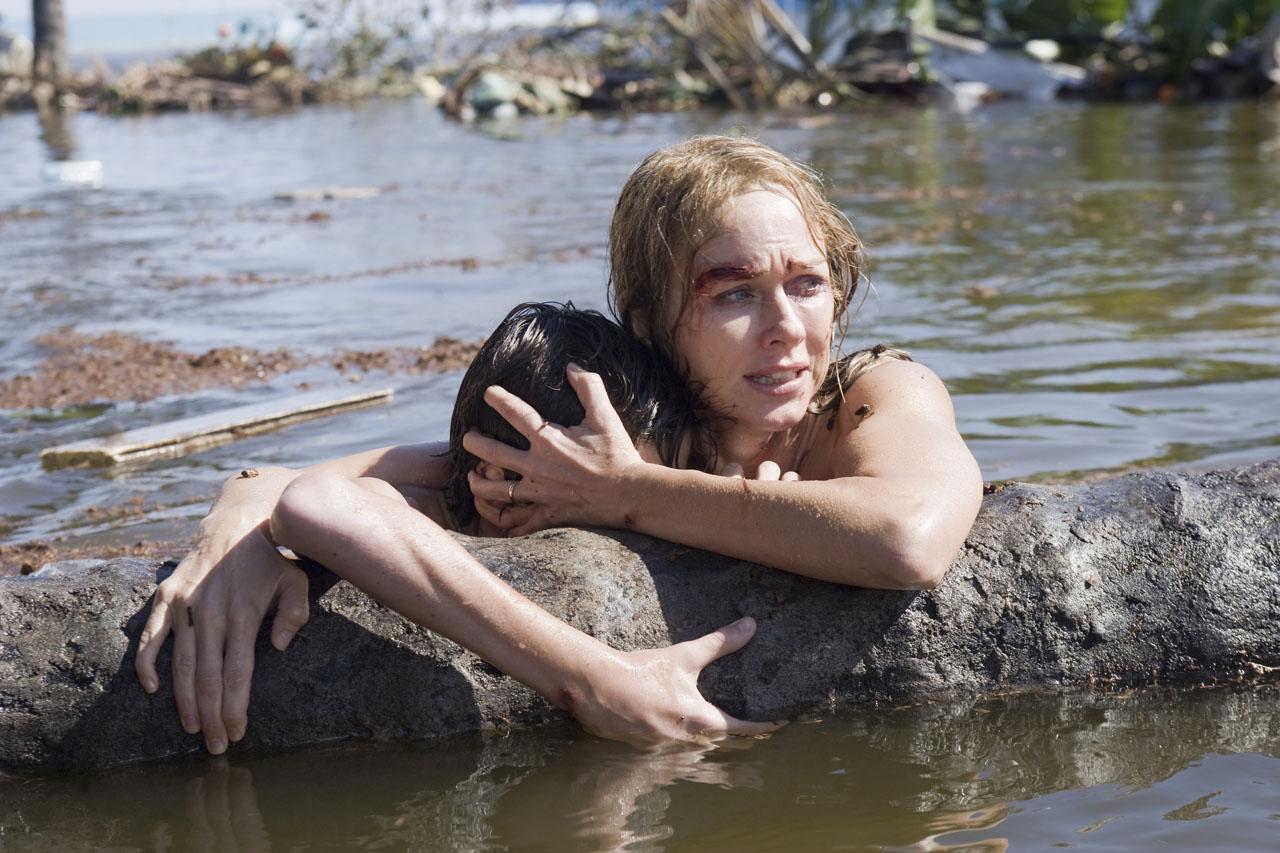
If you could concoct the perfect formula for a harrowing survival film, the results still probably wouldn't come close to matching what you see in The Impossible, which is based on one family's true story of fighting to survive the 2004 Indian Ocean Tsunami. That I use the word "formula" to describe what's actually a dramatization of real events may seem odd, but it's also entirely accurate. It's both the film's biggest strength and weakness because as we're sucked into the human emotion of the story and its unrelenting depiction of a natural disaster, it's hard not to think our strings are being pulled just a little bit. As a result, it at times feels most like an ultimately uplifting disaster movie elevated by a pair of great performances and a frighteningly realistic depiction of a true event. And while adapting from real-life is often tricky, it's especially challenging in this case since knowing how it all turns out does strip the film of a certain degree of suspense. So Spanish director J.A. Bayona piles on the emotion. And it works. Still, I can't help but think the three things everyone will be talking about when it's over are the tsunami scene itself, the graphic injuries and two jaw-dropping performances, one of which was rightfully nominated. But that turns out to be enough.  

Other than a brief argument on the plane about whether the alarm at home was left on at home, not much time is spent getting to know English physician Maria Bennett (Naomi Watts), her husband, Henry (Ewan McGregor) and their sons, 12 year-old Lucas (Tom Holland), 7 year-old Tomas (Samuel Joslin) and 5 year-old Simon (Oakley Pendergast). But we know enough. They're a seemingly normal, well adjusted family spending their 2004 Christmas vacation in Khao Lak, Thailand. That it could be anyone is exactly the point, and exactly the truth. Maria and Lucas are swept away and separated from the others when the tsunami hits, first struggling to make it to higher ground before searching for medical assistance for a severely injured Maria. Still back at what's left of the hotel, Henry and the little boys must stick together, until he decides to search for his missing wife and son. With Maria fighting for her life and Lucas quickly losing hope, the prospect of a family reunion gets bleaker with each passing day.

The most engaging section of the film is surprisingly not the first forty minutes to an hour when the tsunami hits, but everything that follows it, where we get to see the aftermath of the devastation and everyone scrambling to survive and locate their loved ones. Aside from the unforgettable opening of Clint Eastwood's 2010 film Hereafter, there's never really been a cinematic dramatization chronicling the true events surrounding the Indian Ocean Tsunami, so what we see is revelatory, especially in terms of the type of medical care available and how the locals handle such a crisis. There's a shot of the landscape, or what's left of it, after the storm that's absolutely surreal, calling to mind the wreckage and casualties attached to more recent disasters like Hurricane Sandy. This is that, but times ten.

The biggest surprise is how anyone survives something like this, but Watts is heartbreakingly believable in showing us it's possible in what more closely resembles a physically and emotionally exhausting ordeal than an actual acting performance. Maria has just about one of the most gruesome, graphic injuries you can have while remaining alive, and while I never doubted the character would make it, Bayona has to be commended for not shying away from the gore and showing us everything, as difficult as it is to sometimes watch.  That the character's a doctor herself has much less relevance than you'd imagine, as all the victims seem to be at the mercy of little else but circumstance. And the circumstances are dire. The best scenes occur in the makeshift medical facility where survivors try to locate family members amidst the chaos and a frantic, but strong-willed Lucas attempts to help. As good as powerful as Watts is, young Tom Holland is essentially the beating heart of the movie, holding the majority of screen time while Maria is confined to a hospital bed.

That the story isn't as strong or emotionally involving when shifting focus to the dad and the rest of the boys isn't so much a fault as it is a natural progression of events. As the panicked father and husband, McGregor's solid (great even), but his scenes just don't have the visceral pull of Maria and Lucas'. It's at this point that the movie's last act becomes a foregone conclusion and I started looking at my watch, waiting for the inevitable reunion. If you're a screenwriter, what do you do if the true story you're adapting for a Hollywood feature happens to have a Hollywood ending anyway? I guess in this case, if you're screenwriter Sergio Sanchez, you just wouldn't change it because audiences have to go home happy, but there's still this unavoidable feeling of predictability that hangs over the proceedings and hampers the emotional release felt at the end. Still, it's really well done and if I hadn't been told it was a true story going in, there's probably little chance I'd believe it

The biggest controversy might stem from the casting of white movie stars Watts and McGregor as the "Bennetts," and while it's clearly yet another factually inaccurate Hollywood "whitewashing," the practice is sadly nothing new. As far as allegations that the local Asian's experiences were marginalized into supporting roles, if not flat-out ignored, I don't know what to say other than that's mostly true. But this particular story  being told about this family on screen works, even if it may not be the one everyone wants, or is nearly as universal as the advertising would lead you to believe. Fortunately, films aren't (and shouldn't) be judged on those criteria so it's a moot point from where I sit, hardly hampering my appreciation of the work. The Impossible is ultimately a film about the triumph of the human spirit under the worst possible circumstances, and while feel-good elements and predictability wobbly co-exist alongside a horrifying natural disaster, everything eventually adds up to a well-crafted and frequently inspiring viewing experience.                          

Sunday, June 16, 2013

The Guilt Trip


Director: Anne Fletcher
Starring: Barbra Streisand, Seth Rogen, Brett Cullen, Adam Scott, Ari Graynor, Colin Hanks, Yvonne Strahovski, Casey Wilson 
Running Time: 95 min.
Rating: PG-13

★★★ (out of ★★★★) 

Some casting choices just make perfect sense. Barbra Streisand playing Seth Rogen's overbearing mother is one of them, and in the unfairly overlooked The Guilt Trip, the actual execution of it is even better. Unfortunately, the very reason it works is probably why it was so casually dismissed by critics and audiences. Both are talented, likable performers and yet it's still strangely difficult to imagine theses two starring in a creatively successful project together, isn't it? For whatever reason, a perception persists that Rogen's always just playing variations on his stoner persona and that Streisand's merely a singer/celebrity occasionally starring in bad comedies every few years. It's a shame if that kept audiences away because they're both given as good an opportunity here as they've had to disprove it in a well-written movie that's smart, funny and even occasionally touching. This isn't necessarily a 90 minute laugh fest but it gets the job done in ways more ambitious comedies haven't by just simply telling an enjoyable story well. The smile never really left my face the whole time, as everything falls nicely into place with better than expected results. 

Rogen plays Andy Brewster, who's embarking on a cross-country road trip to try to sell his new safe and environmentally friendly cleaning product, Scio-Clean, to retailers in an effort to jump start his sagging career. Before he leaves, he's nagged via voicemail by his well-meaning widowed mother Joyce (Streisand) about everything from his lack of a love life to his diet. But after hearing a story about how a lost teenage love slipped away one summer before she met his dad, Andy plans to secretly track the mystery man down and attempts to stage a surprise reunion in San Francisco. With the hope of enticing some big chain stores in his product and filling a void in his mom's life, he takes her along for his trip, where some suppressed family baggage and a few secrets are dredged up for both.  Arguing non-stop, Andy and Joyce will have to reach some kind of middle ground in understanding one another if they each want to get what they're looking for out of this journey.

The movie makes a number of smart choices that are almost bound to overlooked because of how simple and entirely predictable the premise appears to be from the onset. What is a complete surprise is just how funny it is. There's actually very little gross-out humor, with most of the laughs coming from the fact that Andy can't stand his overbearing mother and is mostly trying to set her up with this guy to get her out of his life. What makes this a bit sad is that his situation might actually be far worse than hers and director Anne Fletcher and screenwriter Dan Fogelman do a commendable job balancing that notion with many of the lighter, relatable moments in the mother-son dynamic. You'd figure that watching this guy constantly arguing with his mom would get tiresome after a while, but it doesn't, mostly because the co-stars work so well together and there are actually more than a few welcome surprises. The first of which comes in the film's handling of Andy's cleaning product. The writing's really smart here because while his presentations are painfully bad, but they fail the way most horrible pitches would in reality, as he continuously bores prospective buyers to tears with scientific and technical jargon. And when Joyce chimes in with her unsolicited tips on how he can improve it (like changing it's horrible name), it's actually common sense advice that seems like it's coming from a sane, intelligent person instead of a comedy caricature. But we also understand why Andy's stubborn pride and insecurity get in the way of him taking it.

That the filmmakers feels no need to shoehorn in a love interest for Andy comes as a relief. In fact, he and his mom's encounter with his high school sweetheart (Yvonne Strahovski) and her husband (Colin Hanks) is handled pretty well, as is a sub-plot involving a potential cowboy suitor (a terrific Brett Cullen) for Joyce during an entertaining steak eating contest. Yes, Barbra Streisand competes in a steak eating contest. All of this should be standard hit-or-miss comedy fare but together Rogen and Streisand are able to elevate it. Of course, the time will eventually come when Joyce discovers the true intention of Andy taking her on this trip and, without giving away too much, I liked how the movie gives these two the ending we want them to have but doesn't do it in an obviously schmaltzy way. Both get exactly what they're looking for, just not how they expected to find it. There's also a great cameo from Adam Scott that's a lot more dramatic than you'd expect given the circumstances.

Rogen is reliably gold at playing a schlubby man-boy who has to grow up, but this is one of the smarter projects he's done it in. When the material is good it's sometimes easy to overlook just how welcome a presence he is on screen. In the hands of another actor it's easy to imagine Andy coming off as a crude sociopath, which obviously wouldn't have been right for this. But it's his chemistry with Streisand that really brings out the best in both, as the legendary entertainer is really on point here, turning in a charmingly comedic performance. It's just the right vehicle for her and she doesn't disappoint, making Joyce just annoying and overbearing enough, but not so annoying that she crosses into the realm of crass unlikablity. In all the nagging, she subtly makes sure we can tell Joyce's intentions are genuine and that's a big difference maker in what kind of movie this becomes. I don't even know what to say about the fact that Streisand received a Worst Actress Razzie nomination for this other than it's mean and disgusting, with its only possible motivation being to stick it to a big star. That's not funny at all. It's just cruel, and maybe even a bit irresponsible when you take into account the current state of the movie industry. Although, it's important to remember that we're talking about an "organization" that once nominated Stanley Kubrick for worst director so it's difficult to take anything they do seriously. The truth is that if Streisand was nominated for a supporting Globe or Oscar for this performance, few would have reason to complain. She's that good.

Much like the fictitious cleaning product at the movie's center, The Guilt Trip's bad title and poor marketing kept the public away from something that's actually very good. Once they saw the commercials they thought they saw the entire movie. And who can blame them?  In begging for laughs, most mainstream comedies these days reach for the lowest common denominator so it was almost inevitable that a funny, heartwarming story that the entire family can enjoy would fall through the cracks. But here's something even sadder: It's not even that great. It simply does what it needs to  do while keeping a consistent tone. We used to get comedies like this all the time. Now they're practically an endangered species. Or maybe I've just seen too many bad ones. Either way, critics should partially shoulder the blame, as all of them somehow found a way to get on the same page with this and still be completely wrong. Luckily, it doesn't happen often. The best thing to do going into The Guilt Trip is forget everything you've heard or read and just approach it with an open mind.                        

Wednesday, June 5, 2013

Arrested Development (Season 4)


Creator: Michell Hurwitz
Starring: Jason Bateman, Portia de Rossi, Will Arnett, Michael Cera, Alia Shawkat, Tony Hale, David Cross, Jeffrey Tambor, Jessica Walter, Ron Howard, Isla Fisher, Terry Crews
Original Airdate: 2013

★★★ (out of ★★★★) 

All the addictive elements that made Arrested Development so brilliant and groundbreaking when its three universally acclaimed, but ratings-challenged seasons first aired on Fox, is also what ultimately led to its cancellation in 2006. Creator Mitch Hurwitz predicted our addiction to serialized storytelling years before it actually arrived and the bitter feelings surrounding its cancellation only seemed to grow worse when we realized it possibly could have thrived in an era of DVR's and Netflix. Back then viewers just weren't ready for a comedy series that dense and complex, requiring them to do some work--and maybe some rewatching--to pick up on all the inside jokes, call-backs and references.

It's Netflix's Arrested Development
The single-camera format and incorporation of rare for its time devices such as narration, flashbacks and archival footage demanded and rewarded a long term commitment, but made ratings success an impossibility. It may have only lasted three seasons but what it accomplished during them felt richer and more developed than any longer running comedy series to air before or since. More importantly, it was a show made for binge viewing before we even knew what that meant. The question was never if it would come back, but when, and whether we'd want it to with the risk that it may not be at the same level of quality. New episodes would be compared to what's arguably TV's all-time greatest comedy series. Not the most enviable position to be in if you're a writer.

It turns out the biggest revelation coming out of AD's fourth season streaming on Netflix is that it doesn't feel like it's back. At least in the form we knew. Forget about catching up on the first three seasons in preparation, because, with few exceptions, it really is a completely fresh start. And I've decided that's okay because much as the show revolutionized comedy TV when it first aired, it's doing it all over again in a new way, albeit with decidedly more mixed results. Reaction to the new episodes from fans and critics have been all over the map and that feels right. The first few episodes are really rough, and almost downright shocking in how much they diverge from the AD we all knew and loved. But the deeper you go, the more sense it makes and the funnier it gets, making it the only season of the show youll have to watch twice in order to fully grasp what's happening. Ridiculously dense and even more ambitious, it makes the most complicated season of Lost seem almost straightforward by comparison.

Trying to explain the narrative of the season would be a fool's errand but fans remember exactly where we left off in 2006 when Michael Bluth (Jason Bateman) escaped with his son George Michael (Michael Cera) on Gob's (Will Arnett) yacht, fleeing his dysfunctional family for good and leaving overbearing, alcoholic matriarch Lucille (Jessica Walter) to deal with the legal fallout from her role in the Bluth Company's accounting scandal. Of course, as the responsible, likable one, Michael can never truly escape his family or resist bailing them out, so the biggest, most jarring development for fans occurs in the first episode ("Flight of the Phoenix") when we discover the past 7 years haven't treated him well. A failed real estate venture and the shame surrounding his family has derailed his personal and professional life to the point that he's pathetically dorming with his son at college (much to George Michael's embarrassment) while taking classes online.
 
Michael Bluth falls on hard times in "Flight of the Phoenix"
Considering much of the series' initial creative success hinged on Bateman playing straight man to the craziness and infantility surrounding him, this decision is easily the season's boldest and most polarizing. If nothing else, it pushes and challenges the actor (who appears in every episode) in a way he wasn't before, proving he's basically capable of anything the writers throw at him.  After being the solid anchor for his troubled family for years, it's now Michael who needs something from them that can help turn his fortunes around. Each character gets their own episode, with a few getting more than that, as we're clued in on the details of what happened to "a family whose future was abruptly cancelled." All the intersecting events eventually come to a head on a Bluth-created holiday known as "Cinco de Quatro."

Nearly everything is told out of chronological order, sometimes making it difficult to distinguish an event that's happening in the present from a flashback. And it's an adjustment getting used to Ron Howard's narrator explaining copious amounts of plot detail and narrative exposition to get us up to speed. Gone from the show are the days where random jokes would come rapid-fire at a mile a minute and you'd have to worry about blinking in fear you'd miss an absurd inside sight gag. Well, there's still some of that, but it's spread wider throughout the course of the season as something you may have noticed in the second or third episode will pay off in the tenth. In this sense, you have to give the writers credit. It would have been easy to fall back on the same successful jokes (and there are still a few), but they came up with completely new ones at the risk of alienating their core fanbase. About as many work as don't, but there's an unmistakable difference in the type of humor, as it's less laugh-out-loud funny and subtler, letting the audience fill in the blanks. But as it wears on, it's apparent some of the jokes are as strong as the ones in the show's original run. It just takes a while to get there.

The writing has definitely lost a step or two, an issue at times unflatteringly highlighted by the extended, character-focused format which seems almost intentionally made for Netflix binge viewing. Without commercials to pad the running time, the show's a good ten to twelve minutes longer, which can seem more like an enternity when trudging through the first few episodes focusing on George Sr. (Jeffrey Tambor) and Lindsay Bluth-Funke (an unrecognizable Portia de Rossi). Of course, the problem is that some of these characters are better to build episodes around than others, as the show evolves into something slower paced and darker in tone. As expected, there's a noticeably smaller budget, which isn't really that big an issue when you this show was never dependent on expensive effects begin with. Just about the only time it's distractingly obvious is when they try to digitally insert actors into scenes with each other, which serves as another argument against this new, but seemingly unavoidable character-based format  

An injured Tobias Funke with wife Lindsay
The George, Sr. episodes ("Borderline Personalities," "Double Crossers") are especially problematic, if only in just how convoluted they are and how few laughs they offer. Much like everything else, it does eventually come together, but this is the one sub-plot where viewers are unlikely to care. Of course, Tambor is once again spot-on doing double duty as George and his twin brother Oscar but his scheme involving a corporate sweat lodge retreat and the building of a wall never seems to click. It's almost as if they didn't know what to do with George once his legal problems were over, and for the first time, the twin gag actually feels a little forced.  You know you're in trouble when even guest star John Slattery as a hippie anesthesiologist can't even save these.

Lindsay's episodes ("Indian Takers," "Red Hairing") try to return her to her to disingenuous activism roots but instead she's at the center of one of the season's most unfunny gags, as the formerly edgy and materialistic Lindsay character is softened to the point that she's almost nice and normal now. But at least de Rossi proves to be a good sport for letting them joke about her plastic surgery, which otherwise would have been a giant elephant in the room. The George Sr./Lindsay episodes are the only ones that truly drag in a big way, compounded by the fact they come at the start, creating a palpable fear of disappointment for a series that once spoiled us for three years straight without a single clunker.

It's around episode 4 or 5 when the show starts to show shades of its former glory, but a good enough argument can be made that it takes even longer. Hurwitz's plan starts to present itself, the puzzle pieces fall into place and his layout of the season as kind of a Rubik's cube starts making some more sense. The potential movie deal with Ron Howard (fantastic as himself) and Imagine entertainment about the Bluth family that was teased in the third season/series finale starts taking shape, giving Michael a new job as producer ("The B. Team") and injecting the rest of the remaining episodes a greater sense of purpose and unity. New jokes start paying off and everything seems to flow better as it chugs along. It shouldn't come as much of a surprise that the two actors who really knock it out of the park (again) are David Cross as "never nude" and aspiring actor Dr. Tobias Funke and Arnett as master illusionist and womanizer Gob.

"The Final Countdown" to Gob's most spectacular illusion yet.
Of all the episodes, Tobias's ("A New Start," "Smashed") are by far the funniest and come closest to capturing the magic of the show's original run without directly recreating it. Whether he's showing up at a methadone addiction group for his method acting class, accidentally getting busted on a To Catch a Predator-style program, or putting together a musical stage production of the Fantastic Four with rehab patients, nearly everything involving Tobias is comic gold with Cross so earnestly selling the most absurd situations with a goofy cluelessness. Thankfully, Gob's just as sleazy and over-the-top as ever, staging his most elaborately ridiculous "illusion" yet, finding himself trapped in an endless "roofie cycle" and reigniting an old feud with a bitter rival ("Colony Collapse", "A New Attitude"). He also has this huge nervous breakdown scene that's so bizarre and transfixing it defies any conventional description, proving that the series is still capable of perfection when you least expect it.

Of the main main players, Lucille and hook-handed "mother boy" Buster (Tony Hale) are probably the most underutilized, though the latter's single episode ("Off The Hook"), in which he attempts to break away from his domineering mother, is the season's darkest and creepiest, actually playing out out the most disturbing aspects of their relationship that were only implied during the first two seasons. It also leads to Ron Howard's best pop culture reference as narrator. Buster's appearances are primarily limited to only he and Lucille's episode ("Queen B."), making Hale the odd man out and sidelining him with far less screen time than many of the guest stars.

But it's Michael Cera who who brings everything he gained on the big screen back with him to deepen and expand his portrayal of George-Michael in "It Gets Better," which isn't only the best written episode of the season, but an absolute joy to watch from start to finish. Creating the "anti-social network," a fake piracy software program called "Fakeblock," George Michael finds himself entangled in a few giant lies that cause a rift with his father and Cera's astounding in how he keeps the character the same "nice kid" he was while adding dimensions and maturity that make him even funnier.

A reunited George Michael and Maeby
The nature of the relationship between he and his dad (always a strong component of the show) is much more intriguing now that the character is older and there are more directions to go with it. It's work Cera couldn't have done 7 years ago and the one glaring improvement made on a show where no improvements seemed possible. The George Michael greatness even extends into his rebellious "cousin" Maeby's (Alia Shawkat) surprisingly entertaining episode ("Señoritis"), which answers the big question of what became of their semi-incestuous sort of romantic friendship. That reunion doesn't disappoint, and with all the problems with scheduling actors we can at least be thankful they have plenty of scenes together and pick up exactly where they left off. It was near the top of the list of details Hurwitz had to get right, and he nails it, as George Michael and Maeby's weird bond remains just as warm, awkward and hilarious as it was.

AD jump-started the now popular TV trend wherein guest stars can be just as important to the story as the main cast. Anticipation was high and they've done a pretty good job keeping a lid on which favorites would be returning, as well as the size and nature of their roles. A moment comes in the first few minutes of the first episode that convinced me everything was going to be alright and the season would probably work. I smiled and laughed uncontrollably as a bruised, desperate Michael climbed the Bluth Company stair car and proceeded to intentionally induce the vertigo of Lucille Austero (Liza Minnelli), the show's most valuable and hilarious recurring character.

A big surprise is just how much Lucille 2 we get, with her role greatly expanded to the point that she may as well be considered a regular. Her impact is felt in some way through every episode, as Lucille 1's kooky social rival seems to have her hands in all the family business this time around, with Minnelli again proving just how skilled she is at delivering this material. And if that wasn't enough, there's also a great sub-plot involving her rehab clinic, "Austerity," run by her bizarre younger brother Argyle (Tommy Tune) who in just his few outlandish appearances makes an impression that somehow rivals hers in sheer hilarity. Of all the new characters introduced, he feels like the one who most needs to come back.    

A desperate Michael propositions Lucille Austero
Also among the returning favorites are the Bluth's bumbling attorney Barry Zuckerkorn (Henry Winkler), George Sr.'s former secretary and mistress Kitty Sanchez (Judy Greer), the notoriously plain George Michael ex Ann Veal (Mae Whitman), magician Tony Wonder (Ben Stiller), lawyer Bob Loblaw (Scott Baio), screenwriter and former prison warden Stefan Gentles (James Lipton), acting coach Carl Weathers and Andy Richter as themselves, follically challenged Stan Sitwell (Ed Begley, Jr.) and his daughter Sally (Christine Taylor), a heavily aged, completely unrecognizable Steve Holt (!) (Justin Wade Grant) and a lot more.

It ends up being the new faces who, for better or worse, have the biggest impact on the season. The idea of Michael unknowingly getting involved with Ron Howard's "illegitimate daughter" Rebel Alley is a good one, but Isla Fisher just never seems right for the role despite how hard she tries. Maybe the problem is that she does always seems like she's trying, which is an occupational hazard in the AD universe where random spontaneity rules the day. Charlize Theron's mentally handicapped Rita was admittedly a tough act to follow, but part of me thinks casting Bryce Dallas Howard as herself in Fisher's place with Michael not knowing her identity would have been far funnier and better suited to the meta comedy the show specializes in. Instead, Fisher comes off as if she's performing in a traditional sitcom, which this definitely isn't. What saves her is being sandwiched between the two strongest storylines, and Bateman and Cera, who are clearly the MVP's.

Terry Crews fares pretty well as Herman Cain-like conservative politician, Herbert Love, who's in cahoots with George Sr. in his building of the wall and takes a romantic liking to Lindsay. Unfortunately, those are the season's two weakest sub-plots, so his game performance is mostly done a disservice. Maria Bamford is a memorably goofy addition as Tobias's meth-addicted girlfriend DeBrie while Chris Diamantopolous is buried in nonsense as Lindsay's love interest, the "face blind" ostrich farmer Marky Bark. The stunt casting of Kristen Wiig and Seth Rogen as a young Lucille and George Sr. in flashbacks has generated a lot of discussion, and while the execution of it never really works and Rogen just phones it in, Wiig actually seems to have studied Jessica Walters, impressively incorporating many of the actress's mannerisms into the performance.

Guest star Isla Fisher as Rebel Alley.
So now we know. Everyone was wondering what Arrested Development would look and feel like if it ever came back and here's our answer. Fans hoping for the return can probably be split into two camps. Those who demanded it maintain the same exact tone, style and quality of the original episodes and others who just wanted the characters come out for a curtain call or reunion special. What we got was closer to the latter, which is fine, but if Hurwitz and company plan to keep going with this (and right now it looks like they are), I'm not sure they can successfully continue this approach without making some changes. The episodes definitely need to be shorter and tighter and there was too much reliance on the narration, which likely stemmed from the need to catch viewers up on 7 years worth of backstory for eight main characters. There's a lot potential here if they play their cards right and plenty of open-ended storylines to be continued in another season or movie. The finale ("Blockheads") is basically a cliffhanger.

While I can certainly understand the fact that the well deserved boost these actors' careers got as a result of the series made scheduling impossible, it's also easy to sympathize with fans who may feel this shouldn't have been attempted unless the entire cast was available at once. Actors need to pay the bills with other projects but I'm still not sure how I feel about the series being treated as a gig everyone does on the side, as there's no question not having an the entire ensemble together limited the creative possibilities. But within those limits, they came up with something truly inspired and original, refusing to rely on the old stand-bys (no Banana Stand!) in favor of expanding the universe and tweaking its format for new kinds of laughs. Like the Bluths themselves, it's kind of a mess, but with an undertaking this ambitious, that was inevitable. Compared to its previous incarnation, it's tough not to view this new more binge-friendly AD as somewhat of a disappointment. But, honestly, anything would have been. What matters most is that it's still more clever and innovative than any comedy currently on TV.           

Thursday, May 30, 2013

Django Unchained


Director: Quentin Tarantino
Starring: Jamie Foxx, Christoph Waltz, Leonardo DiCaprio, Kerry Washington, Samuel L. Jackson, Don Johnson, Walton Goggins, Dennis Christopher
Running Time: 165 min.
Rating: R

★★★★ (out of ★★★★)

Each time Quentin Tarantino comes out with a new film I find myself saying that this will be the one where I've finally had it. I'll say he's gone the revenge fantasy route too times many times, overwrites, casts the same people, fetishizes violence and music and seems more interested in making his movies "cool" than having them work. Then it's released and all those things end up being mostly true. And it doesn't even matter. It's still the greatest thing out there. He gets away with this because there's only one Quentin and no one else out there is remotely capable of doing what he does, even if many have tried in the 90's, only to embarrass themselves.

Tarantino's writing is so idiosyncratic it's some kind of  miracle any actor can effectively deliver it and maybe even more of one that his crazy vision can be translated onto the screen, even by the person responsible for it. Django Unchained is his highest-grossing movie to date and also his longest, clocking in at nearly 3 hours to make it the longest of the year's nine Best Picture nominees. And it feels it. Yet, that doesn't matter either because it seems as if you're too glued to the screen to even care and on the receiving end of at least two or three movies for the price of one.

Set in the Deep South in 1858, a slave named Django (Jamie Foxx) is suddenly given a shot at freedom when he's rescued by Dr. King Schultz (Christoph Waltz), a German dentist and bounty hunter who grants him that freedom in exchange for helping him track down the Brittle Brothers, with whom Django has a brutal history. Feeling responsible for the man, Schultz takes him on as his apprentice, showing him the ropes of bounty hunting and even supplying him with a new wardrobe.

Schultz's ultimate act of generosity is in helping Django rescue his slave wife Broomhilda (Kerry Washington) from her cruel but charismatic owner Calvin Candie (Leonardo DiCaprio), whose "Candyland" plantation is a home to slaves being forced to fight to the death for entertainment in "Mandingo" fights. Manipulating their way into Candie's good graces, Schultz and Django must find a way to outsmart him and his right-hand house slave Stephen (Samuel L. Jackson). But escaping with Broomhilda and their lives won't be so easy, especially as Django's conflicted emotions about horrors of his slave past and his new responsibilities as a bounty hunter rise to the surface, threatening to blow their cover.        

It's odd describing the first half of a film dealing with such an ugly topic as being a fun watch but that's just what it is because of how Tarantino presents the personal and professional partnership that develops between Schultz and Django. There's an undeniable thrill in seeing this slave freed and given the opportunity to extract revenge on those who oppressed him. On top of it, it's interesting to witness all the double talk and scams Schultz uses to help him make it happen. Of the criticisms leveled against the film, the most popular is that Django is merely a spectator in his own story, rescued by the white man and unable to think or act on his own. But how much autonomy can he reasonably have? He's still only freed slave. The reality of the situation is that he won't be accepted on his own as a bounty hunter because of his race and he'd need a great deal of help pulling this off. It's simply a story requirement and nothing more.

Django's marginalization isn't a flaw and Foxx's role is clearly lead (or at least co-lead) but Waltz is such a titanic and charismatic screen presence that's he's basically tricked everyone into thinking otherwise. Much like in Inglourious Basterds, he steals show and there are a remarkable number of similarities between the two  characters, with the key difference of course being that Schultz is a German freeing slaves instead of a Nazi Jew hunter. It's fascinating to watch Waltz give a slick, fast-talking, witty performance that touches many of the same bases he did as Col. Hans Landa while this time around earning audience adoration instead of hatred. And Waltz accomplishes all this without really ever making the Schultz "feel" like the hero, but instead just as ruthless and calculating as the white slave owners he's hunting. Not to mention a whole lot smarter.

Foxx's job in comparison would almost seem to be a thankless one in that he must play the strong, silent avenger but he hasn't gotten enough attention for just how much of that quiet intensity and pain he has to convey when they infiltrate Candyland and he must come face-to-face with the atrocities of his own past while staying in character to effectively execute their scheme. It's here where we start wondering if he's enjoying his new role maybe a bit too much and possibly getting too cocky to see it through to the end. There's a great duality going on here and it's difficult to believe that Tarantino's original choice for the role, Will Smith, could have pulled it off better, or even as well, as Foxx. Smith's reasoning for turning it down are well-documented, confirming everything we've already known (feared?) about how he approaches his career, or rather his brand. That his problems with the script boiled down to " Must Be Hero" and "Good Guy Must Shoot Bad Guy" make me wonder if he even read the thing, or maybe just skipped the last fifty pages.

DiCaprio, on the other hand, has never met a role out of his comfort zone or above his ability level   that he won't tackle. On paper, he would certainly seem ill-suited for a racist plantation owner, but yet again, he gives it his all and makes it work, turning in a diabolical, scenery chewing performance as Candie. He's all at once funny and scary, with a good argument to be made that the film doesn't really hit its stride until his arrival. And he's not even playing the most detestable character. That (dis)honor goes to Samuel L. Jackson, whose house slave Stephen might just be the most reprehensible character the actor's played in his career. So sickening in his subservience to Candie and the abuse of his own race that it's difficult to watch, the whole performance is kind of scary in how it touches a nerve and just makes us uncomfortable every moment he's on screen, including a scene where we realize he's more observant than we originally thought.

No Tarantino film would be complete without appearances from veteran actors like Don Johnson (memorable early on as slave owner "Big Daddy"), Dennis Christopher, Tom Wopat, Russ Tamblyn, Tom Savini and Bruce Dern. Jonah Hill also briefly appears when Tarantino accomplishes the impossible with an absurd gag involving the Klu Klux Klan you can't imagine would ever get laughs, but somehow does. Of everyone, Kerry Washington seems the least essential as Broomhilda, but even that role's challenging and it would be difficult to come up with suggestions as to who else could have tackled it as well. True to form, the director saves an almost aggressively distracting cameo for himself in the last act that ranks as the most unintentionally hilarious few minutes of screen time he's had as an actor in one of his own films. Complete with a bizarre accent and cowboy hat, his appearance is so crazy that it works almost in spite of itself, even as the filmmaker proves once again that he probably shouldn't give up his day job anytime soon. It's a good thing we're having too much fun to care.

Unsurprisingly, the soundtrack is as much a character in the film as any person in it, utilizing the most music of any of his outings since the 90's, with a big standout being the use of Jim Croce's classic "I Got a Name" in a sequence where Django first comes into his own as a bounty hunter. For me, the only questionable musical choice comes in the final act, as Rick Ross' "100 Black Coffins," just seems too glaringly modern and "on-the-nose" to fit amidst the film's setting. But that's a minor quibble. With Tarantino's longtime editor Sally Menke having passed away, the glaring question going into this was what effect, if any, it would have on the finished product. Of course, looking at the running time the easiest joke to make is that there was no editing at all, but the truth is actually that the film holds together surprisingly well under the circumstances, and while some action probably could have been cut, there's good reason to be grateful for everything that got in.

Whereas Inglourious Basterds mostly played it straight until its third act, morphing into an alternate history revenge fantasy flick, Django is a revenge fantasy through and through, from the opening credits onward. It's also a spaghetti Western, a blaxploitation picture and a buddy film.The biggest surprise is in how it starts as an action comedy not too far removed from something like Butch Cassidy and The Sundance Kid and slowly morphs into something darker, calling the country out on its own shamefully racist past as the title character steps up to take ownership of his own story. When analyzing Tarantino's films, the popular approach is always to compare them, not to other works, but his own, which is unusual considering how many influences and inspirations he incorporates. Maybe it's finally time to admit he's more original than we give him credit for. 
            

Tuesday, May 21, 2013

How I Met Your Mother (Season 8)


Creators: Carter Bays and Craig Thomas
Starring: Josh Radnor, Jason Segel, Cobie Smulders, Neil Patrick Harris, Alyson Hannigan, Lyndsy Fonseca, David Henrie, Bob Saget(voice)
Original Airdate: 2012-2013

★★ ½ (out of ★★★★)

                                                **Spoiler Warning: This Review Contains Major Plot Spoilers**

So, there's this moment that comes at the end of Episode 20 of How I Met Your Mother's penultimate season, titled, "The Time Travelers," in which Barney (Neil Patrick Harris) attempts to persuade Ted (Josh Radnor) to stop moping at MacLaren's and go with him to see Robots vs. Wrestlers: Legends or he'll regret it in 20 years. Before long, future versions of Ted and Future Barney show up to confirm that. Then comes the kicker: Ted's really sitting alone at the bar. Barney, Robin (Cobie Smulders), Lily (Alyson Hannigan) and Marshall (Jason Segel) are all too busy with their own lives to go with him. And all the events that occur in the episode actually happened five years ago, as a lonely, dejected Ted replays them in his own mind.

It'll be 45 days until he meets the mother and Bob Saget's narration informs us that if he could go back, he'd spend it with his friends. Ted imagines himself knocking on the mother's apartment door and introducing himself early, saying he'd do anything to get extra time with her. The entire sequence is Season 1 level quality, proving that creators Carter Bay and Craig Thomas are still capable of pulling off the magic when necessary. The moment encapsulates what's best about the series during another season where not enough of the rest does. It's the first time the end actually feels in sight  while even vaguely addressing crazy fan theories that Ted might be telling this story from a rubber room, or that he and The Mother, down the road, may no longer be together.

We've seen Ted Mosby depressed over the past 8 years, but we've never seen him truly hopeless until now. He's given up and is well on his way to rock bottom, which presumably arrives the weekend of a certain wedding that will somehow end for him in the rain on a Farhampton train platform with "the girl with the yellow umbrella." And now, shockingly, she's here. Bays and Thomas definitely saved their biggest play for last this season and while it's a shame it had to follow nearly three years of wheel-spinning and stalling, it does feel like a giant weight has been lifted off the show by revealing her to us (if not Ted just yet) and insuring we'll be getting to know her a lot better soon. Just doing that is a controversial decision in itself so it remains to be seen just how much that will positively or negatively affect their eventual meeting, which is one of the last big weapons the writers can still claim to have up their sleeves at this point.

Teds and Barneys in "The Time Travelers"
Unmistakably, and no matter what has come before, that meeting will still be a MOMENT. How much emotional impact it'll carry is now up to them and the performance of an untested, little known actress.  But as difficult as it is to digest, there's also a full season's worth of developments that came before that reveal. Well, sort of. Mostly it was just more of the same, with very few exceptions. But the good news is that for the first time in a while things at least look promising for a strong finish. It's certainly no secret that we probably shouldn't even be talking about an upcoming ninth season and this story should have been tighter and wrapped up a lot sooner, but because the show continues to financially thrive for CBS, these are the cards we've been dealt.

Most of the first half of the eighth season is spent cleaning up a gigantic mess the writers got themselves into at the end of a pretty awful seventh season. In their defense, they accomplish this as quickly and efficiently as possible, even if there's no getting around the obvious fact that none of it should have happened to begin with. Robin and Barney are each in committed relationships (though not with each other...yet), Lily and Marshall now have a baby and Ted had shockingly run away with Victoria (a returning Ashley Williams) on her wedding day. Of course, we know that none of these relationships will last, as we've continually gotten flashforward glimpses of Robin and Barney's wedding for the past few seasons. They're interspersed, as usual, with the show's main framing device of Future Ted recounting to his kids (Lyndsy Fonseca and David Henrie) the story of how he met their mother. And it's a story that's become increasingly long-winded and detailed, with seemingly no end in sight, at least until this season's potentially show-saving final shot.

Barney's engagement to stripper Quinn (Becki Newton), Robin's not-so-serious union with himbo Nick (Michael Trucco) and Ted's second go-around with fan favorite Victoria all collapse within a span of five episodes collectively known as "The Autumn of Break-Ups." That this doesn't even qualify as a spoiler of any sort should give you an idea how painfully predictable and unfunny they are, with the only relief coming from the aforementioned Farhampton flashforward in the premiere and the fact that we're now finally freed up get down to business.Why Ted, who was so memorably left at the altar himself, would run away with another man's bride on her wedding day is a question we'll continue to ponder. Along why Victoria was brought back to be labeled as a "slob" and give Ted a Friends-inspired ultimatum. Or why Barney seems to be the only one who can't see that marrying a still working stripper could create an issue.That business at hand is of course the path to Robin and Barney's wedding, which at this point almost has to feel rushed considering they weren't even together at the start of the season. But this is at least one development I didn't mind to see rushed since we already know how it ends up. 

I was curious as to how Bays and Thomas would handle the Barney-Robin engagement and was pleasantly surprised. I half expected a long, drawn-out courtship between the two to kill more time but instead they took a clever, short-term approach I can't completely give away. Let's just say they did a good job getting Barney to the place where he could believably settle down with Robin, without sacrificing the key narcissistic, womanizing, lying, scheming qualities that have made Barney Stinson, as played pitch-perfectly by NPH, such an entertaining character over the past eight years. While I'll never be thrilled with the pairing just out of its sheer predictability and the absurd fan devotion it inspires, they did just about as good a job as they could getting there while their backs were against the wall and the series' future time frame was still very much in the air.

The two-parter (titled "The Final Page") not only works as a welcome callback to classic HIMYM story devices like Barney's "Playbook," but also circles the show back to Ted's inability to let go of his feelings for Robin. Unlike many, I don't have a problem with that at all. That's where the story should be at this point and is in many ways the series' most realistic aspect. Why should he be over her? She's one of his best friends and has done very little overs the years to dissuade him from pursuing her, always keeping him in her back pocket as a possible romantic option in case things don't work out. And even as pathetically as Ted can come across, you almost have to admire his dedication and refusal to give up despite being trapped squarely in her "friend zone." As we know, there's only one person capable of triggering him to let go of Robin and until she shows up I'd say it's fair for the writers to go back to that well as many times as they see fit.

The finale hints he may have found one last ditch attempt to slide back into her good graces, even if it comes at the expense of his friendship with Barney. It's clear that we're definitely headed toward a major Ted-Barney battle in the final season and that feels right given that the two of them have never really sat down and hashed out this Robin situation. One of the season's more memorable images comes when Ted stares out from the window of the building he designed, seemingly a success, yet alone as his best friend proposes to the woman he's still in love with. I also appreciate that they finally gave us an update on that GNB building, Ted's teaching career and the renovation of his dream house in Westchester, all of which haven't been mentioned in what's felt like five years.
                 
Robin as her alter ego "Robin Daggers" in "P.S. I Love You"
From the description of it, you'd figure the series is an hour-long drama instead of a 30-minute situation comedy, but this season does bring some laughs to balance out the angst. Cobie Smulders has consistently proven herself to be the most improved actor of the five and it's become especially noticeable in these latter, weaker seasons. This one at least gives her the opportunity to briefly slip back into her most iconic and hilarious persona and one of the series' most satisfying long-running gags. Robin's not so secret past as Canadian pop sensation "Robin Sparkles" and the resulting flashbacks and music videos have resulted in some of the show's biggest laughs. The episode "P.S. I Love You," in which Barney unearths a Behind The Music-style documentary chronicling her career fall, features an onslaught of inside jokes and hilarious Canadian celebrity appearances (Dave Coulier!), proving the show is still at times capable of channeling its early greatness.

Unfortunately, the same can't be said for the handling of Marshall and Lily's adventures as new parents. It's always been speculated that bringing a baby onto a sitcom can be a death knell, if not a sure sign your show has "jumped the shark" While this doesn't feel like it deserves such a declaration and is more just a reflection of the general course of things, the two sure aren't given much to do this season aside from changing diapers. But that could possibly be considered a step up from the previous season, when the couple was so busy playing house on Long Island that Segel and Hannigan were absent enough to barely qualify as series regulars anymore.

Supposedly, Segel was the lone holdout in signing up for a ninth season, and with a burgeoning film career and Marshall's arc having run its course, he could hardly be blamed if he wanted out. Marshall ends the season with yet another career opportunity (this time for a judgeship) presenting itself just as Lily aspires to follow her professional dreams abroad. Despite being wasted for most of the 24 episodes, Lilly does share a couple of meaningful moments with Ted, which is a relief since their talks have been sorely missed of late. One leads to a surprisingly deep confession from her, while the other unwittingly pushes him further along in his path to meet The Mother. But as absent as Marshall and Lilly may occasionally be from the gang's booth at MacLaren's, it's at least a relief to not to see guest stars filling their seats.

If there's any improvement over the previous  year it's that guest stars are used more sparingly and we don't have a repeat of an underdeveloped character like Kal Penn's Kevin being incorporated into the group for half a season and boring us to tears. Or worse yet, nabbing a huge name like Katie Holmes, only to do little with her. Chris Elliot and Ray Wise make their respective returns as Lily and Robin's fathers, Peter Gallagher appears as Ted's former college professor, Abby Elliot has an arc as Ted's crazy girlfriend, Amber Benson finally gives a face to Barney's long-lost sister, Alexis Denisof briefly returns as Sandy Rivers, Seth Green plays a former classmate of Marshall and Lily's, Mike Tyson shows up as himself, Rachel Bilson cameos as Cindy again, Kyle Maclachlan is back as "The Captain" and Keegan-Michael Key and Casey Wilson make a memorable appearance as an obnoxious couple in the finale. This list is actually pretty conservative by HIMYM's standards. But there's really only one guest star anyone wants to talk about.

A lonely Ted looks out from inside his newly completed GNB building
It's almost surreal finally having a face and an actual name of an actress attached to The Mother. It happened. We saw her. Supposedly, Radnor was pushing very hard for the choice to be relative unknown and, to an extent, I get it. While we all had to throw away our lists of fantasy picks for the role, the fact remains that anyone who isn't complete unknown would carry with them at least some degree of baggage because the audience would already be familiar with them. And it's not hard to like the idea of us meeting and getting to know a fresh face as Ted is since we've been with him on this journey the entire time. Someone unexpectedly sweeping in out of nowhere who we've never seen before dovetails nicely into the show's theme, while giving a working actress, who may not have otherwise gotten a chance, an opportunity to break through to the next level.  You also have to consider that in this age of the internet and social media it would be nearly impossible for Bays and Thomas to plug the leaks and be able to keep anyone resembling a major name a secret from rabid fans. Oh, and they used up every possible actress already. That's the part I most have a problem with because it could have so easily been avoided.

When I first saw The Mother my immediate reaction was one of mild disappointment, the blame of which I'd put at the feet of the writers and my expectations, not Cristin Milioti, who until now was best known for her Tony nominated performance in Broadway's Once, a guest spot on 30 Rock and a big screen credit playing comedian Mike Birbiglia's sister in his 2012 low budget indie gem, Sleepwalk with Me. When she made her entrance to the strains of The Shins' "Simple Song" in the final moment of the season finale, "Something New," I didn't recognize her at all. So, mission accomplished there.  But the disappointment no doubt stems from the usual let down bound to accompany an appearance that's been built up for nearly a decade. Maybe she's just not quite how I expected Ted Mosby's wife to look. Maybe not the right height or weight. Is she not pretty enough? Or maybe she didn't speak exactly how I expected. Then I realized she's competing with nothing except our own imaginations and the unfair expectations the writers have spent the past several years burdening her with.

It probably all goes back to that infamous 100th Episode, "Girls vs. Suits," in which The Mother's then-roommate, Cindy complained to Ted how she just couldn't compete with "the girl with the yellow umbrella" and that every guy she tried to date just instantly fell in love with her. And that was it right there. If Rachel Bilson (who proved she could have handled The Mother role herself) is made to feel insecure and jealous then the idea is already planted in viewers heads to expect the unreasonable. Not helping any is Ted's notoriously high standards and the producers' penchant for stunt casting, as former dates or girlfriends played by Bilson, Holmes, Sarah Chalke, Danica McKellar, Mandy Moore, Jennifer Morrison did set the bar fairly high for the title character despite their characters' obvious faults. Are the writers trying to tell us something by foregoing the temptation to cast a big name actress or a traffic-stopping beauty, but rather a conventionally cute, average girl who seems extraordinary to Ted? I'd say so. We'll see whether the gamble pays off.

Our first glimpse of The Mother, played by Cristin Milioti
It probably would have been impossible for any actress to deliver on all our expectations in just a single moment. Luckily, Milioti will be given more time than that to fulfill those expectations, and she only has to believably fulfill them for Ted, not us. Ultimately, it wouldn't have mattered whether the actress chosen was a huge name or an unknown just as long as she's right for the role. A vocal minority of fans already think she's perfect for this and, if it's any consolation, the reaction to her casting was about ten times more positive than you'd expect given the circumstances. She isn't a disappointment. At least not yet. It just remains to be seen. And we'll apparently be seeing a lot of her as she's apparently joining the cast as a regular in the show's final season to interact with the gang before finally meeting Ted. So this isn't merely a walk-on. It's a lock that we'll be learning more about her side of the story with a whole extra season suddenly available for them to play around with.

The decision to have the final season unfold 24-style during the 56 hours leading up to Barney and Robin's wedding is a a polarizing one. Expect tons of flashbacks and flashforwards to fill in the gaps, lending even more weight to the assertions that this is the Lost of sitcoms, now thankfully minus the mystery. Truthfully, their new approach heading into the final lap couldn't have come at a better time since the main problem plaguing HIMYM over the past few years (besides simply its age) is a tired formula that's enabled Bays and Thomas to take as much time as they need to tell their story with as little forward momentum as possible. But now she's here and they don't have that crutch to lean on anymore. They were smart to finally remove it themselves, even if viewers who have somehow hung in there since the 2005 premiere had already lost patience. Having binge watched the show's previous seasons last year, that level of fatigue hasn't set in for me, but it's easy to commiserate with anyone who decided enough is enough and jumped ship.There's certainly been a nosedive in quality these past few seasons and with it comes a reminder of the kinds of creative problems sitcoms face when they overstay their welcome. But there are few other characters I'd rather have overstay that welcome than these five and most of that has to do with the talented actors who play them. Even as the material has sometimes wavered, their work in front of the camera never has.

Over the years, HIMYM has kind of evolved into comfort television. A familiar place where you can hang out with people you like going through similar problems. And that's why, despite complaints, we keep coming back. When the series concludes there's at least a possibility that it will play well as a whole, marginalizing some of the criticisms that appear to be a big deal now. Whereas the series' seventh season just felt like more filler, this one at least had flashes of the show's glory days interspersed with the mess. And out of that comes potential. The idea that the season 9 may not at all resemble the eight that came before is intriguing when you consider how stale things have gotten. A major shake-up and format change seemed necessary and Bays and Thomas should at least be commended for realizing that if they were planning to go one more season, a whole new game plan had to be implemented. Despite sometimes striking a sour note along the way, the end is finally here, and accompanying it is a feeling of cautious optimism and anticipation longtime HIMYM viewers haven't experienced in a while. The only question left is whether it's come too late.                                    

Saturday, May 18, 2013

Smashed


Director: James Ponsoldt
Starring: Mary Elizabeth Winstead, Aaron Paul, Octavia Spencer, Nick Offerman, Megan Mullally, Mary Kay Place, Kyle Gallner
Running Time: 81 min.
Rating: R

★★★ ½ (out of ★★★★) 

There are certain actors and actresses you're just a fan of. It would probably be easier to deny it and pretend I go into every movie with complete objectivity, but the fact is that I'm much more likely to watch and appreciate a film starring performers I like and have followed throughout their careers. I want them to make smart choices that confirm my opinions of their talent, and if they don't, it's disappointing. Three of them co-star in James Ponsoldt's Smashed, a film about alcoholism that's really about a descent into sobriety. Mary Elizabeth Winstead, Aaron Paul and Nick Offerman appearing together in a single film reading from a phone book probably would have been enough for me, but here's Winstead giving an award caliber central performance as an alcoholic, Paul as her immature, unsupportive husband and Offerman proving he can inhabit a character that's about as far removed from Parks and Rec's Ron Swanson as possible. On top of that, the film itself is nearly perfect in a straightforward, no-nonsense way that may not be immediately apparent. It plays honestly, but without judgement.

Winstead plays Kate Hannah, a schoolteacher who also happens to be an alcoholic. We see in early scenes that, as the former, she's amazingly kind and patient with the kids and pretty much every parent's dream of who they'd trust with their children. Until, hungover from another night of partying, she vomits all over the classroom floor. The kids ask her if she's pregnant and, panicking, she to lies them and a supportive Principal Barnes (Megan Mullally). It's likely Kate's been an alcoholic for a while but is just now starting to come around and realize it. She's not there yet, but getting close. Hardly helping is her equally hard partying husband, Charlie (Paul) whose complete obliviousness to their situation and terminal complacency are the only qualities making him seem like he doesn't have as much of a problem as she does. Kate's only real support comes from the soft-spoken vice principal Dave Davies (Offerman), a recovering addict not only willing to cover up her lie because he has a big crush, but also willing to take her with him to AA meetings where she meets her sponsor, Jenny (Octavia Spencer). On the road to recovery, Kate discovers sobriety is slowly tearing her marriage apart, as a still drinking Charlie feels left behind and a slew of other problems start to surface.  

It seems to be a commonly held belief about young people that their drinking and drug use will never escalate to alcoholism or addiction, and it carries over into movies where the middle-aged tend to be the most serious substance abusers. It's almost as if young adults are expected to be doing it, and, as a result, should be able to handle it just fine. At the beginning of this film you'd almost be forgiven into thinking so, until a moment comes that's frightening in how well Winstead sells it. Waking up on the street with no idea where she is or how she got there, it's the first time Kate seems legitimately scared and mortified of what she's capable of when drinking. During a memorable sequence scored to Richard and Linda Thompson's "I Want to See The Bright Lights Tonight," we see Kate spend the night smoking crack with a hooker, and it's after that she realizes it's the final straw. But really it's just the beginning. Short-term, her decision to embrace sobriety surprisingly causes more problems than it solves in her marriage and life, while bringing dormant ones to the surface, such as an already strained relationship with her mother (Mary Kay Place).

There were already strong hints of Winstead promise in 2011's The Thing prequel and now seeing this it'll be easier to understand why I suspected that role in Scott Pilgrim was way beneath her. This confirms it. It's almost become a long-running joke that playing an alcoholic is every actor's dream since it invariably leads to awards recognition of some sort, but there's a reason for that. It's difficult to do believably. She doesn't squander the opportunity, knowing that drunk people often behave like delusional sober people, completely ignorant to everything going on around them. And it's the mode she's in for the entire first half of the film, which is no small feat. But it's when the drinking stops that her performance really kicks into high gear, as Kate's eaten with guilt over her sobriety driving a wedge through her marriage. She also has to ward off the advances of confidant and co-worker, Dave, though using the term "advances" is probably stretching it given his struggles talking to women. Offerman leaves all traces of the manly, breakfast obsessed Ron Swanson behind in a really subdued, low-key dramatic performance that still doesn't completely abandon the dry sense of humor he's known for. It proves, unsurprisingly, that he's capable of other things.

Aaron Paul plays Charlie as a good guy, but also one stuck in a complacent holding pattern. In this way, he resembles Jesse Pinkman of Breaking Bad's early seasons (right down to the substance abuse and playing video games on the couch) to the point that he'll probably be accused of just playing a variation on his TV character. But this speaks more to our familiarity with Paul than the actual performance, which is surprising in how he cedes so much of the spotlight to his co-star. Now that Kate's sober, there may no longer be a place for him in her life and they'll have to take stock as to whether they ever had anything that went beyond drinking and partying. We also wonder if she can move past how unforgivably unsupportive he's been in her recovery. But much like Flight, the other 2012 film dealing with alcoholism, Kate won't really be clean until she admits she isn't and takes responsibility for her lies.

Watching Smashed, I couldn't help but wonder how badly it would have turned out if a major studio had released it, interfering to make it more exciting or dumbing it down so a depressing topic like alcoholism could be more cheery and accessible. Thankfully, we'll never see that version and I'm given the opportunity to see three of my favorites given free reign to just tear into this meaningful material with everything they've got. It also marks the first time I've seen a movie character pulled over for driving drunk...on a bicycle. First-time director Ponsoldt makes it happen but it's easy believe the hard part was over once this cast was set in place. It wasn't until the end that I realized Paul and Offerman don't share a single scene together. And that feels strangely like the right call. For the story's purposes, there's no need, so they don't.  But the film ultimately belongs to Winstead, revealing dimensions to her abilities even her biggest fans couldn't have anticipated. And that she does it opposite two of TV's best, only makes the accomplishment seem that much greater.